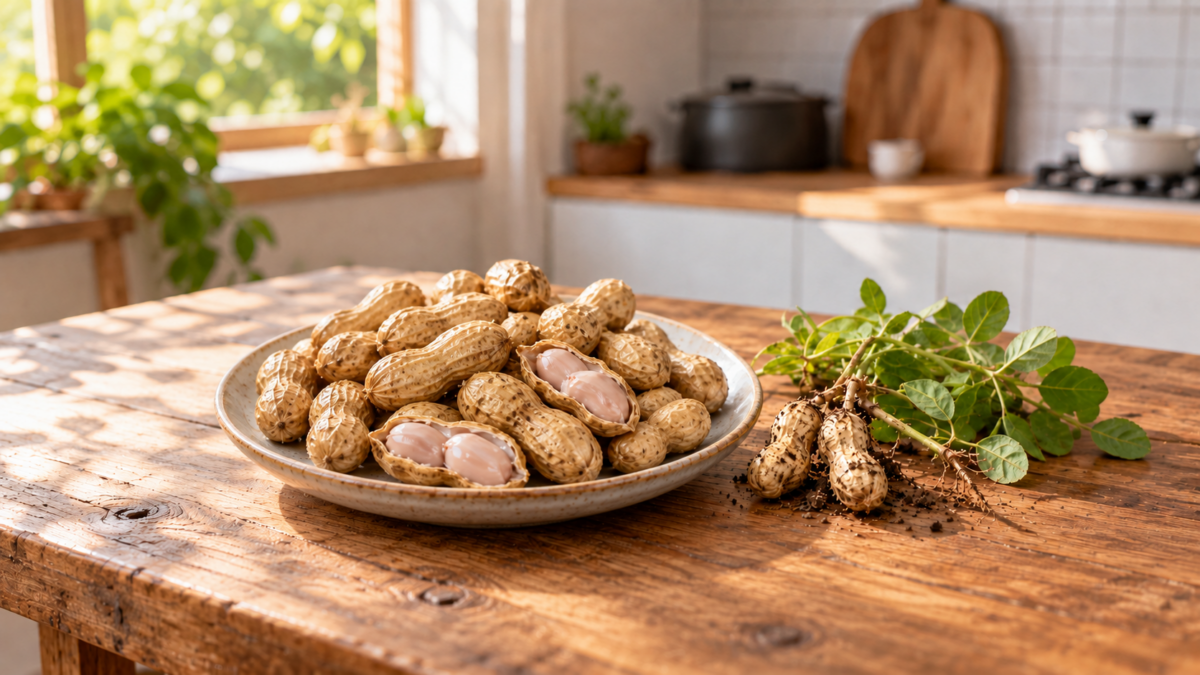
In early autumn, local markets frequently feature fresh peanuts still coated in soil. Newly harvested and packed with moisture, fresh peanuts are a seasonal delicacy available during a brief window each September. When boiled inside their shells, they deliver a tender, chewy texture and a mild natural sweetness.
Despite their name, peanuts are botanically classified as legumes rather than tree nuts, sharing a plant family with peas and soybeans. Because freshly dug peanuts retain significantly more moisture than fully dried varieties, boiling softens the kernels into a moist, tender snack. When selecting fresh peanuts, choose firm pods with well-defined, net-like outer patterns. If shaken, the kernels inside should not rattle loudly—a key indicator that the pods are completely filled.
Cardiovascular Benefits and Essential Nutrients
Fresh peanuts are rich in healthy unsaturated fats, particularly oleic acid and linoleic acid. Consuming a moderate portion of peanuts in place of snacks high in saturated fats can help manage blood cholesterol levels and support overall cardiovascular health. The benefit relies on substitution: swapping processed foods or chips for peanuts provides a far healthier lipid profile.
Beyond healthy fats, peanuts supply plant-based protein and dietary fiber, which promote satiety and help stabilize digestion. They are also packed with essential micronutrients, including niacin, folate, vitamin E, and magnesium. Furthermore, boiling peanuts requires no added oil, setting them apart from traditional roasted or oil-fried nut snacks.
Boiling Techniques and Mindful Consumption
Because dirt easily collects in the ridges of the shells, fresh peanuts should be soaked in water and rinsed thoroughly under running water several times before cooking. To prepare them, place the unpeeled peanuts in a pot, cover with water, bring to a boil, and cook for 20 to 30 minutes. Turn off the heat and allow them to steep for an additional 5 to 10 minutes so the heat penetrates to the center. A small pinch of salt can be added to the water to enhance their natural flavor, though excessive sodium should be avoided.
Despite their high moisture content, fresh peanuts remain calorie- and fat-dense. Because their mild flavor makes overeating easy, a small handful represents an appropriate serving size. Due to their moisture content, fresh peanuts spoil quickly; leftovers should be refrigerated immediately. Any pods showing signs of mold or discoloration must be discarded entirely, as boiling does not neutralize fungal toxins. Finally, individuals with known peanut allergies must avoid them completely.