One day, without warning, brushing your teeth sends an agonizing, electric shock-like jolt across one side of your face. Touching your cheek while washing or chewing a meal triggers a sharp, knife-like pain that lasts for several seconds. Speaking becomes terrifying, yet a glance in the mirror reveals no visible swelling, redness, or abnormalities.
Many individuals initially dismiss this excruciating facial pain as a severe toothache or temporary nerve sensitivity, often visiting a dentist first. However, if these sudden bursts of severe pain persist, they may point to trigeminal neuralgia.
Trigeminal neuralgia is a neurological condition characterized by sudden, severe, and brief recurring attacks of facial pain along the pathways of the trigeminal nerve, which provides sensory perception to the face. In most cases, the pain occurs when a normal blood vessel in the brain compresses the nerve root. While it typically affects one side of the face, rare bilateral cases do occur. Because there are no external signs of disease, diagnosis is frequently delayed.
July 7 is observed globally as World Trigeminal Neuralgia Day to raise public awareness of the condition and highlight the severe burdens faced by affected patients.
The Danger of the "Remission Period"
Trigeminal neuralgia rarely presents as constant, unyielding pain. Instead, intense paroxysms come and go in unpredictable waves. Between attacks, patients often experience a "painless phase" or remission period, leading many to believe the condition has resolved on its own.
"In most cases of trigeminal neuralgia, a remission period occurs early on," said Lee Sang-hoon, honorary director of neurosurgery at Bongseng Memorial Hospital. "After the initial episode of severe pain, a patient may remain pain-free for a period regardless of medical treatment. However, from the second episode onward, the pain often returns with greater intensity, and both the frequency and severity of attacks tend to escalate over time."
Everyday physical stimuli can trigger severe episodes. Light touches or routine motions—such as brushing teeth, washing the face, eating, speaking, or feeling a cold breeze—can set off agonizing nerve firing.
Surgical Intervention via Microvascular Decompression
In the early stages, pharmacological treatment using anticonvulsants or muscle relaxants often manages symptoms effectively. Over time, however, many patients develop drug tolerance, experiencing breakthrough pain alongside distressing side effects such as dizziness, somnolence, and cognitive fog at higher dosages.
When medication fails or becomes intolerable, surgical treatment is considered. The gold standard surgical procedure is microvascular decompression (MVD). Rather than destroying or severing the trigeminal nerve, MVD aims to relieve the underlying vascular compression directly.
During the procedure, a neurosurgeon makes a small incision behind the ear and creates a tiny opening in the skull to access the nerve. The offending blood vessel compressing the trigeminal nerve is identified and carefully mobilized away. A surgical pad made of Teflon is then inserted between the vessel and the nerve to prevent the vessel's arterial pulsation from transferring pressure to the nerve fibers.
While medication merely dampens nerve signals, microvascular decompression addresses the root physical cause of the neuralgia. In properly selected candidates, MVD provides long-term relief or complete elimination of facial pain.
5,100 Surgical Cases: Decades of Dedicated Expertise
Lee, the honorary director, has specialized in treating trigeminal neuralgia and hemifacial spasm for decades. His cumulative MVD surgical volume reached 5,100 cases as of late July 2026.
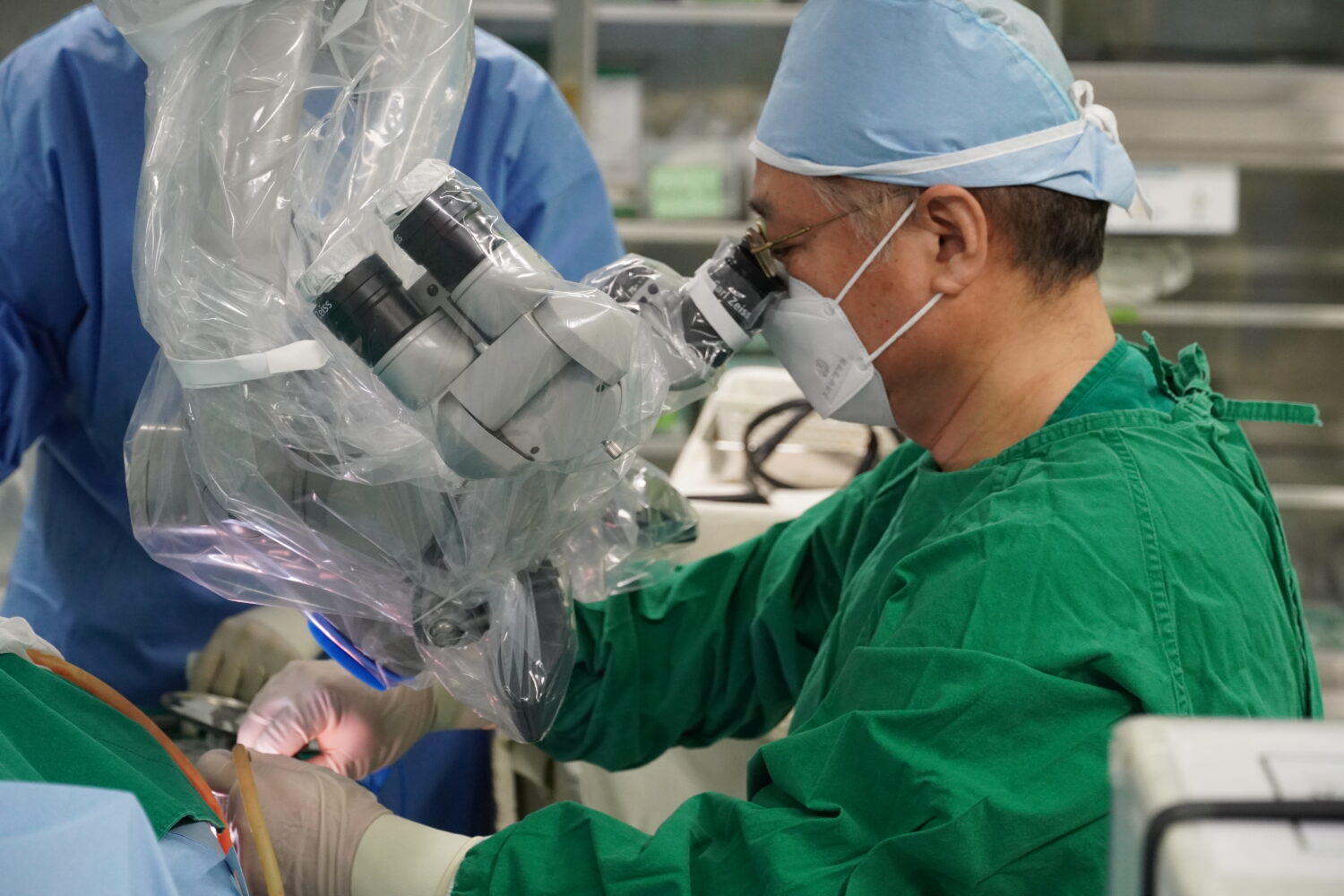
Because microvascular decompression involves intricate micro-neurosurgery deep within the brain stem—working around cranial nerves and blood vessels as thin as a single hair—surgical experience directly correlates with patient outcomes and complication rates. Reaching 5,100 cases highlights Lee's lifelong focus on optimizing surgical techniques for cranial nerve disorders.
Maintaining a "Pain Diary" for Clinical Evaluation
Not all sharp facial pain stems from trigeminal neuralgia. Diagnostic differential considerations include dental pathology, temporomandibular joint (TMJ) dysfunction, and ENT-related conditions. Clinicians must carefully evaluate pain characteristics, exact anatomical locations, attack duration, and specific physical triggers.
Keeping a detailed pain diary prior to a clinical consultation provides vital diagnostic clues. Patients should document:
Exact onset dates and locations of facial pain
Attack duration and subjective pain scores
Correlation with daily activities (e.g., brushing teeth, washing, chewing, talking)
The timing, length, and frequency of pain-free remission intervals
Facial pain that fluctuates or recurs should not be ignored. If previously transient pain returns with increasing frequency or severity, patients should gather their symptom logs and seek evaluation from a neurosurgical specialist.