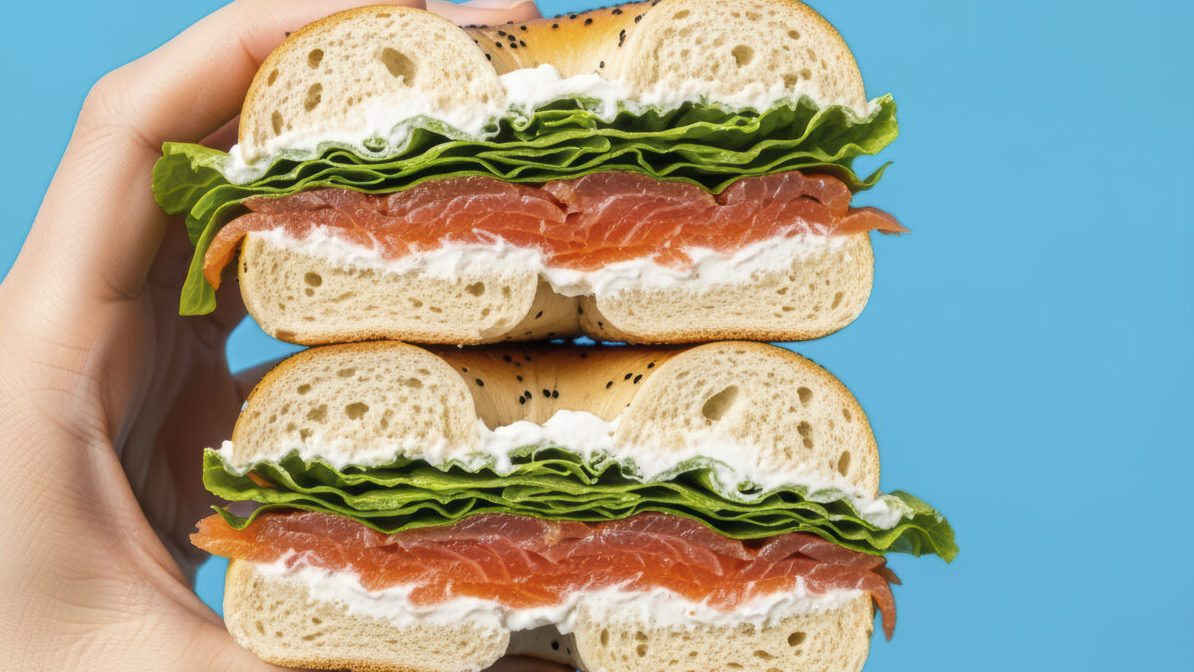
When managing weight, many people reach for salmon instead of chicken breast. Whether served over a salad or stacked on a bagel, salmon boosts protein intake and satisfies appetite. However, the potential issue lies not in the salmon itself, but in how it is prepared and paired. Opting for smoked salmon over fresh salmon and pairing it with a bagel heavily spread with cream cheese can drive calorie, sodium, and saturated fat intake far higher than expected.
The Hidden Sodium in Cured Salmon
Salmon is naturally rich in protein and omega-3 fatty acids such as eicosapentaenoic acid (EPA) and docosahexaenoic acid (DHA). Protein helps preserve muscle mass and increases satiety, while EPA and DHA support cardiovascular health by lowering blood triglycerides.
However, when salmon is consumed as smoked salmon, sodium content requires careful scrutiny. Because smoked salmon undergoes curing or seasoning with salt during production, its sodium levels are substantially higher than those of raw or fresh salmon. High-sodium diets are directly linked to elevated blood pressure. Both the Ministry of Food and Drug Safety in South Korea and the World Health Organization (WHO) recommend that adults keep their daily sodium intake below 2,000 mg.
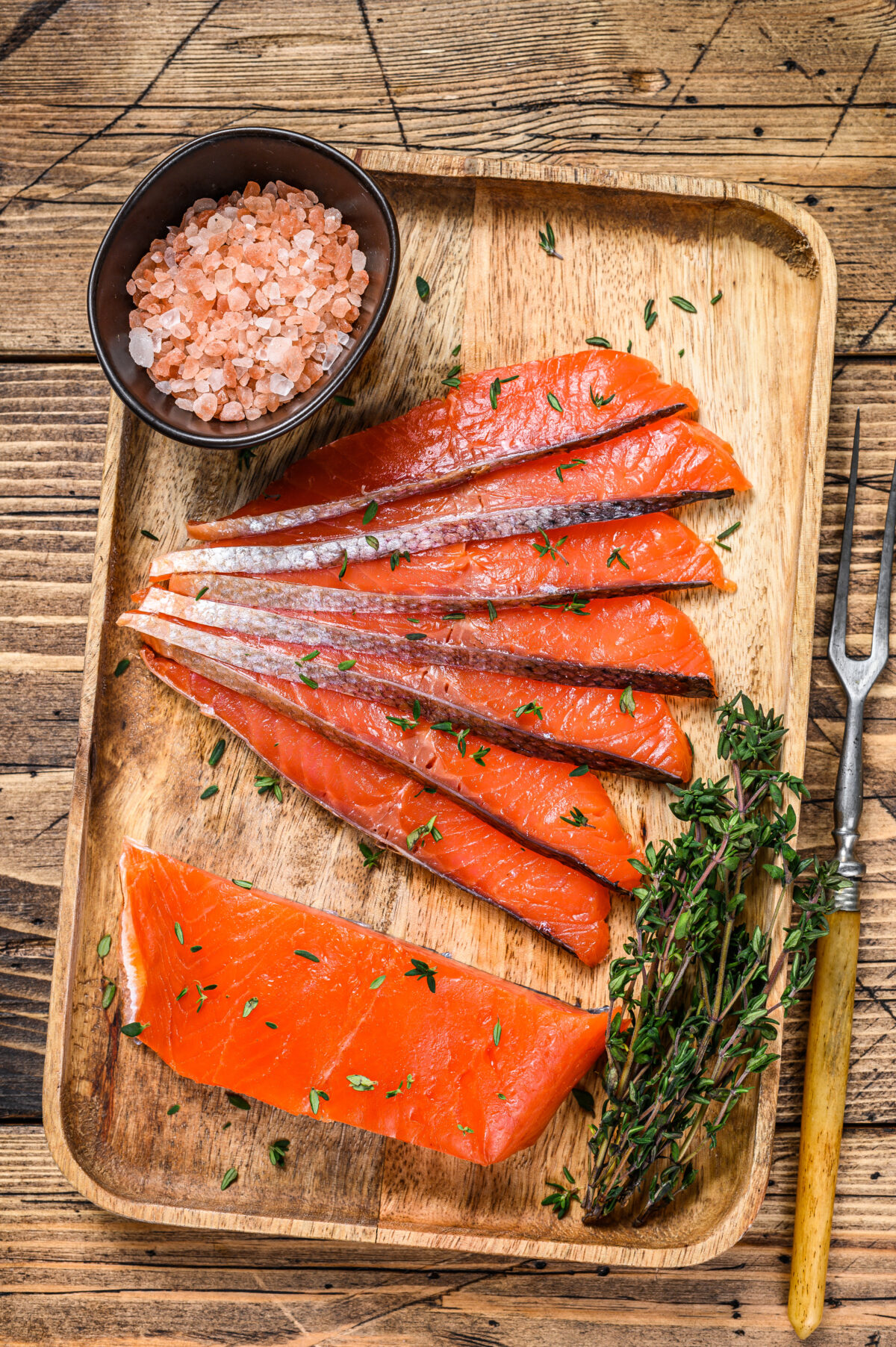
Data from South Korea’s Rural Development Administration shows that fresh salmon contains 95 mg of sodium per 100 grams. By contrast, commercial smoked salmon products sold in South Korea contain significantly more. One popular product using 98% salmon and 2% refined salt contains 341 mg of sodium per 100 grams (17% of the daily reference value). Another product containing 98.5% salmon and 1.5% salt packs 378 mg per 100 grams (19% of the daily value). Side by side, these smoked salmon products contain 3.6 to 4 times more sodium than fresh salmon.
Adding just 50 grams of smoked salmon to a bagel or salad delivers 170 to 190 mg of sodium. When combined with other ingredients—such as bread, cheese, and capers or sauces—total sodium intake quickly escalates. When purchasing smoked salmon, consumers should compare sodium content across brands and inspect ingredient labels rather than focusing solely on calorie and protein totals.
Cream Cheese, Saturated Fat, and Vascular Health
For weight management, the portion size of cream cheese is another critical factor. Primary ingredients like milk and cream make cream cheese inherently high in fat. Two tablespoons (31 grams) of a typical cream cheese spread supply 80 calories, 7 grams of fat, and 4.5 grams of saturated fat.
Many cafes and bagel specialty shops serve bagels stuffed with a thick layer of cream cheese. A four-tablespoon portion (62 grams) adds 160 calories and 9 grams of saturated fat from the cheese alone. That single serving represents 60% of the 15-gram daily saturated fat reference value used on South Korean nutrition labels.
Consuming excess calories beyond daily expenditure leads to body fat storage and weight gain. Furthermore, excessive saturated fat intake raises low-density lipoprotein (LDL) cholesterol in the bloodstream. Elevated LDL cholesterol can cause arterial plaque buildup, narrowing and hardening blood vessels, accelerating atherosclerosis, and increasing the risk of heart disease and stroke.
Balancing Calories with Smarter Preparation
Adding a bagel further increases the energy density of the meal. Ministry of Food and Drug Safety data indicates that one plain bagel (110 grams) contains roughly 300 calories.
Combining one plain bagel with 50 grams of smoked salmon and two tablespoons of cream cheese creates a meal of approximately 520 calories. Increasing the cream cheese to four tablespoons pushes the total to 600 calories—a substantial single-meal intake for anyone aiming to lose weight.
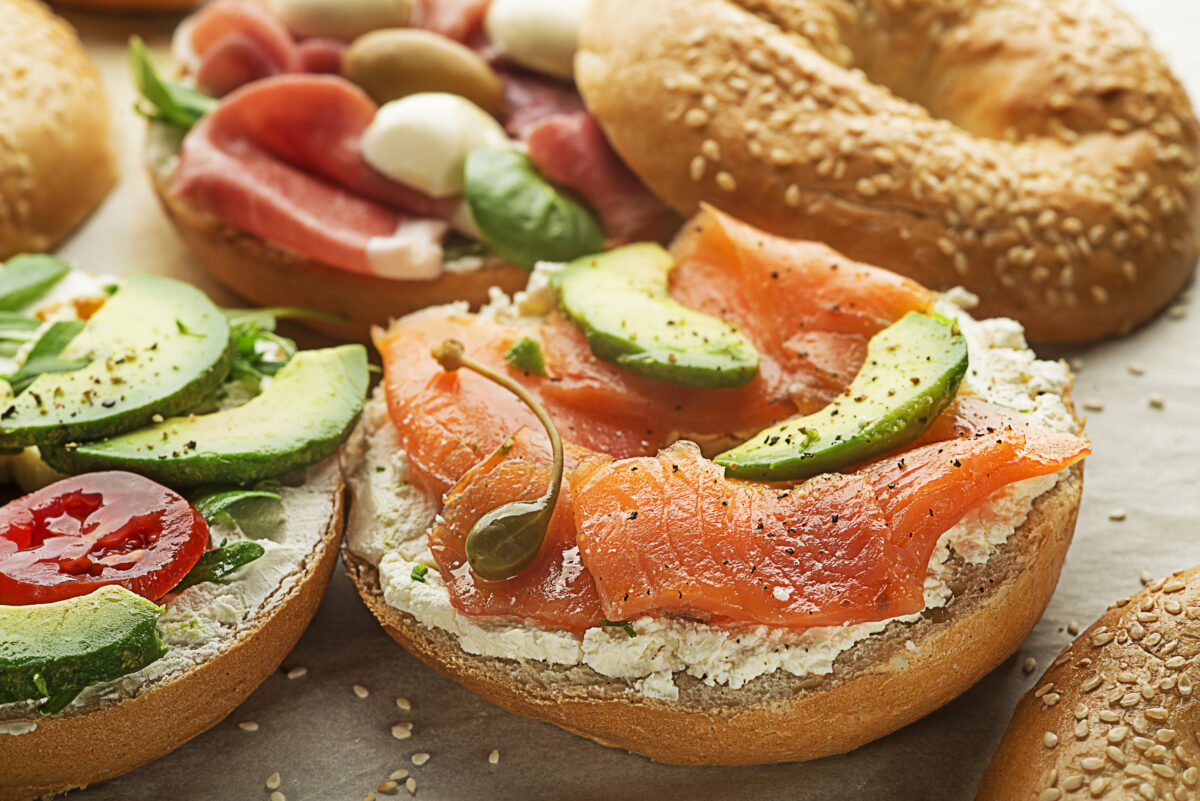
Enjoying this classic combination does not require eliminating it entirely. Dicing down the amount of cream cheese and selecting reduced-fat alternatives significantly cuts saturated fat. When buying smoked salmon, selecting brands with lower sodium levels helps protect blood pressure. Additionally, using half a bagel to make open-faced toast and piling on fresh tomatoes, red onions, and leafy greens adds volume, fiber, and texture without unwanted calories.