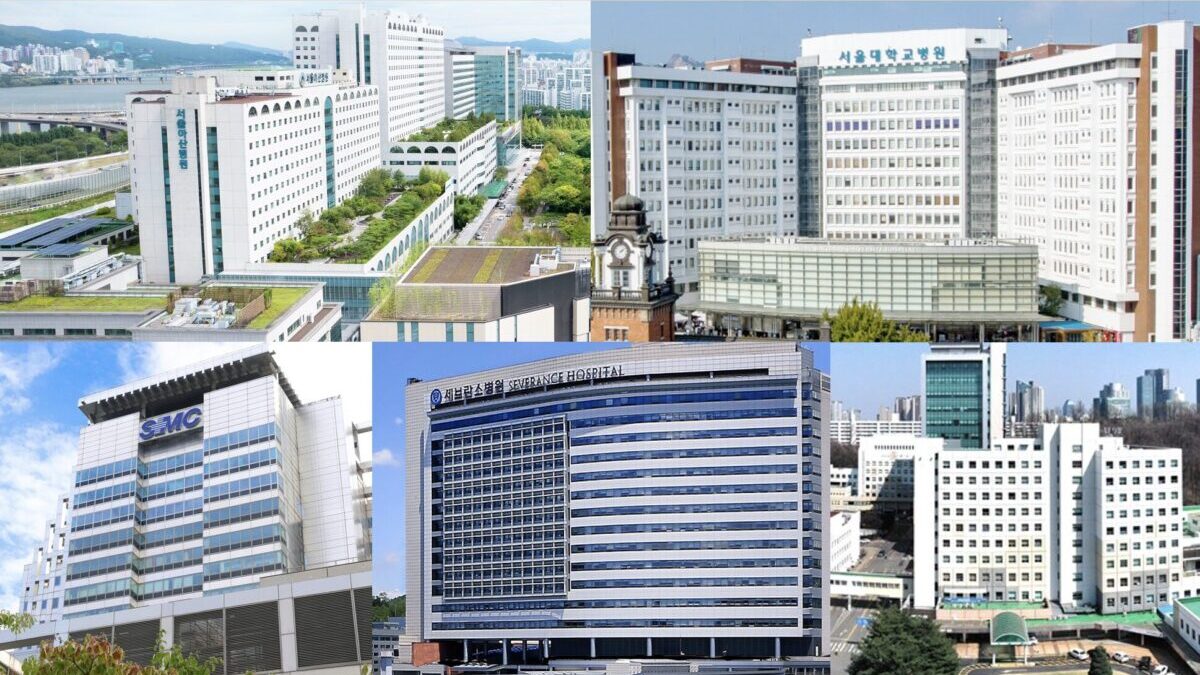
Asan Medical Center and Samsung Medical Center earned Grade 1 ratings in the latest national patient experience survey, while Seoul National University Hospital, Seoul St. Mary’s Hospital, and Severance Hospital received Grade 2. Meanwhile, Pusan National University Hospital was the only tertiary general hospital in South Korea to receive a Grade 3 rating.
The findings stem from the "2025 (5th) Patient Experience Survey," released on July 31 by the Health Insurance Review & Assessment Service (HIRA). The evaluation gathers direct feedback from discharged inpatients on whether medical staff listened attentively, provided adequate treatment explanations, and treated them with respect. It also assesses hospital safety, environment, patient rights protection, and emotional support to evaluate overall healthcare experiences.
Among Seoul’s 14 tertiary general hospitals, results split evenly, with seven institutions earning Grade 1 and seven receiving Grade 2. Health officials emphasized, however, that the ratings should not be interpreted as a direct report card on clinical competence, as the survey does not measure surgical success rates, mortality, or outcomes for severe conditions like cancer and heart disease..
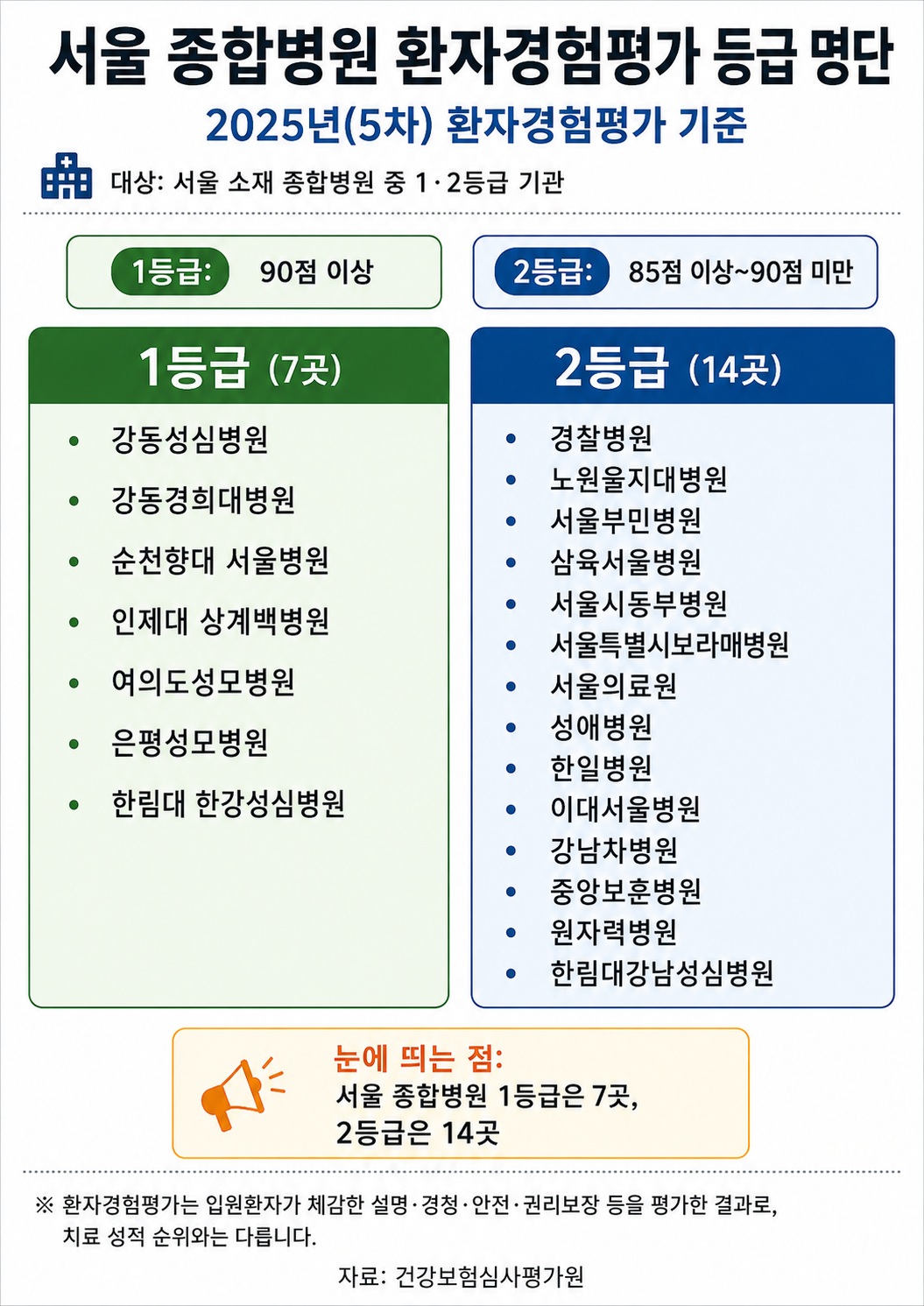
Seoul Tertiary Centers Split 7-7 Between Grades 1 and 2
Seoul’s tertiary general hospitals divided into two distinct groups under the new grading system. The seven institutions receiving Grade 1 included Asan Medical Center, Samsung Medical Center, Korea University Anam Hospital, Korea University Guro Hospital, Kyung Hee University Hospital, and Konkuk University Medical Center.
The seven earning Grade 2 were Seoul National University Hospital, Seoul St. Mary’s Hospital, Severance Hospital, Gangnam Severance Hospital, Kangbuk Samsung Hospital, Ewha Womans University Mokdong Hospital, Chung-Ang University Hospital, and Hanyang University Hospital. None of Seoul's tertiary centers received a Grade 3 or lower.
Nationally, Pusan National University Hospital stood out as the sole institution among South Korea’s 47 tertiary general hospitals to receive a Grade 3 rating, which designates an overall score between 80 and 85 points. While Pusan National University Hospital averaged 83.44 points across the seven individual evaluation categories—the lowest among tertiary centers—HIRA determines final grades using a weighted overall score rather than a simple average.
Disparities also emerged among general hospitals in Seoul. Seven facilities—including Kangdong Sacred Heart Hospital, Kangdong Kyung Hee University Hospital, Soonchunhyang University Seoul Hospital, Inje University Sanggye Paik Hospital, Yeouido St. Mary’s Hospital, Eunpyeong St. Mary’s Hospital, and Hallym University Hangang Sacred Heart Hospital—achieved Grade 1. Fourteen others, including the National Police Hospital, Seoul Medical Center, Boramae Medical Center, Ewha Womans University Seoul Hospital, and the Central Veterans Hospital, received Grade 2.
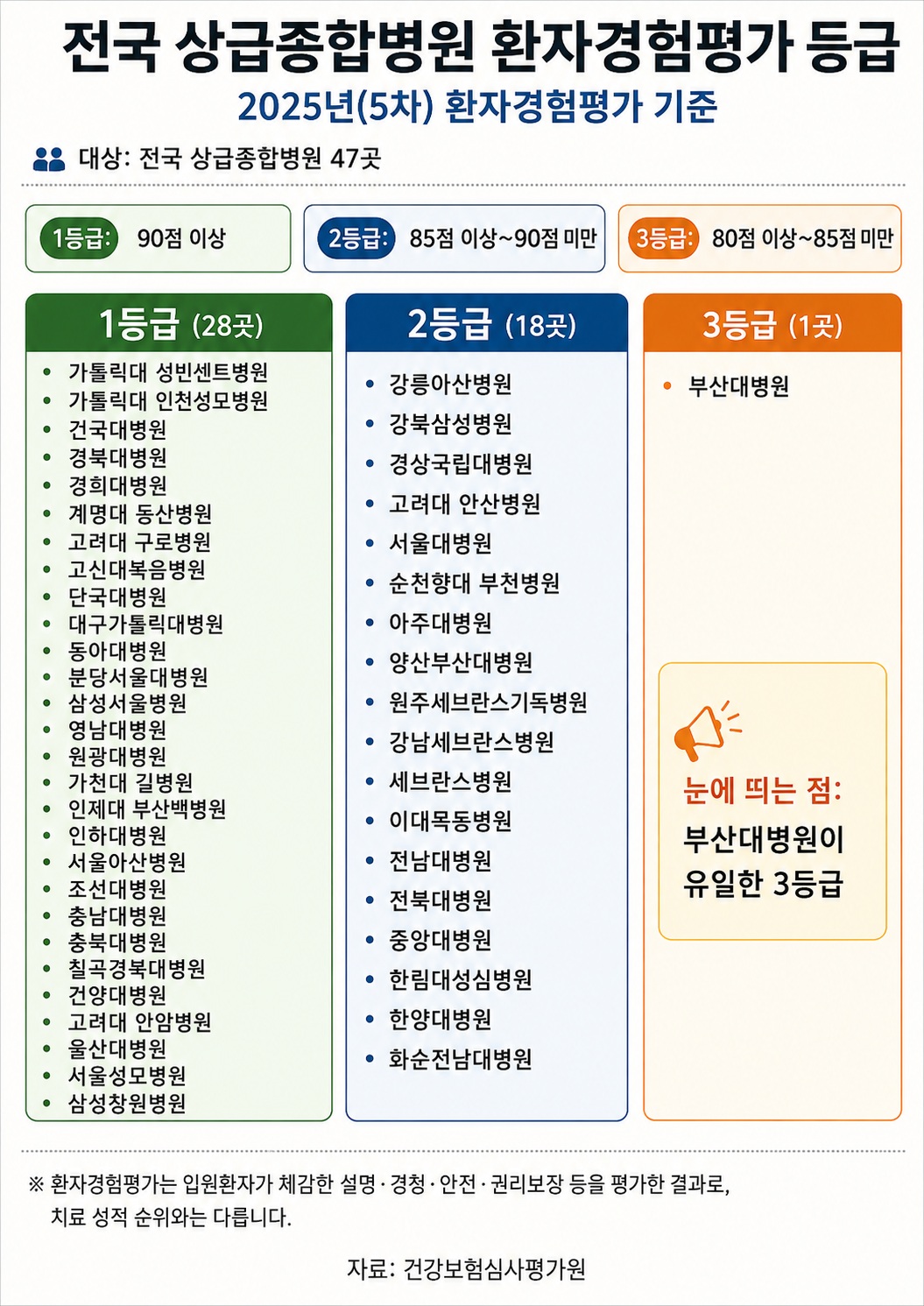
HIRA Discloses Hospital Ratings in Tiered Grades for First Time
First introduced in 2017, the Patient Experience Survey is now in its fifth cycle, following previous releases in 2018, 2020, 2022, and 2024. While past surveys disclosed exact overall and category scores by institution, this round marks the first time HIRA has categorized results into Grades 1 through 5. Under the scale, Grade 1 represents an overall score of 90 points or higher; Grade 2 covers 85 to 89 points; Grade 3 spans 80 to 84 points; Grade 4 ranges from 75 to 79 points; and Grade 5 applies to scores below 75 points.
Out of 363 evaluated institutions, 57 hospitals (15.7%) earned Grade 1. Grade 2 went to 85 institutions (23.4%), Grade 3 to 129 (35.5%), Grade 4 to 80 (22.1%), and Grade 5 to 12 (3.3%), with 11 facilities excluded from grading.
The fifth survey evaluated 376 tertiary and general hospitals from August through December 2025. Mobile surveys were sent to 630,487 adults hospitalized for at least one day and discharged within 2 to 56 days, yielding 130,435 responses. Outpatients, pediatric patients, psychiatric inpatients, and those in day wards or palliative care were excluded.
High Marks for Identity Verification, Lower Scores for Emotional Support
Across all evaluated institutions, the average overall score was 87.54 points. Among the seven categories, overall assessment scored highest at 89.31 points, followed by nursing care (88.99 points), patient safety and hospital environment (88.86 points), and protection of patient rights (87.70 points). Physician care scored 86.89 points, while medication and treatment processes scored 86.35 points.
Emotional support—evaluated as a standalone category for the first time—recorded the lowest score at 82.37 points.
A closer look at specific metrics highlighted clear areas of strength and weakness. "Patient identity verification"—confirming patient identities prior to administering medication or tests—earned the highest individual score at 91.40 points, followed closely by nurses' respect and courtesy at 90.46 points.
Conversely, metrics measuring communication and empathy scored substantially lower. Whether staff provided "comfort and empathy" when patients experienced anxiety or distress scored lowest at 82.37 points. "Opportunities to meet and talk with a physician" scored 84.11 points, while "providing information regarding physician rounding times" received 84.76 points. Patients consistently rated soft communication skills lower than facility quality or advanced medical equipment.
Grade 1 Does Not Imply Superior Clinical Outcomes
Health experts caution against using these grades as a definitive ranking of overall medical quality.
Tertiary general hospitals handle varying proportions of high-severity and complex cases. Factors such as patient age, department mix, and length of stay vary significantly by institution and heavily influence patient perceptions. Consequently, a Grade 2 rating for Seoul National University Hospital, Seoul St. Mary’s Hospital, or Severance Hospital does not indicate inferior medical expertise. Likewise, a Grade 1 rating does not guarantee superior treatment outcomes for severe diseases.
Instead, the assessment provides valuable insight into patient-centered care, answering whether hospitals listen to patients, communicate effectively, and maintain a safe, respectful environment—metrics that traditional clinical capability measures alone cannot capture.