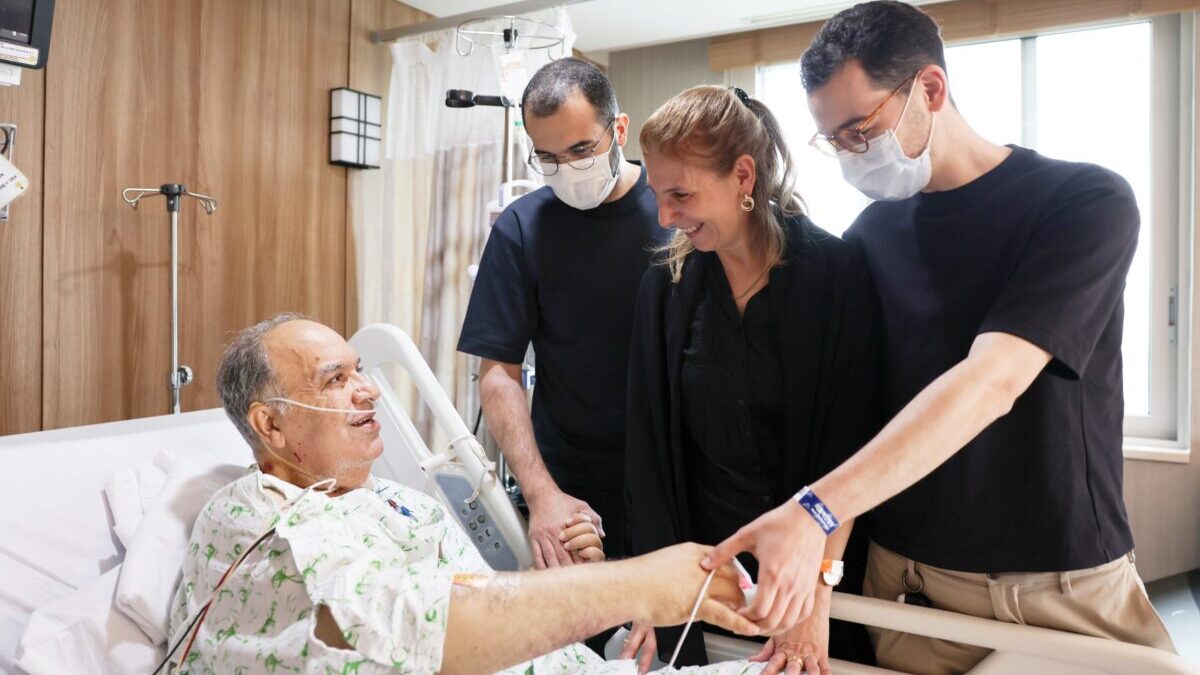
When Mohamed El Kettani, a 64-year-old Moroccan-born dual citizen of France and Morocco, was told that a liver transplant was virtually impossible in France, his second son, Omar El Kettani, refused to give up. As a 30-year-old cardiac surgeon practicing in France, Omar began scouring global medical literature and surgical track records for alternative options. His search led him and his older brother, Hachim El Kettani, 33, directly to Asan Medical Center in Seoul, South Korea.
Mohamed was suffering from end-stage liver failure complicated by progressive liver cancer. Weighing nearly 135 kilograms, his large physical frame made it impossible to obtain a sufficiently sized liver graft from a single living donor without endangering the donor’s safety. The family ultimately opted for a highly specialized "2-to-1 living-donor liver transplant," a procedure in which surgeons transplant portions of livers from two separate donors into a single recipient.
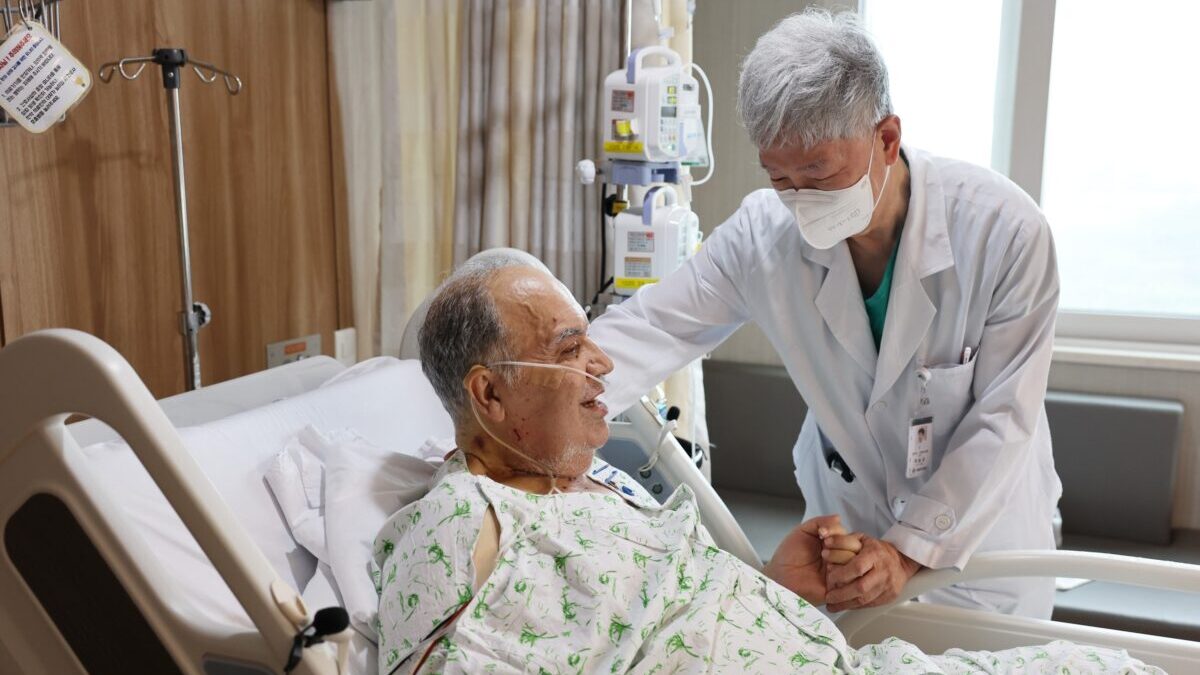
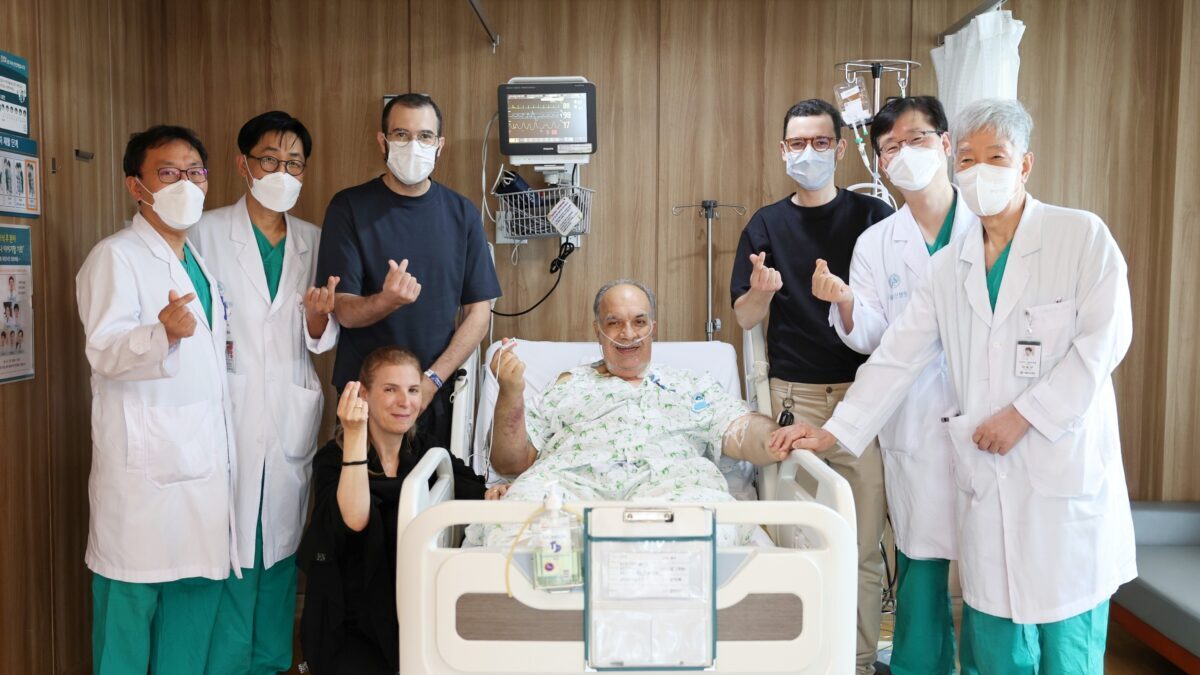
On May 22, a liver transplant team at Asan Medical Center successfully performed the 17-hour operation, transplanting portions of both sons' livers into their father across three operating rooms operating simultaneously. The hospital announced on May 30 that all three men had recovered smoothly.
Balancing Donor Safety and Recipient Needs
In living-donor liver transplantation, ensuring that a safe volume of liver tissue remains with the donor is just as critical as providing enough liver to sustain the recipient. Although the liver regenerates over time, leaving too little liver in a donor increases the risk of postoperative liver failure. Conversely, if a transplanted graft is too small relative to the recipient’s body mass, it cannot adequately meet the body's metabolic demands.
A 2-to-1 living-donor transplant solves this imbalance by harvesting safe amounts of liver tissue from two donors. To accommodate Mohamed's large frame, the surgical team removed the left lobe from his eldest son, Hachim, and the right lobe from his second son, Omar, to graft into their father.
A World-Leading Record in Adult Living-Donor Transplants
Why did a French physician decide to bring his father 10,000 kilometers to South Korea? While France maintains a robust overall liver transplantation system—recording a rate of 21.2 liver transplants per million people in 2024 according to the French Biomedicine Agency—its experience with adult living-donor transplants remains heavily restricted. In 2024, France performed 16 living-donor liver transplants, all of which involved pediatric recipients receiving a donor's left lobe; zero adult living-donor liver transplants were recorded that year. In fact, between 1998 and the end of 2024, France performed a cumulative total of 622 living-donor liver transplants.
By comparison, Asan Medical Center alone has logged 664 cumulative 2-to-1 living-donor liver transplants, including Mohamed's case. The technique was first devised in 2000 by Lee Seung-gyu, a distinguished professor of liver transplantation and hepatobiliary surgery at Asan Medical Center, marking a global first. When the hospital reached 9,000 cumulative liver transplants in April 2025, living-donor procedures accounted for 7,502 of them, alongside 1,498 deceased-donor transplants. While France's 622 living-donor cases over 27 years and Asan's 664 dual-donor cases represent different timeframes and surgical scopes, the disparity highlights the unmatched volume of complex adult living-donor cases managed in Seoul.
Overcoming Advanced Cancer, Blood Type Mismatches, and Complex Anatomy
Mohamed’s medical journey began roughly 20 years ago when he contracted hepatitis C. Although antiviral medication cured the infection a decade ago, extensive liver damage had already progressed to cirrhosis and liver failure. During evaluations for the French transplant waiting list in late 2025, doctors discovered liver cancer. An initial tumor was treated with transarterial embolization, but a follow-up scan in February revealed a new 6-centimeter tumor that had invaded the portal vein, the primary blood vessel carrying blood from organs such as the intestines into the liver.
Because portal vein invasion drastically increases the risk of post-transplant cancer recurrence, eligibility criteria in France are exceptionally strict, and French physicians determined that Mohamed was excluded from transplant eligibility. Concerned about the risks his sons would face by donating parts of their livers, Mohamed initially refused to travel to South Korea. He relented after extensive persuasion from his sons, arriving in Seoul in April.
Further hurdles emerged upon their arrival. Omar's blood type was incompatible with his father's. However, Asan Medical Center had already performed more than 1,100 ABO-incompatible liver transplants, allowing the team to proceed.
At 8:00 a.m. on May 22, operations began simultaneously in three separate surgical suites. Professor Song Ki-won and Professor Jeong Dong-hwan resected the donor grafts—removing Hachim's left lobe using a minimal-incision approach with an abdominal incision under 10 centimeters, while harvesting Omar's right lobe laparoscopically.
Meanwhile, Distinguished Professor Lee Seung-gyu and Professor Moon Deok-bok removed Mohamed's diseased liver. To prevent cancer cells from spreading given the suspected portal vein invasion, they employed a "no-touch technique" to minimize manipulation of the tumor. When placing the two grafts into the recipient, surgeons discovered that the space beneath Mohamed's diaphragm was narrower than expected. The team resolved the issue by gently repositioning his right kidney and adrenal gland slightly toward the front and lower part of the abdomen. The marathon surgery concluded past 2:00 a.m. the following morning.
Inspiration for a Fellow Surgeon
While a single case cannot represent a direct comparison between the overall medical care systems of France and South Korea, it highlights Asan Medical Center’s specialized mastery in high-difficulty adult living-donor liver transplantation.
Reflecting on the experience, Omar expressed deep gratitude for the care his family received. "During our stay at Asan Medical Center, our family was deeply impressed by the overwhelmingly advanced medical technology and hospital system, and especially by the humane attitude of sincerely caring for patients," he said. "As someone working as a cardiac surgeon in France, I found myself thinking that I would like to receive training at Asan Medical Center someday."