"South Korea is among the top 10 markets in GSK’s global clinical research. More than 70 clinical programs are currently underway here."
Strong clinical trial activity reflects far more than sheer volume. It demonstrates the ability to enroll eligible patients on schedule, execute complex trial procedures to international standards, and generate reliable data through capable medical institutions and research teams. Particularly in areas such as oncology, hematologic cancers, and immune diseases—where patient characteristics must be carefully stratified—this foundation becomes a competitive edge that shapes global development strategy.
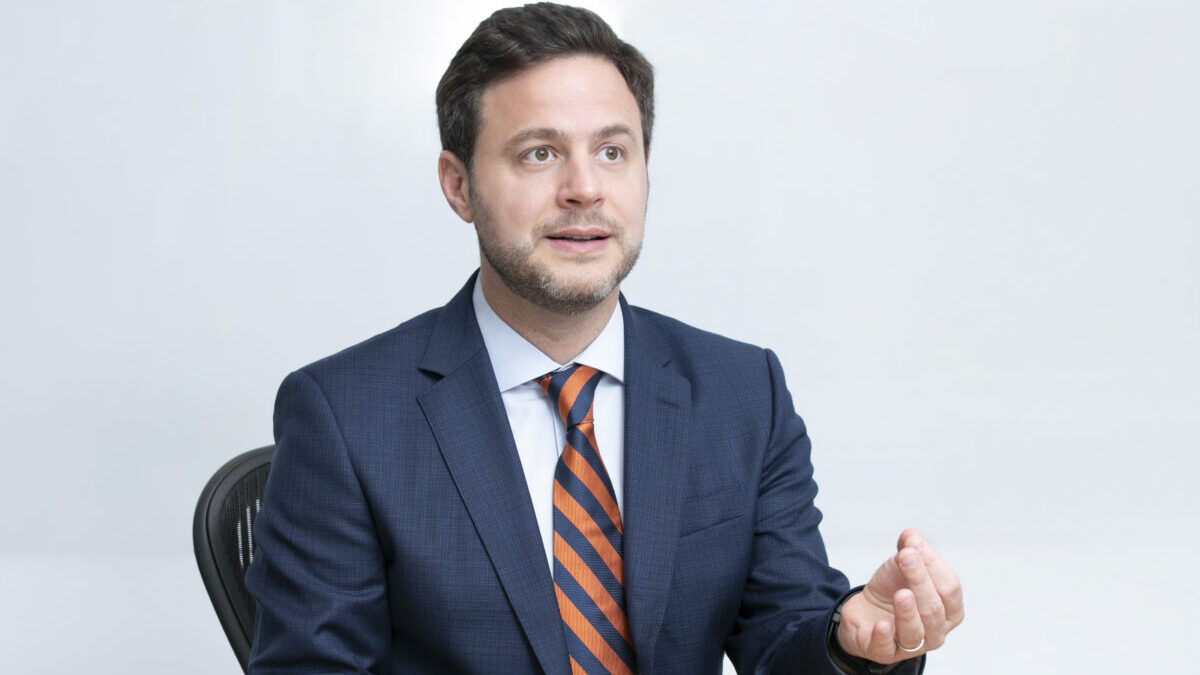
As he marked his first anniversary in the job, Guna Riediger, CEO of GSK Korea, described the South Korean market’s importance not in revenue or units sold, but in "clinical development capabilities." In South Korea, the company is running not only Phase 3 trials ahead of new drug approvals, but also early-stage Phase 1 and Phase 2 trials. This means South Korea has moved beyond importing and selling already-developed medicines to become a strategic hub directly participating in global new drug development.
Kormedi.com recently met with Riediger to discuss his experiences in South Korea’s pharmaceutical and biotech market over the past year and where the company plans to take its business next. This year marks 40 years since GSK established its local subsidiary in South Korea. A native of Brazil, Riediger has worked at GSK for more than 20 years, holding roles across Latin America and in the company’s global vaccines business before taking charge of the South Korean subsidiary.
A Strategic Development Partner in Global R&D
Riediger said he rates the market highly for its medical infrastructure and the expertise of its researchers. Major medical institutions in South Korea are conducting global clinical trials across areas including cancer, blood disorders, and immune diseases, supported by internationally recognized clinicians and researchers.
"South Korea’s health care infrastructure is astonishing and impressive," Riediger said. "Clinicians, clinical trial researchers, and a wide range of health care professionals are creating a world-class research environment."
Clinical research conducted in South Korea is not a separate program limited to domestic patients; it is part of GSK’s global new drug development process carried out worldwide. Treatment efficacy and safety data accumulated at local medical institutions serve as evidence to demonstrate a new drug’s effectiveness, while the experience of clinicians and researchers helps shape subsequent trials and development strategy.
"Ongoing clinical research here is directly incorporated into GSK’s global new drug development programs and is closely connected to research worldwide," Riediger said. "It is not only a market with strong growth potential, but also an important country that supports GSK’s global R&D strategy."
This also carries direct benefits for patients. When patients participate from the early stages of clinical development, those who have not seen sufficient benefit from existing treatments gain early access to novel candidate compounds. Furthermore, incorporating patients' clinical characteristics and real-world treatment environments into global data helps secure the evidence needed for future approvals and clinical practice.
Expanding Beyond Clinical Trials to Manufacturing and Biotech Partnerships
That role extends beyond clinical trials. Production facilities and technological capabilities at local companies also support GSK’s global supply chain. One example is its contract manufacturing partnership with Samsung Biologics for biopharmaceuticals. The manufacturing capacity secured there is used not only for domestic supply but also to meet global market demand for GSK products.
"Our collaboration with Samsung Biologics is a concrete example of leveraging a partner’s capabilities and infrastructure," Riediger said. "It is contributing not only to demand in South Korea, but also to supporting demand globally."
GSK is also working with domestic pharmaceutical companies through contract sales organization (CSO) arrangements that outsource drug sales. This approach links medicines developed by GSK with local sales networks to deliver treatment options to more clinicians and patients. Collaboration with local companies is thus expanding from clinical development to manufacturing and commercialization.
Riediger said he also intends to expand R&D collaboration with biotech companies. Recently, the chief medical officer (CMO) and chief patient officer (CPO) of GSK’s global organization visited South Korea to discuss ways to strengthen cooperation with the local science and biotech industries.
"South Korea has a very dynamic and attractive biotech innovation ecosystem," Riediger said. "We want to expand the scope of collaboration so that scientific achievements from here do not remain within a single country, but can benefit patients around the world."
The goal is to connect locally developed technologies with GSK’s global networks for clinical trials, regulatory approvals, and manufacturing. Biotech companies can secure pathways to validate and commercialize research outcomes in global markets, while GSK integrates strong technologies and research capabilities into its global new drug pipeline.
Pricing and Reimbursement Determine Patient Access
However, strong research and manufacturing capabilities alone are not enough to maintain status as a global strategic market. For newly developed drugs to reach patients in practice, access issues such as post-approval pricing and National Health Insurance reimbursement must also be addressed.
"The value and price of innovation are not issues for any single country; they are important topics of discussion across many markets worldwide," Riediger said. "The key is how governments assess the value of innovation and how quickly they reflect it in the health care system."
He also expressed interest in evaluations of "innovative" and "semi-innovative" pharmaceutical companies. When judging the contributions of global pharmaceutical companies, he noted that stakeholders should look beyond simple sales figures or whether a company maintains a research institute, broadly considering diverse contributions such as investment in clinical trials, use of production facilities, technology collaboration, and development of specialized talent.
Prioritizing Adult Immunization in a Super-Aged Society
Another defining feature of the South Korean market, Riediger said, is rapid population aging. South Korea has entered a super-aged society, with people 65 and older accounting for more than 20% of the population. As the elderly population grows, demand is rising not only for the treatment of cancer and chronic diseases, but also for health care strategies that prevent infectious diseases and reduce hospitalization risks.
"What I want to emphasize is not simply vaccines, but ‘vaccination,’" Riediger said. "Innovation and technology must reach the patients and population groups that actually need them, and that is the role vaccination plays."
Developing and obtaining approval for new vaccines alone produces limited societal impact. To reduce hospitalizations and treatment demand while easing families’ caregiving burdens, vaccination must be delivered to older adults in practice through medical institutions, with target groups and support coverage clearly defined.
Riediger stressed that perceptions must also shift away from the idea that vaccines are mainly needed for infants and young children. As diseases carrying a high risk of severe progression in older adults increase—such as shingles and respiratory syncytial virus (RSV) infection—adult immunization is becoming an important policy tool in a super-aged society to reduce health care costs and pressure on hospital beds.
"Many health care systems focus more on treating disease after it occurs than on investing in prevention," Riediger said. "The value of vaccination should not be limited to preventing infectious diseases; it should be assessed to include reduced hospitalizations and bed utilization, eased treatment burdens, and improved quality of life."
Compared with Latin America, South Korea has the economic capacity and health care infrastructure to adopt new vaccines and treatment technologies. At the same time, because the pace of aging is fast, it must move more quickly to establish prevention policies for adults and older adults.
"High-income countries like South Korea have the conditions to invest in innovation and recognize its value," Riediger said. "Going forward, we need to broaden our view beyond childhood and adolescent immunization to include diverse age groups and population segments, including older adults."
Over the past 40 years in South Korea, GSK has built its presence around respiratory diseases, vaccines, and HIV treatments. More recently, it has been expanding its business into solid tumors including gynecologic cancers, as well as hematologic cancers such as myelofibrosis and multiple myeloma, and immune diseases. The strategy is to provide treatment and prevention options tailored to patients’ life stages and disease stages—from prevention to chronic disease management to complex cancer treatment.
Asked how he hopes GSK Korea will be remembered, Riediger said, "I hope it will be remembered as a company that has introduced innovation to South Korea over the past 40 years and contributed to the development of the health care system." He added, "We will continue to steadily introduce new treatment and prevention options, and we will work with various stakeholders—including the medical community and policy authorities—so that patients can access these innovations more smoothly."