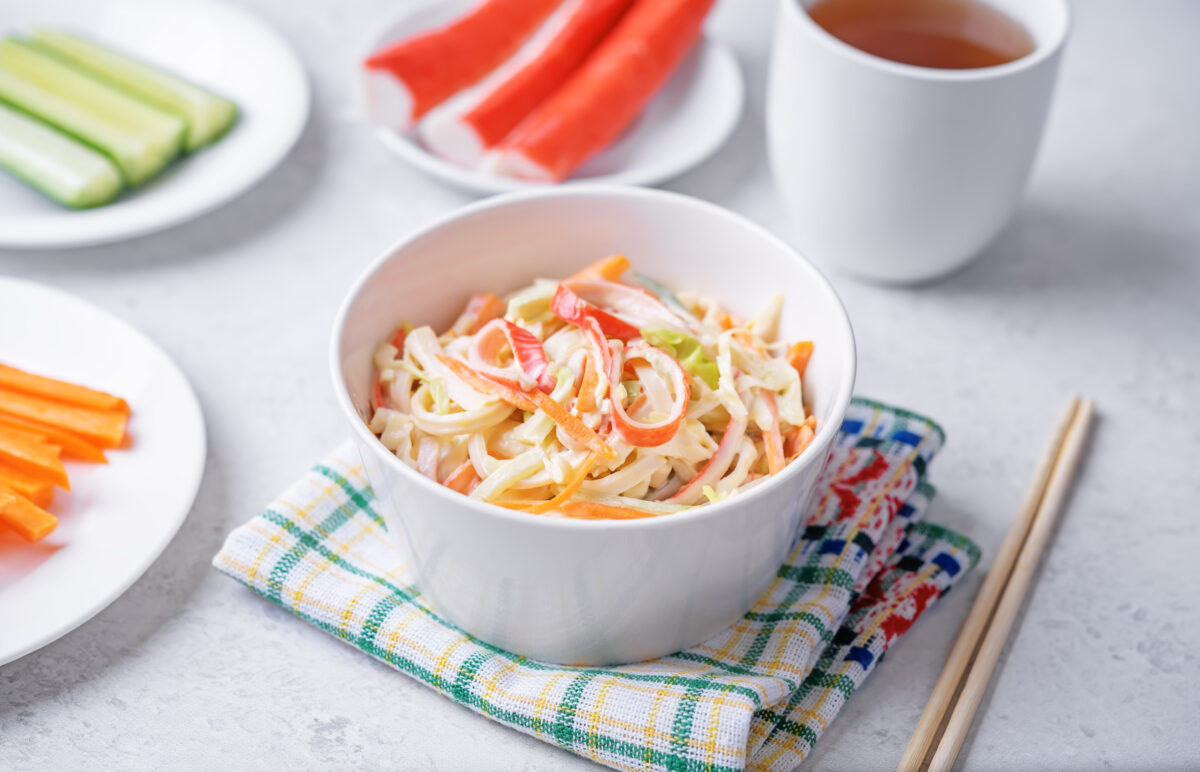
Tossing shredded cucumber, cabbage, and carrots with torn imitation crab sticks and mayonnaise is a popular way to make a quick, appetizing salad. Because the dish is loaded with fresh vegetables and fish-based protein, many view it as a light, weight-loss-friendly choice. However, depending on how much dressing is added and which ingredients are selected, its total calorie and carbohydrate counts can be surprisingly high.
While raw vegetables are naturally low in calories, the primary calorie driver in crab stick salad is the mayonnaise dressing. Traditional mayonnaise is made mostly from vegetable oil, making it exceptionally fat-dense. Fat provides 9 calories per gram—more than double the 4 calories per gram provided by carbohydrates or protein.
Standard commercial mayonnaise contains roughly 730 kcal and 80 grams of fat per 100 grams, which translates to approximately 110 kcal per tablespoon (15 grams). Typical home recipes often call for three to four tablespoons of dressing. Using just three tablespoons adds 330 kcal to the dish from the mayonnaise alone.
When combined with imitation crab, the calorie tally rises further. A standard 90-gram pack of commercial crab sticks provides about 80 kcal. Paired with three tablespoons of mayonnaise, these two components alone total 410 kcal—excluding the calories from added vegetables, sweet corn, or extra sugar. Even when divided into two or three side portions, a single serving can easily contribute 140 to 210 kcal. As health authorities like the Korea Disease Control and Prevention Agency emphasize, successful weight management requires balancing overall energy intake against expenditure, making high-fat dressings a crucial area to monitor.
Hidden Starches in Processed Fish Paste
The main protein component—imitation crab—also warrants a closer look at its nutrition facts panel. Crab sticks are manufactured primarily from surimi, a processed fish paste made from ground white fish. While fish is the core ingredient, manufacturers add starches, sugars, and salt to achieve a chewy texture and savory flavor.
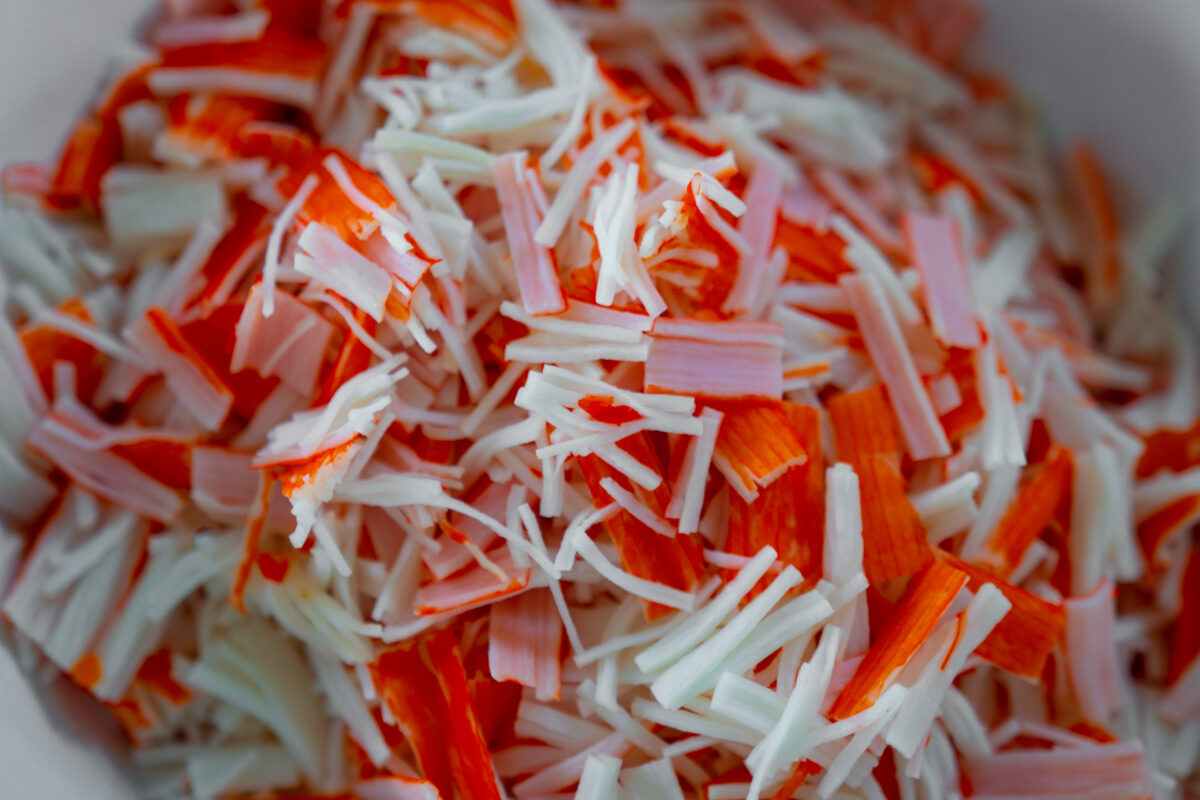
As a result, carbohydrate levels vary significantly across products:
Product B (Higher Fish Content): Formulated with 81% fish paste along with potato starch, sugar, and salt. A 90-gram package contains 10 grams of carbohydrates and 4 grams of sugar.
Product C (Lower Fish Content): Contains 62% fish paste blended with wheat starch and modified food starch. A 100-gram serving contains 19 grams of carbohydrates and 3 grams of sugar.
Because carbohydrate and sugar content depend heavily on formulation, checking ingredient lists for fish paste percentages and added starches is essential when choosing products.
Smart Swaps for a Lighter Dressing
To reduce the calorie density of crab stick salad without sacrificing flavor, dietitians recommend adjusting dressing preparation:
Measure Dressing: Avoid squeezing mayonnaise directly into the bowl. Measuring with a spoon prevents accidental overconsumption.
Switch to Reduced-Calorie Mayonnaise: Reduced-fat mayonnaise contains around 405 kcal per 100 grams, or roughly 61 kcal per tablespoon. Using three tablespoons saves nearly 150 kcal compared to traditional mayonnaise.
Use Yogurt-Based Alternatives: Replacing half or all of the mayonnaise with unsweetened plain yogurt or Greek yogurt significantly lowers total fat while increasing protein. Adding lemon juice, vinegar, yellow mustard, or cracked black pepper maintains brightness and flavor.
Adjust Ratios: Increase the proportion of high-fiber vegetables—such as cucumbers, cabbage, carrots, and onions—relative to the amount of crab sticks and dressing used.