For patients diagnosed with severe aortic stenosis and their families, one question often comes first: “Can it be treated without opening the chest?”
Aortic stenosis occurs when the valve at the entrance to the aorta — the vessel that carries blood from the heart to the rest of the body — narrows. Without treatment, the risk of heart failure or sudden death can rise sharply.
Once the condition reaches a severe stage, medication alone typically cannot restore the valve to normal. Ultimately, the narrowed valve must be replaced.
There are two main approaches. One is surgical aortic valve replacement, in which surgeons open the chest, remove the diseased valve and implant an artificial valve. The other is TAVI (Transcatheter Aortic Valve Implantation) — also called “percutaneous aortic valve replacement” — in which doctors deliver an artificial valve through a blood vessel such as the femoral artery in the thigh.
For patients unlikely to tolerate surgery, TAVI is often the first option considered
TAVI does not require opening the chest. It generally involves less burden from general anesthesia, and patients often recover faster. That has made it an important option for super-elderly patients age 80 and older, and for patients whose risk is simply too high to undergo open-chest surgery.
This includes patients with significantly reduced heart function or poor lung or kidney function. When patients have multiple comorbidities — such as cerebral infarction, myocardial infarction, asthma, chronic lung disease, dialysis or severe obesity — surgery and general anesthesia themselves can be a major burden.
Park Yong-hwan, director of the Cardiovascular Center at Samsung Changwon Hospital of Sungkyunkwan University, said, “The first thing we look at is whether the patient is someone who would have difficulty undergoing surgery.” He added, “If a patient is older and has many comorbidities, surgical treatment can be difficult, so we more actively consider TAVI.”
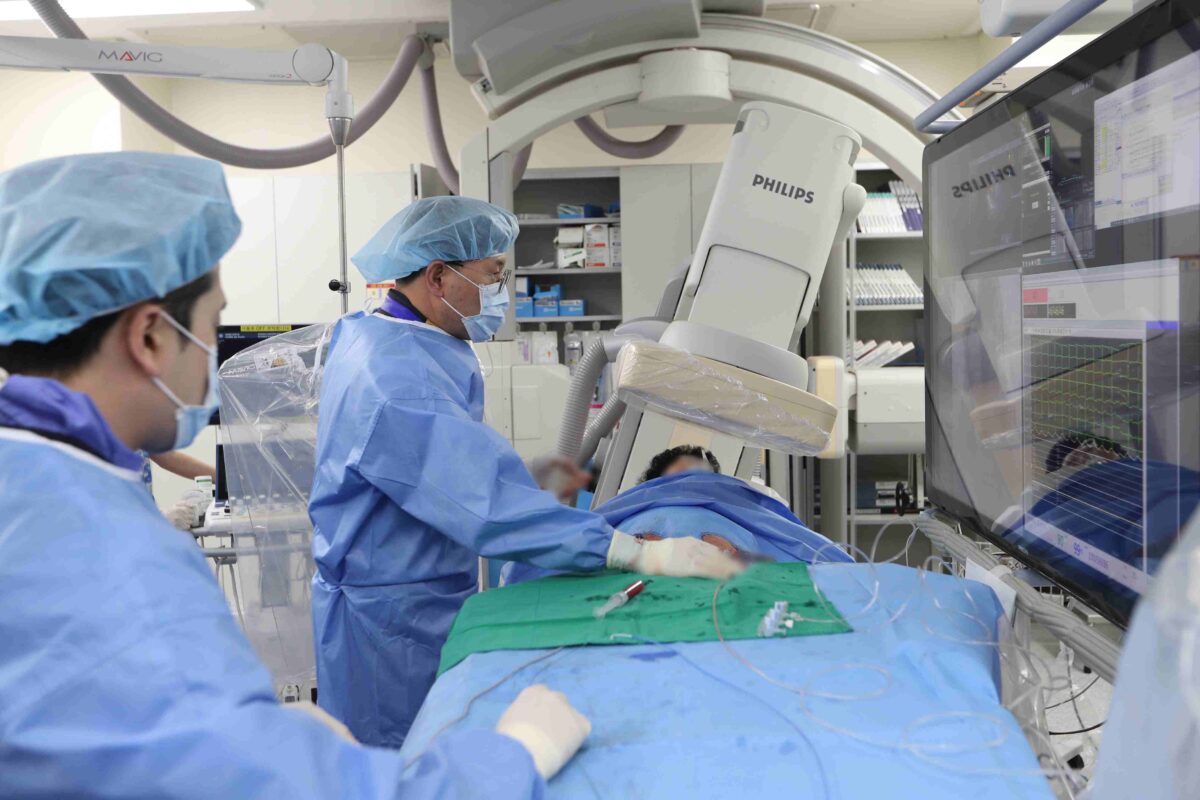
Patients with severe aortic stenosis are typically older. Many live with shortness of breath and declining stamina, thinking, “It must just be age.” They often do not seek care until fluid builds up in the lungs or daily life becomes difficult.
For these patients, TAVI can reduce the burden of treatment. Because doctors implant an artificial valve through a blood vessel without opening the chest, it can create a treatment option even for patients who previously could not undergo surgery.
July 6 National Health Insurance criteria eased… patients under 80 can also receive 95% coverage
Recent changes to National Health Insurance coverage criteria are especially significant for patients in their 60s and 70s. In the past, patients under age 80 faced a high bar to receive TAVI, such as having to be classified as high-risk for surgery. If they did not meet the criteria, their out-of-pocket share rose to 50% or as high as 80%. As a result, many hesitated because of the cost even when TAVI could help medically.
The criteria changed starting July 6 this year. If the heart team agrees on the need for TAVI, patients under age 80 now have a greater chance to receive treatment with a 5% out-of-pocket share.
Park said, “Even for patients in their 70s, if a multidisciplinary consultation concludes that TAVI would be best, the criteria have changed in a direction that allows them to receive the 5% rate.” He added, “It’s good news for patients who couldn’t get treatment because of the cost.”
That does not mean “anyone can get TAVI.” Instead, it makes the heart team’s judgment even more important. The team must assess whether the patient can tolerate surgery, whether TAVI is technically feasible, and what options would remain if the patient needs treatment again later.
The younger the patient, the more doctors must consider ‘valve lifespan’ and the possibility of retreatment
Even so, TAVI is not the answer for every patient. Park, a cardiologist, also said, “TAVI is a good treatment, but I can’t say it’s the best for every patient.”
Key factors include the patient’s age, comorbidities, surgical risk, valve anatomy, vascular condition and the amount of time the patient is expected to live. That is why the calculus changes for relatively younger patients with low surgical risk — in other words, patients who can undergo open-chest surgery. For these patients, surgery may be better than TAVI.
The reason is valve durability. Artificial valves are not meant to last forever. Over time, their function can decline, and that may require another replacement procedure.
Park said, “An 80-year-old patient and a 60-year-old patient inevitably have different treatment goals.” For an 80-year-old, what matters is receiving safe treatment now and recovering quickly. But for a patient in their 60s, doctors must also look 10 years and 20 years ahead.
He compared it to marriage. “You can’t decide (to get married right away) just because it looks good at first, can you? You also have to see whether you can live together for 20 years, 30 years,” he said.
The same applies to TAVI. You may want to choose the less taxing treatment right now, but you also need to consider what paths remain if you need treatment again in the future.
Of course, long-term data on TAVI valves continues to accumulate. Overseas, there is also a trend toward lowering the age at which it is used. Still, for younger patients, the first treatment choice requires greater caution — whether to do surgery first and then TAVI later if needed, or to do TAVI first, and so on. From the outset, the decision must factor in the possibility of retreatment.
That is why the saying “TAVI for older patients, surgery for younger patients” is half right and half incomplete. Age is an important criterion, but it is not the only one.
If the vascular route is narrow or valve anatomy is unfavorable, the decision changes
There is another important criterion. With TAVI, doctors must deliver the artificial valve through blood vessels to the front of the heart. So clinicians cannot look only at the valve itself. They also have to evaluate the route used to reach it.
That is why doctors perform a TAVI CT scan. They must check whether the femoral artery in the thigh is wide enough, whether there is severe calcification in the vessel wall, and whether the vessels are highly tortuous. In some cases, the coronary artery openings are low, calcification around the valve is severe, or the aortic anatomy is unfavorable.
These variables can change the choice of treatment. Patients may think “the procedure is simple,” but clinicians evaluate the valve shape and vascular route, the location of the coronary arteries and coexisting heart disease together.
In particular, if coronary artery disease, aortic disease or other valve disease is present, surgery may be more advantageous. That is because surgery does not only replace the aortic valve; when needed, it can address other heart and vascular problems at the same time.
This is both why TAVI is a good treatment and why it requires caution. It is less invasive, but it is not a treatment that can be applied easily to just anyone.
What special criteria must a hospital meet to perform TAVI?
TAVI is not a treatment a hospital can start simply because it wants to. Under Ministry of Health and Welfare and Health Insurance Review and Assessment Service criteria, a TAVI center must have facilities capable of cardiac surgery, cardiopulmonary bypass equipment or ECMO, specialist staff in cardiology and cardiothoracic surgery, and a certain level of experience in cardiac surgery and cardiovascular procedures.
Samsung Changwon Hospital (President Oh Ju-hyun) also began performing TAVI after meeting these Ministry of Health and Welfare “approval” criteria. It was also recognized as qualified for “independent procedures” by global artificial-valve suppliers such as Edwards Lifesciences and Medtronic. In a sense, it is “the minimum gateway any hospital must clear to perform TAVI,” Park, the cardiovascular center director, said.
But from the perspective of patients and caregivers, that basic gateway matters. TAVI cannot be considered a simple procedure just because it does not involve opening the chest. It is a highly complex treatment that should be performed only at hospitals with established standards and a team-based system.
Samsung Changwon Hospital began TAVI in 2023. But it did not happen overnight. Park said he had already encountered TAVI during training at the Aortic Center at the University of Chicago Medical Center in 2014.
At the time, however, the cost burden in Korea was heavy, and the barrier was high for regional patients to choose it while absorbing tens of millions of won. “Even then, there were always patients, and I always thought we needed to be able to offer them TAVI as an option,” he said.
More important than the name of the treatment is the patient’s ‘entire remaining life’
TAVI and surgery are not only competitors. Both are treatments aimed at resolving a narrowed aortic valve. The difference lies in the approach and the conditions that best fit the patient.
When choosing a treatment, Park said, “You have to look at the patient’s entire remaining life.” That means weighing whether it is less taxing right now, whether it is more stable over the long term, and how likely it is that additional treatment will be needed in the future.
In the end, the question is simple. It is not “Do you open the chest or not?” It is “What is the safest path that will help this patient the longest, right now?”
[FAQ] Questions patients ask most often
If you’re older, is TAVI always better?
TAVI is often advantageous for older patients, but not always. Doctors must also consider valve anatomy, vascular condition, comorbidities and surgical risk.
Can patients in their 60s and 70s also receive TAVI with a 5% out-of-pocket share?
The likelihood has increased. Regulations were recently changed so that if a hospital heart team agrees on the need for TAVI, patients under age 80 can also receive treatment with a 5% out-of-pocket share. However, it is not automatically applied to all patients under 80. The patient’s condition and whether coverage criteria apply must be checked carefully.
Why is surgery considered first for younger patients?
Because they have a longer time ahead. Artificial valves can lose function over time. Younger patients must choose the first treatment method with the possibility of retreatment 10 years or 20 years later in mind.
What if problems arise again later after open-chest surgery?
In some cases, it is possible. When a tissue valve implanted through surgery ages and its function declines, doctors sometimes perform a “valve-in-valve” treatment by placing a TAVI valve inside it. However, it is not possible for every patient, and the possibility of future retreatment must be considered from the time the first valve is implanted.
Expert source=Professor Park Yong-hwan (Cardiology), Cardiovascular Center, Samsung Changwon Hospital. He graduated from the Dongguk University College of Medicine and earned a Ph.D. in medicine at Dong-A University. After working at Samsung Changwon Hospital, he trained at Samsung Medical Center and served as a clinical instructor in cardiology. He holds certification as an interventional specialist. He currently serves as a professor in the Department of Internal Medicine at the Sungkyunkwan University School of Medicine, head of the Department of Internal Medicine at Samsung Changwon Hospital, director of the Cardiovascular Center, and director of the Clinical Cooperation Center.