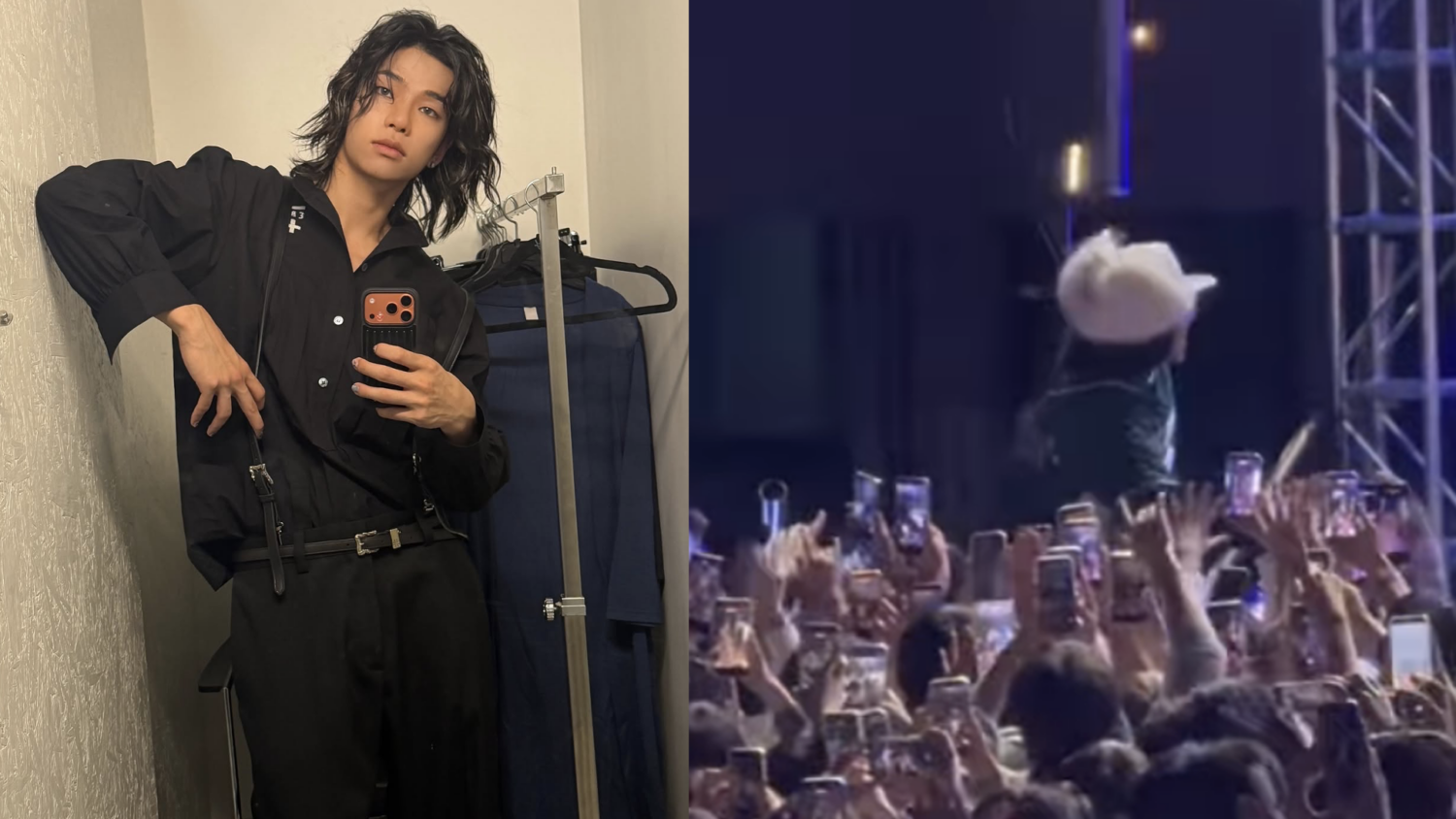
Tarzan, a member of the group ALLDAY PROJECT, suffered a frightening fall after throwing himself into the audience during a university festival performance.
A video of ALLDAY PROJECT performing on the Konkuk University festival stage on October 1 recently surfaced on social media. In the clip, Tarzan turned his back to the audience and threw himself toward the standing section while performing "Crash."
At the time, audience members were holding up their phones to film the performance. Because the crowd did not catch him as he suddenly leaped, Tarzan fell directly to the floor. The footage indicates he was attempting stage diving, a performance move in which an artist jumps from the stage into the crowd.
Tarzan stood up immediately after the fall and returned toward the stage with the help of a security guard. He then checked on the crowd's safety and continued the performance, asking, "Is everyone here OK? I’m sorry. You’re not hurt, right?" Although the situation could have resulted in a serious accident, no major injuries were reported.
Stage diving remains common overseas
Stage diving refers to a performer launching themselves from the stage into the audience.
In the United States and other countries, stage diving occurs frequently at rock, punk, and hardcore shows, as well as at select performances in South Korea. However, the practice is not universally permitted within those genres. Many venues explicitly prohibit stage diving based on house rules and safety conditions, as unannounced jumps can lead to serious injuries for both the artist and fans.
When a singer dives with their back turned to the crowd, assessing landing conditions becomes nearly impossible. For that reason, performance experts recommend signaling to the crowd before dropping and aiming for areas with sturdy, capable fans when possible.
If the audience fails to anticipate the jump—or lacks the space and capacity to support the artist—the performer can crash to the ground. Conversely, if a performer's weight concentrates on a single individual, that fan can suffer severe blunt-force trauma and fractures. A sudden impact can also cause concertgoers to lose their balance, risking a dangerous domino-effect crowd collapse.
Incidents include neck and spinal fractures
Unprepared stage dives have repeatedly led to catastrophic injuries worldwide. At a 2024 Trophy Eyes concert, a female audience member suffered a neck fracture and spinal damage after the vocalist jumped into the crowd.
During a Fishbone concert, an audience member sustained severe injuries, including skull and collarbone fractures. Rapper Coolio also attempted a stage dive, only to be injured when the crowd parted to avoid him.
At American rock and hardcore shows, front-row attendees generally follow an unspoken rule to stay alert for potential stage divers. However, industry observers note that stage diving has become increasingly dangerous in recent years, as more fans focus on recording performances on smartphones rather than keeping their hands free to assist or cushion falling performers.