"I’m taking my medication faithfully—so why is this happening again?"
It is a deeply frustrating question that patients with depression or bipolar disorder, along with their families, frequently ask in the examination room. Even when medication successfully stabilizes acute symptoms, the risk of a relapse can quietly climb when sleep schedules, light exposure, and daily activity rhythms drift out of sync with the environment.
A research team led by Professor Lee Heon-jung of the Department of Psychiatry at Korea University Anam Hospital has successfully tested a smartphone application paired with a wearable wristband that bridges this critical therapeutic gap.
The results of the multicenter clinical trial evaluating this circadian rhythm-based digital therapeutic app—named CRM (Circadian Rhythm for Mood)—were published online ahead of print on June 24 in the prestigious American Journal of Psychiatry. By tracking biological rhythms through everyday wearable devices and smartphones, the CRM platform predicts impending mood episodes and delivers personalized lifestyle interventions to head them off.
Targeting the Root of Mood Relapses
The human body relies on an internal clock operating on an approximate 24-hour cycle. When this circadian rhythm is disrupted, it can trigger depressive or manic episodes. Building on this biological vulnerability, the research team designed the CRM app to detect and correct subtle daily disruptions before full-blown symptoms return.
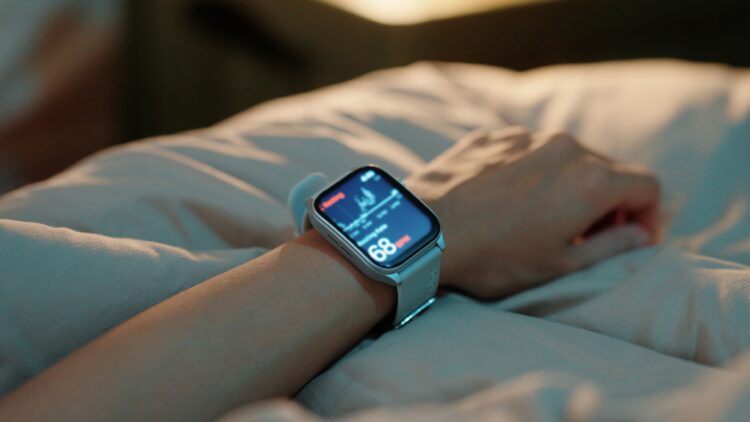
The system automatically aggregates data from a wearable wristband and smartphone, tracking activity levels, heart rate, sleep duration, and light exposure. By combining these metrics with user-logged mood updates, the app forecasts a patient's emotional trajectory over the next three days as low, moderate, or high risk. It then dispenses personalized behavioral recommendations, such as optimal wake-up times, targeted light exposure windows, and customized strategies to stabilize activity patterns.
Relapse Rates Slashed to One-Third
To test the platform's efficacy, the researchers conducted a rigorous, one-year clinical trial enrolling 93 adult patients with depression or bipolar disorder who were in a stable phase of their illness. The participants were recruited from five major university hospitals across South Korea: Korea University Anam, Guro, and Ansan hospitals; Inje University Ilsan Paik Hospital; and Pusan National University Hospital.
The study utilized a strict double-blind, sham-controlled design. Investigators randomly assigned 47 patients to the active CRM app group and 46 to a sham group that featured an identical interface but lacked any therapeutic logic or feedback mechanisms.
The outcomes were striking. The relapse rate within the CRM group was cut to approximately one-third of that seen in the control group. Conversely, patients using the sham app experienced a relapse rate 3.4 times higher than those utilizing the active digital therapeutic.
When measured by the number of relapses per 100 patient-years, the CRM group recorded 41.1 cases compared to a staggering 139.3 cases in the sham group. Furthermore, patients using the CRM app experienced shorter symptom durations and a significantly prolonged time to their first relapse. The platform not only reduced the frequency of relapses but also accelerated recovery and extended periods of clinical stability. Separate analyses of depressive and hypomanic symptoms consistently favored the CRM group, and no serious adverse events related to app usage were reported during the one-year trial period.

A Powerful Complement to Traditional Medicine
"Aligning the body clock is, in itself, an essential form of treatment," noted corresponding author Professor Lee Heon-jung, an expert in mood disorders, chronobiology, and digital therapeutics. "Relapse in mood disorders is rarely just a random resurgence of symptoms; it is deeply intertwined with misaligned biological rhythms involving light and activity. By analyzing a patient's lifestyle patterns in real time and resetting their internal clock, CRM functions as a powerful digital therapeutic that directly complements traditional pharmacological treatment."
Co-first authors Professor Yeom Ji-won and Professor Jung Jae-kwon emphasized the study's methodological strengths. "It is highly meaningful that we were able to map individual biometric characteristics using entirely automated sensor data and validate the feedback system through a rigorous, double-blind, sham-controlled trial," they stated. "We intend to advance this work with larger trials featuring optimized user interfaces and investigate the underlying biological mechanisms using specific biomarkers."
The CRM app was developed by Huseo Circadian Co., Ltd., a spin-off subsidiary of Korea University Medical Center’s medical technology holding company, co-founded by Professor Lee Heon-jung. The researchers clarified that while the company provided the application platform, it had no role in the study's design, data collection, statistical analysis, or interpretation. The research was funded by the National Research Foundation of Korea and a technology development program under the Ministry of SMEs and Startups.