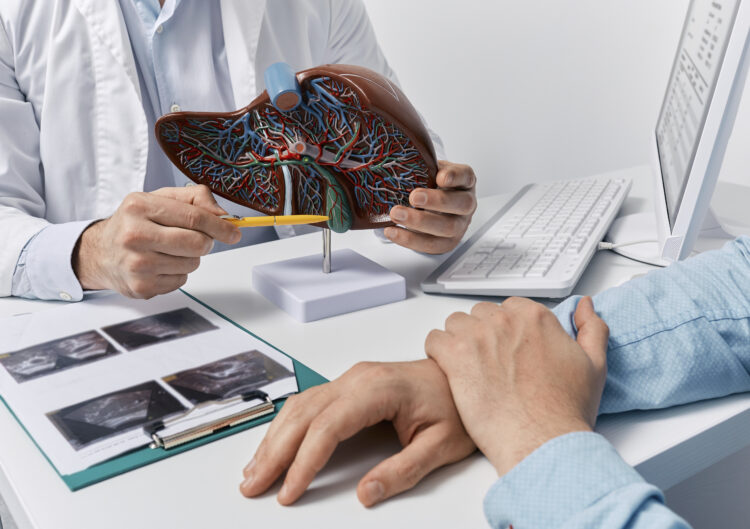
Hearing a doctor say that “the cancer has invaded the portal vein” can be deeply overwhelming for patients with liver cancer. It typically signals an advanced stage of the disease and a much more challenging treatment course. The portal vein—also called the hepatic portal vein—is a critical blood vessel that carries nutrient-rich blood from the intestines to the liver.
However, portal vein invasion does not affect every patient in the same way. A recent study suggests that clinicians can refine their treatment strategies based on how far the cancer has spread within the vein and how much liver function remains. A research team led by Professor Kim Yun-jun of the Division of Gastroenterology at Seoul National University Hospital recently announced results comparing the outcomes of radioembolization against combination immunotherapy in patients with hepatocellular carcinoma accompanied by portal vein tumor thrombosis (PVTT).
PVTT occurs when liver cancer cells invade the vessel and grow into a mass inside it. This can block or severely restrict blood flow, making liver function much more likely to deteriorate. Consequently, liver cancer with PVTT is notoriously difficult to treat and often carries a poor prognosis.
Evaluating Alternatives to Standard Drug Therapy
Treatment for liver cancer is heavily dependent on the extent of the disease and residual liver function. When tumors are small and liver function is well-preserved, doctors can opt for treatments that directly remove or destroy the cancer, such as surgery, liver transplantation, or radiofrequency ablation.
However, when the cancer invades major blood vessels, the therapeutic landscape becomes vastly more complex. These cases are typically classified as advanced liver cancer that cannot be managed by surgery alone. In this scenario, systemic drug therapies—such as immunotherapy or targeted therapy—become the primary options.
The combination immunotherapy evaluated in this study pairs atezolizumab with bevacizumab. Atezolizumab helps immune cells recognize and attack cancer, while bevacizumab inhibits angiogenesis, the process by which tumors form new blood vessels to grow.
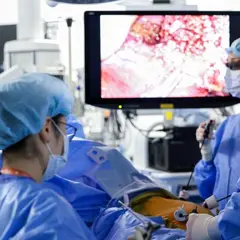
Yet, for patients whose cancer remains largely confined to the liver and whose portal vein invasion is relatively limited, radioembolization offers a compelling alternative. This procedure delivers tiny microspheres containing radioactive material directly to the tumor through the hepatic artery. Because liver tumors draw their blood supply primarily from the hepatic artery, this route concentrates radiation within the tumor area. Unlike external-beam radiation, radioembolization delivers targeted radiation from within the blood vessels immediately adjacent to the cancer.
To determine which patients benefit most from each approach, the researchers analyzed 213 patients with hepatocellular carcinoma and PVTT treated between 2016 and 2023. The patients received care at one of four major institutions: Seoul National University Hospital, the National Cancer Center, Severance Hospital, or Samsung Medical Center.
The cohort was divided into a radioembolization group and a combination immunotherapy group. The team compared overall survival, progression-free survival, tumor response rates, and safety profiles. Because baseline disease severity and liver function varied among individuals, the researchers applied statistical adjustments to ensure a well-balanced comparison.
A Clear Advantage Before Cancer Reaches the Main Trunk
The study revealed a stark contrast in outcomes: median overall survival was 27.5 months in the radioembolization group compared to just 8.6 months in the immunotherapy group.
However, this survival advantage was not uniform. The benefits of radioembolization were distinctly more pronounced when the cancer had not yet spread to the largest, main trunk of the portal vein. For patients whose portal vein invasion was limited to smaller branches or confined to a single hepatic lobe, the risk of death in the radioembolization group was only about 36% of that seen in the immunotherapy group. In other words, even with portal vein invasion, radioembolization remains a highly viable option if the main trunk of the vessel is clear.
Conversely, among patients whose cancer had already invaded the main portal vein trunk, the study found no statistically significant difference in survival between the two treatments. The two groups also showed comparable results regarding progression-free survival and tumor response rates.
For this reason, the researchers cautioned that the findings should not be oversimplified to mean that radioembolization is universally superior to combination immunotherapy.
Lower Rates of Ascites and Variceal Bleeding
Safety evaluations also yielded noteworthy insights. Severe ascites (fluid accumulation in the abdomen) affecting daily life occurred in 12.0% of the radioembolization group compared to 20.5% in the immunotherapy group. Similarly, the incidence of variceal bleeding was notably lower in the radioembolization group, at 1.7% versus 8.0%.
Importantly, there was no meaningful difference between the two groups regarding the worsening of Child-Pugh scores, a metric used to assess residual liver function in patients with cirrhosis or liver cancer.
The researchers noted that the study was a retrospective medical record review rather than a randomized, prospective clinical trial. While statistical adjustments were made to minimize confounding variables, the clinical status of patients at the time of treatment selection may still have influenced the outcomes.
Despite these limitations, the clinical takeaway for patients is clear: portal vein invasion does not automatically restrict treatment to a single path. Depending on the extent of the vascular invasion, the preservation of liver function, and how treatments can be sequenced with subsequent therapies, clinicians can tailor highly individualized care plans.
In the clinic, patients can advocate for themselves by asking three essential questions: Has the cancer invaded the main trunk of the portal vein? Is my current liver function robust enough to tolerate radioembolization? Can radioembolization be safely followed by systemic drug therapies or other anticancer treatments?

"Hepatocellular carcinoma accompanied by portal vein tumor thrombosis is historically difficult to treat and associated with a poor prognosis," said Professor Kim Yun-jun. "However, this study confirms that radioembolization can serve as an incredibly useful treatment strategy depending on a patient's liver function and the specific extent of portal vein invasion."
He added, "Because radioembolization keeps liver function relatively stable and can be seamlessly linked to subsequent anticancer therapies, it holds vital implications for sequential, personalized treatment strategies in advanced liver cancer."
The study was initially published online on September 24, 2025, and appeared in the January 2026 print issue of the international journal Diagnostic and Interventional Imaging.