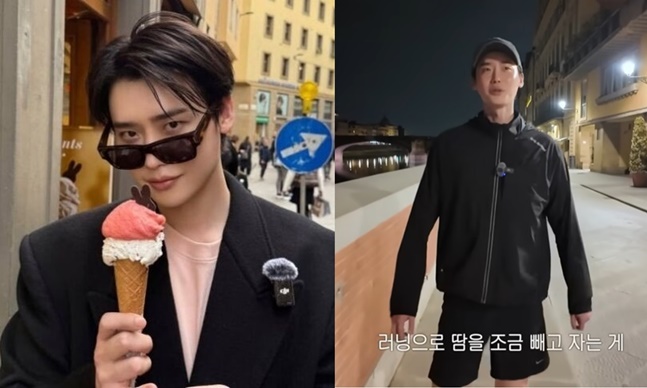
Actor Lee Jong-suk, 36, recently caught the attention of fans by working up a sweat immediately after indulging in an epic culinary feast.
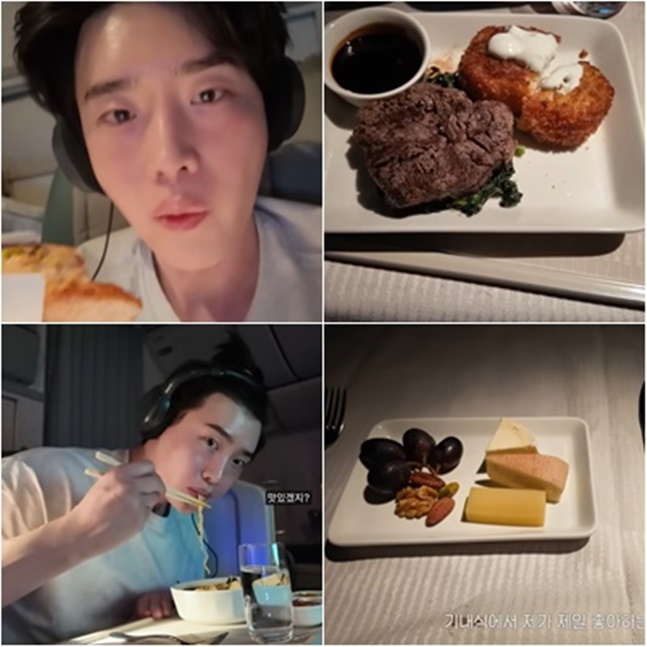
In a vlog posted to his YouTube channel, Lee documented his travels to Florence and Milan, Italy, to attend a luxury fashion show. His food journey began before departure with a "mukbang" (eating broadcast) in the airport lounge. On the flight, he proceeded to polish off a massive spread, including pizza, tenderloin steak, potato croquettes, cheese, biscuits, chocolate ice cream, ramen, and a grilled eel rice bowl. "I'm so full," Lee admitted, adding that his blood sugar had spiked and he felt sleepy.
Upon arriving in Florence, Lee ordered pasta via room service before heading to the fashion show. Later, while sightseeing at the Piazza del Duomo in Milan, he treated himself to gelato. Reflecting on his continuous eating, Lee joked, “As a celebrity, you’re not supposed to eat everything you want like this before a scheduled event, but I’m getting rounder and rounder.” Facing a photoshoot the next morning, he ultimately decided to head out for a late-night workout.
"I've been pushing it and eating nonstop, so I think I’ll feel less guilty if I sweat it out with a run before bed—I’ll jog a bit," Lee said. Motivated by the city's picturesque night view, he overcame his sluggishness and went for a jog. Online commenters reacted with admiration, writing, "He stays slim even after eating like that—I guess you really have to work out as much as you eat," and "Running at night feels so refreshing."
The model-turned-actor, who stands 185 cm tall and maintains a lean physique of around 68 kg, chose running as his countermeasure to the high-calorie itinerary. Lee, who has been dating singer-actress IU, 33, for four years, highlighted a classic yet highly effective workout.

The Benefits of Running and the Appeal of a Night Workout
Running is a quintessential aerobic exercise that burns a significant amount of energy in a relatively short period. It elevates the heart rate and increases energy expenditure, which helps reduce body fat and improve cardiopulmonary endurance. Consistent running also provides long-term health benefits, including better blood sugar regulation and enhanced cardiovascular health.
For individuals like Lee who prefer evening workouts, night running offers distinct advantages. Human body temperature and muscle function typically peak in the late afternoon and evening, meaning a workout of the same intensity can actually feel easier and yield higher performance.
Additionally, nighttime running serves as an excellent stress reliever, helping to dissipate the tension and fatigue accumulated throughout the day. Engaging in a light run or walk after dinner can also blunt post-meal blood sugar spikes, making it particularly beneficial on days when carbohydrate intake is high. However, fitness experts warn that high-intensity exercise right before bed can stimulate the nervous system and interfere with sleep. Conversely, morning runs excel at building consistency and regulating the body's circadian rhythm through exposure to natural sunlight.
Why Exercise Alone Isn't Enough: The Critical Role of Diet
While running offers numerous metabolic advantages, experts emphasize that exercise alone cannot offset a poor diet or guarantee sustained weight loss. Burning off all the calories from high-calorie foods like pizza or dessert through a single workout is exceptionally difficult. True weight management requires a consistent caloric deficit, where energy expenditure exceeds energy intake.
To achieve lasting results, running must be paired with structured nutritional management. Experts recommend a balanced diet rich in vegetables, whole grains, legumes, fish, and lean meats, while minimizing sugary drinks, desserts, greasy foods, and excessive late-night snacking.
Furthermore, post-workout nutrition is vital. Replenishing the body with protein and a moderate amount of carbohydrates helps prevent muscle loss and promotes satiety. Rather than resorting to extreme fasting, pairing regular running with appropriate caloric intake remains the most effective strategy for sustainable fat loss and long-term weight management.