

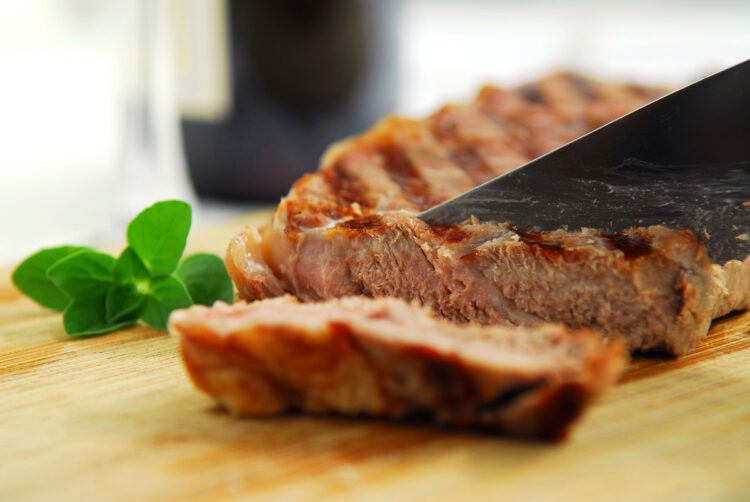
In South Korea today, the ‘low-carb, high-fat’ diet is arguably the most popular weight-loss method, often yielding high satisfaction as individuals frequently lose 2–3 kg within the first two weeks. However, there is a ‘trick’ that often goes unmentioned. The weight lost on a low-carb, high-fat diet is primarily ‘water’ and ‘muscle’—not the ‘body fat’ that should be the true target of any diet. Over time, this approach can damage health through various side effects.
How Can We Achieve True ‘Body Fat Loss’?
Body fat collectively refers to subcutaneous and visceral fat. It is surplus energy stored in fat cells when the body consumes more fuel from carbohydrates and fats than it expends. While it helps maintain body temperature, protects internal organs, and secretes hormones, excessive body fat leads to disease. Fat cells contain high levels of triglycerides and cholesterol; as they increase, patients develop insulin resistance and dyslipidemia, which are precursors to chronic conditions such as diabetes, cardiovascular disease, and cerebrovascular disease [1].
Body fat can be indirectly estimated using Body Mass Index (BMI). What is the ideal BMI? According to a large-scale meta-analysis tracking the relationship between BMI and mortality, being overweight increases the risk of premature death. Mortality was found to be lowest when BMI was between 20 and 22 [2]. (For reference, South Korea defines a BMI of 23 or higher as ‘overweight,’ while the United States uses a threshold of 25 or higher.)
Some claim to be “overweight but healthy,” but even those currently without metabolic issues cannot be complacent. Over time, hypertension, dyslipidemia, and fatty liver typically emerge, leading to chronic illness [3]. “Healthy obesity” is essentially a myth without scientific evidence [4]. Therefore, improving health requires the reduction of excessive body fat. Because losing fat through exercise alone is difficult, ‘diet’—what we eat—is far more efficient.
Which Diet Is Superior for Fat Loss?
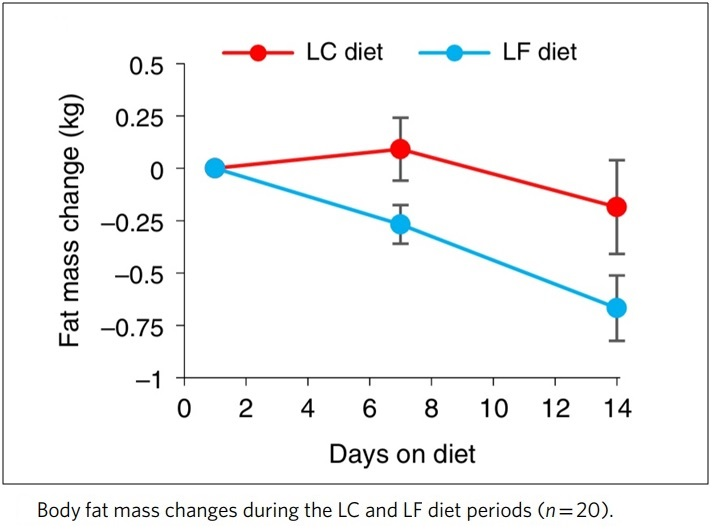
A 2021 study by the U.S. National Institutes of Health (NIH), published in the journal Nature, compared a low-carbohydrate ‘keto’ diet with a low-fat ‘plant-based’ diet. Twenty obese adults (average BMI 28) alternated between a keto diet (75% fat, 10% carbs) and a plant-based diet (10% fat, 75% carbs) for two weeks each. The results showed a marked difference: the keto group reduced body fat mass by 180 g, while the plant-based group lost 670 g [5].
Why Is the Keto Diet Less Effective for Fat Loss?
The reason is simple. While the body burns fat for energy during ketosis, the diet simultaneously requires consuming more fat than the body expends. Thus, low-carb, high-fat is not an efficient way to reduce stored body fat; a plant-based diet proved much more effective.
Ketone production is a specialized metabolic survival mechanism evolved to endure starvation. This is not a normal metabolic process but a short-term detour used when the supply of glucose—the body's primary energy source—is cut off.
Consequently, if this abnormal state is prolonged, side effects are inevitable. A high-fat diet can cause gastrointestinal issues such as nausea, vomiting, and bad breath, which may lead to weight loss simply through decreased appetite. Furthermore, ‘constipation’ is common because animal-based foods lack dietary fiber [6].
If continued long-term, excessive saturated fat intake raises cholesterol and triglycerides, while the body becomes deficient in essential vitamins, minerals, and antioxidants. Serious risks include dehydration due to blood acidification, electrolyte imbalance, hypoglycemia, kidney failure, osteoporosis, and life-threatening events such as myocardial infarction or cerebral infarction [7, 8, 9, 10, 11].
While low-carb, high-fat may offer short-term weight loss, it is unsustainable and potentially hazardous to long-term health. It is crucial not to be deceived by ‘gimmick diets’ that compromise well-being.
Song Mu-ho, MD, PhD, Specialist in Orthopedic Surgery & Lifestyle Medicine
References
1. HE Bays, PP Toth, PM Kris-Etherton, et al. Obesity, adiposity, and dyslipidemia: a consensus statement from the National Lipid Association. J Clin Lipidol 2013;7(4):304-383.
2. D Aune, A Sen, M Prasad, et al. BMI and all cause mortality: systematic review and non-linear dose-response meta-analysis of 230 cohort studies with 3.74 million deaths among 30.3 million participants. BMJ 2016;353:i2156.
3. SL Appleton, CJ Seaborn, R Visvanathan, et al. Diabetes and cardiovascular disease outcomes in the metabolically healthy obese phenotype: a cohort study. Diabetes Care 2013;36(8):2388-2394.
4. JO Hill, HR Wyatt. The Myth of Healthy Obesity. Annals of Internal Medicine 2013;159(11): 789-790.
5. KD Hall, J Guo, AB Courville, et al. Effect of a plant-based, low-fat diet versus an animal-based, ketogenic diet on ad libitum energy intake. Nature medicine 2021;27(2):344-353.
6. C Wibisono, N Rowe, E Beavis, et al. Ten-year single-center experience of the ketogenic diet: factors influencing efficacy, tolerability, and compliance. The Journal of pediatrics 2015;166(4):1030-1036.
7. D Nordli. The ketogenic diet: uses and abuses. Neurology 2002;58(12 Suppl 7):S21-4.
8. HC Kang, DE Chung, DW Kim, HD Kim. Early- and Late-onset Complications of the Ketogenic Diet for Intractable Epilepsy. Epilepsia 2004;45(9):1116-1123.
9. H Noto, A Goto, T Tsujimoto, M Noda. Low-Carbohydrate Diets and All-Cause Mortality: A Systematic Review and Meta-Analysis of Observational Studies. PLOS ONE 2013;14(2):e0212203.
10. M Mazidi, N Katsiki, DP Mikhailidis, et al. Lower carbohydrate diets and all-cause and cause-specific mortality: a population-based cohort study and pooling of prospective studies. Eur Heart J 2019;40(34):2870-2879.
11. Y Schutz, JP Montani, AG Dulloo. Low‐carbohydrate ketogenic diets in body weight control: A recurrent plaguing issue of fad diets?. Obesity Reviews 2021;22:e13195.











