To truly understand an object, we often look at its components. By breaking a whole into small pieces to analyze their individual properties, we hope to reveal the truth of the entire structure. This mindset, known as "reductionism," has fueled nearly all scientific advancement. However, in the field of nutrition science, reductionism has a significant blind spot: it ignores the fact that when parts come together, new characteristics emerge that do not exist in isolation.
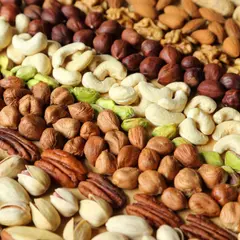
As Aristotle famously noted, “The whole is greater than the sum of its parts.” In nutrition, this is a fundamental truth. Food is not merely a collection of isolated nutrients; it is a complex web of interactions [1]. While we recognize about 150 food nutrients, modern research suggests there are approximately 26,000 nutritional components. Current human knowledge covers only 0.6% of these; the remaining 99.4% exist in forms we cannot yet fully categorize or understand [2, 3].
These countless components interact to produce "synergy effects." To discuss health based on just one or two isolated vitamins is a reductionist error—one might even call it absurd [4]. While supplementation is vital for those with diagnosed clinical deficiencies, taking high doses of nutrients when no deficiency exists generally offers no benefit and, in some cases, can lead to harmful side effects. Food has value far beyond its individual nutrients [5].
Why Supplements Are Rarely a Reliable 'Health Insurance' Policy
Since the COVID-19 pandemic, the supplement industry has seen a massive boom. Consumers are flooding the market for red ginseng, multivitamins, collagen, and glutathione. Yet, few realize that despite their pharmaceutical appearance, these products are classified as "foods," not "medicines." Many of the claims surrounding them lack solid medical evidence and rely on exaggerated advertising [6].
There is no scientific consensus that consuming nutrients above recommended levels improves health. In fact, the abnormally high concentrations found in some functional foods can strain liver and kidney function [7]. If you are taking various supplements as "insurance," a much safer and more effective policy is simply eating nutrient-rich whole foods.
For those eating a balanced diet, there is essentially nothing to "supplement." Taking pills to replace nutrients you already possess often results in nothing more than "expensive urine" and a waste of financial resources [8].
The Myth of the Vitamin C Megadose: Aiming for 'Optimal Status'
The limitations of supplements are perhaps most clear with Vitamin C. While a supplement might serve as a last resort for those on highly restrictive "low-carb, high-fat" diets or those reliant on processed convenience meals, it cannot replace the complexity of a plant-based diet.
For everyday health, the goal is not "megadosing" but maintaining an "optimal status." Data from the U.S. National Health and Nutrition Examination Survey (NHANES) suggest that the ideal blood level for Vitamin C is around 1 mg/dL. This level is easily achieved by consistently eating fresh fruits and vegetables.
In conclusion, Vitamin C is not "better" the more you take. It is best for the body when consumed in appropriate, naturally occurring amounts. What your body needs today is likely not a high-dose tablet, but one or two kiwis or a mandarin orange. Real health is found in the daily habit of eating whole foods.
Song Mu-ho, MD, PhD Specialist in Orthopedic Surgery & Lifestyle Medicine

References
A Fardet, E Rock. Toward a New Philosophy of Preventive Nutrition: From a Reductionist to a Holistic Paradigm to Improve Nutritional Recommendations. Advances in Nutrition 2014;5(4):430-446.
AL Barabási, G Menichetti, J Loscalzo. The unmapped chemical complexity of our diet. Nature Food 2020;1:33-37.
A Mackie. Food: more than the sum of its parts. Current Opinion in Food Science 2017;16:120-124.
Jacobs DR, Tapsell LC. Food synergy: the key to a healthy diet. Proc Nutr Soc. 2013 May;72(2):200-6.
The Hankyoreh https://www.hani.co.kr/arti/society/health/1104122.html
Sisa Journal https://www.sisajournal.com/news/articleView.html?idxno=159769
E Guallar, S Stranges, C Mulrow, et al. Enough is enough: stop wasting money on vitamin and mineral supplements. Annals of internal medicine 2013;159(12):850-851.