
"Investing just 10 minutes yields the recovery of four hours of sleep. Even the CEO of Google relies on this method before making major decisions."
This bold claim, featured in a viral self-development video last month, has taken the internet by storm. In the footage, practitioners are shown lying on their backs, arms slightly away from their sides with palms facing upward. They close their eyes and sink into a state of profound relaxation through rhythmic, deep breathing. The video introduces this as the "NSDR method," claiming it shifts the brain into an alpha wave state to quickly recharge one’s cognitive battery.

The post has become a genuine sensation, surpassing 2.95 million views within just two months. Among the hundreds of comments, a recurring theme emerges: "It actually works." But what exactly is this unfamiliar technique, and does it live up to the hype? Healthstagram explores the science behind Non-Sleep Deep Rest.
NSDR: A Modern, Scientific Reinterpretation of Yoga Nidra
NSDR stands for "Non-Sleep Deep Rest." The term was coined in 2022 by Andrew Huberman, a neuroscientist at Stanford University, who introduced the concept through his lab’s research. Essentially, NSDR is a form of sleep-inducing meditation, redefined in neuroscientific terms from the traditional Indian practice of Yoga Nidra.

Professor Huberman explains that while Yoga Nidra offers numerous benefits, many people are deterred by its perceived association with spiritual training or "self-realization." By rebranding it as NSDR, he emphasizes a neutral, scientific basis. This has sparked a trend among those who find traditional meditation burdensome but are eager to achieve similar restorative effects through guided audio in a relaxed state.
Stabilizing the Nervous System and Relieving Stress
How does it work in practice? To perform NSDR, one simply lies in a comfortable position and slows their breathing while listening to a guided audio track—commonly found on YouTube or apps like Calm. The guide directs the listener to mentally "scan" and relax each part of the body, from head to toe, typically for 10 to 30 minutes.

According to Huberman, this process allows the brain to enter a state of deep relaxation similar to sleep while the individual remains awake. When the body is intentionally relaxed, the nervous system responds by reducing sympathetic activity (the "fight or flight" stress response) and activating the parasympathetic nervous system (the "rest and digest" state).
Proponents claim this shift increases the secretion of dopamine, a neurotransmitter critical for motivation, attention, and working memory. By focusing on bodily sensations, practitioners can quiet anxious thoughts and improve cognitive clarity. This makes NSDR an effective tool for falling asleep at night or returning to rest after waking up in the early hours.
The 2026 Wellness Trend: Biohacking Your Focus
The method gained global visibility when Sundar Pichai, CEO of Google, mentioned in a 2022 interview with The Wall Street Journal that he uses NSDR to relax. As we move through 2026, NSDR has solidified its place in the "biohacking" movement—the practice of managing physical and mental performance based on biological data.
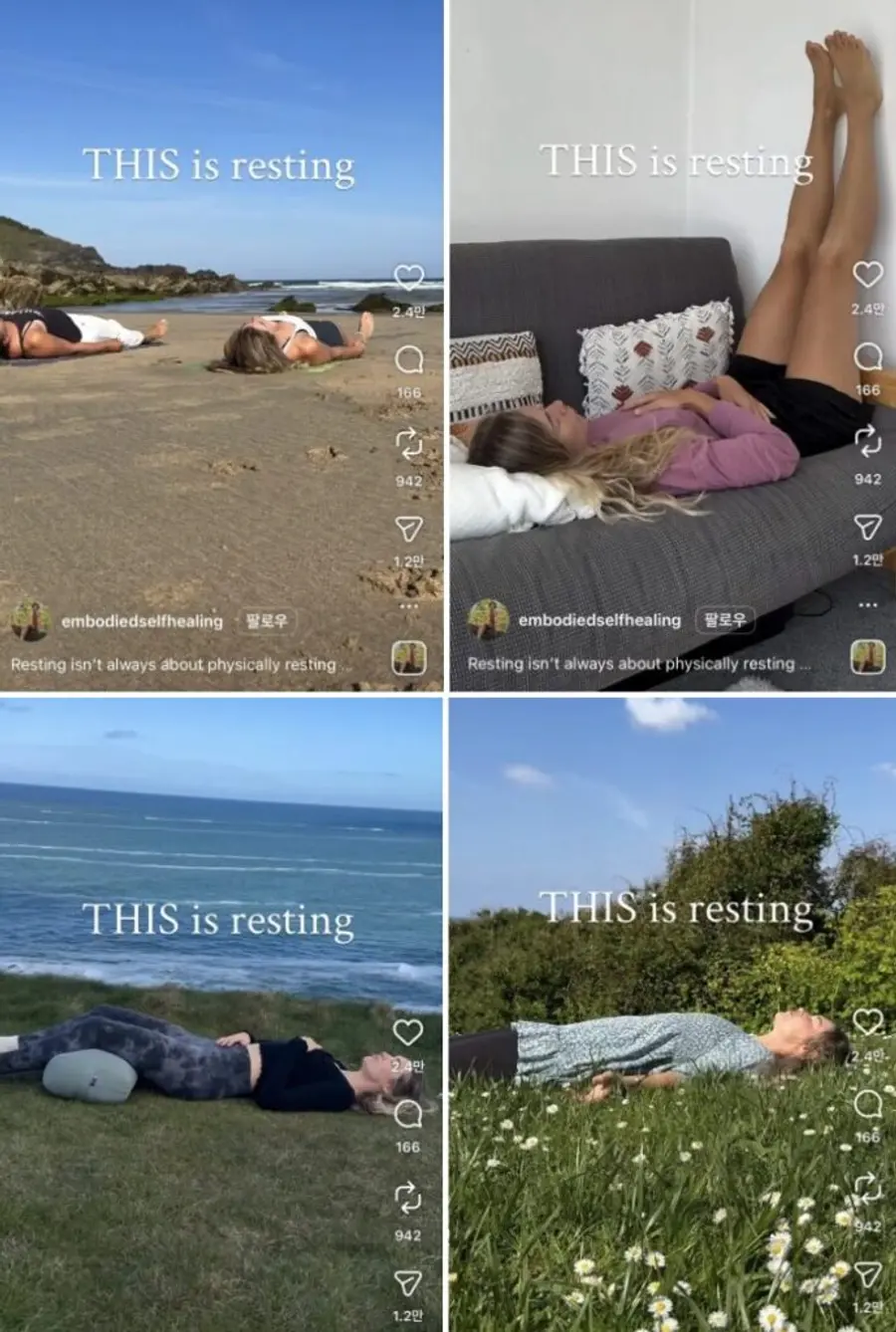
One of the primary advantages cited by enthusiasts is the ability to recover focus without the drawbacks of a traditional nap. While napping for over an hour can disrupt sleep cycles and lead to "sleep inertia"—that dazed, groggy feeling upon waking—NSDR leaves the practitioner feeling immediately refreshed. For many, it has even become a viable alternative to excessive caffeine consumption.
Editor’s Note: At its core, both NSDR and Yoga Nidra emphasize the principle of "focusing on the present without doing anything." In an age where even our rest is often interrupted by smartphones and future anxieties, perhaps the greatest benefit is simply giving the mind permission to be still.