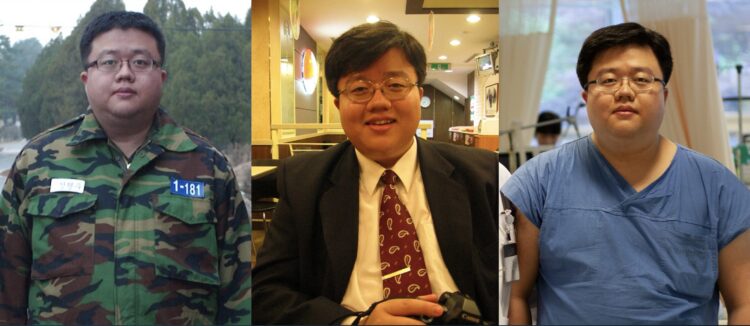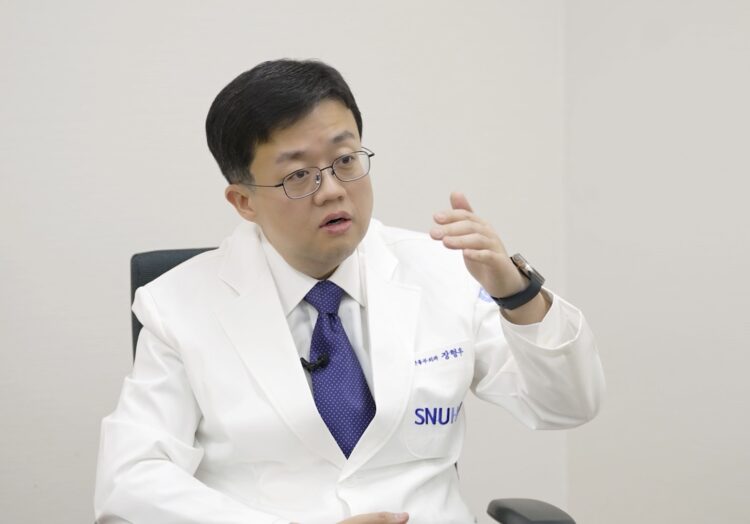
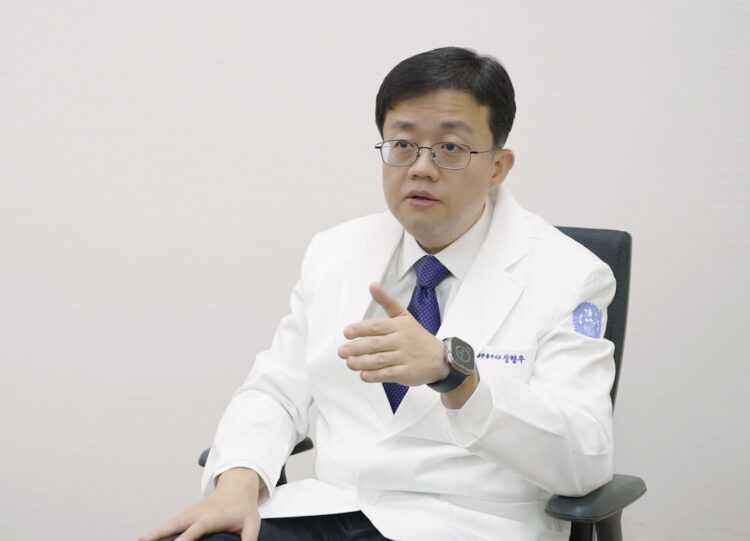
It is hard to believe that a cardiothoracic surgeon who repairs hearts was once a patient with "super obesity." Professor Jang Hyung-woo of Bundang Seoul National University Hospital once weighed 118kg at a height of 178cm. While he spent his days saving lives in surgical scrubs, he personally suffered from hypertension, arrhythmia, and sleep apnea so severe he had to sleep sitting upright.
Recently, Professor Jang published a book titled Obesity Chronicles: I Am a Doctor Who Treats Obesity. Now maintaining a weight in the 80kg range, he says, "I am happy that the threat to my life has disappeared." I met him in person at Bundang Seoul National University Hospital to discuss his battle.
Obesity Is Not a Matter of Willpower
According to Professor Jang, obesity is not simply caused by overeating or a lack of exercise. The true culprit is an abnormality in the "weight set point." Just as the body maintains a temperature of 36.5°C, the brain has its own "optimal weight standard." In severely obese patients, this set point is malfunctioned at an abnormally high level—for instance, 115kg.
"Overeating is not the cause of obesity, but a symptom caused by an elevated set point," he states. "The unbearable appetite, the lack of motivation to exercise, and the cravings for greasy foods all stem from this poorly calibrated internal standard."
Because of this, when severely obese patients try to lose weight, their bodies fight back with extreme resistance. Professor Jang compares this to "holding your breath." Just as the brain eventually forces you to breathe to survive, it triggers an explosive appetite to return to the set weight during a diet. This biological survival mechanism is the root of the "yo-yo" effect.
Professor Jang explains that patients with a BMI over 35 (super obesity) often need to lose more than 30kg, a feat he describes as "as difficult as winning an Olympic gold medal" through diet and exercise alone.
Obesity Metabolic Surgery: Crossing the Point of No Return
After failing with various conventional diets, Professor Jang chose obesity metabolic surgery, which involved removing two-thirds of his stomach. The results were immediate, with a loss of over 25kg in six months. However, the progress stalled at 89kg, and his weight eventually began to creep back up.
"I felt that something was seriously wrong," he recalls. "Despite having my stomach surgically reduced, I couldn't drop below 89kg. It felt like a punishment I could never escape."
The breakthrough that finally brought him to his "dream weight" in the low 80s was the advent of GLP-1 treatments, such as Wegovy and Mounjaro. He describes these medications as a "miracle."
GLP-1 Treatments: More Than Just Appetite Suppressants
Professor Jang emphasizes that he no longer has to restrict himself as severely as before to maintain his current weight. Interestingly, his food intake now is actually greater than when he was struggling to maintain 97kg through willpower.
"If I stop the medication now and eat the same amount, my weight will return to nearly 100kg," he says. This is because obesity involves not just how much one eats, but how the body absorbs and stores fat. However, he notes that medication alone isn't a silver bullet for the super obese; while GLP-1 drugs typically offer a 16–21% weight loss, a 120kg patient would still weigh nearly 100kg. In his case, the combination of metabolic surgery—which physically limits stomach volume—and medication was the key to his 36kg success.
"The Fear of Medication for Life? Severe Obesity Is Much Scarier"
When asked about the concern of having to take obesity medication for a lifetime, Professor Jang’s response is firm: "Those who say such things probably aren't fat enough yet. The state of severe obesity, where you feel a true threat to your life, is far scarier than the prospect of lifelong medication."
To the question of whether he has lost the "joy of eating," he simply replies, "I am happy that the threat to my life is gone." Regaining the ability to run for 30 minutes—something he thought was physically impossible for him—has been a source of immense pride and wonder.
Why Severely Obese Patients "Disappear" After Their 50s
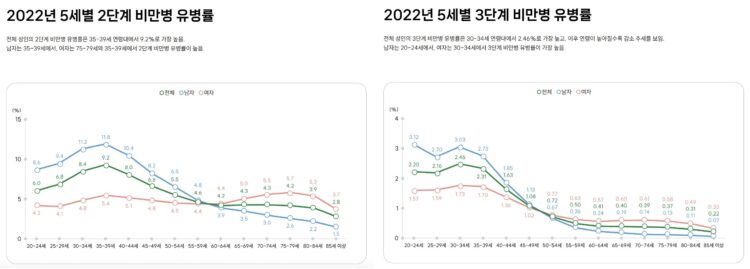
To highlight the gravity of the disease, Professor Jang points to a graph in his book showing the prevalence of stage 3 obesity (BMI over 35). The numbers peak in the 20s and 30s but plummet to less than 1% after the age of 50.
"They aren't losing the weight," Professor Jang warns. "They are disappearing because they die early from complications. It is a truly terrifying graph."
Escaping Severe Obesity: The Two-Part Answer
Professor Jang asserts that he has never seen a severely obese patient maintain significant weight loss through regular dieting alone. He calls the mantra of "willpower" a form of "hope torture" that mocks the patient's biological reality.
"Currently, there are no other definitive ways to escape severe obesity other than metabolic surgery and GLP-1 treatments," he asserts. By candidly sharing his own surgery details, medication types, and even photos of his body at his heaviest, Professor Jang hopes to provide a realistic roadmap for others. His story will also be shared on the February 25th episode of tvN’s You Quiz on the Block.
"I wanted to share the quickest way to escape without wasting money or time," he says, driven by a sincere desire to help those suffering as he once did.