One of the most common phrases heard in orthopedic outpatient clinics is "there's water in my knee." Patients themselves say this when their knees swell and they feel something building up inside. If they have ever experienced a scene where joint fluid is drawn out with a syringe at the hospital, this statement becomes even more convincing.
This indicates that many patients are experiencing a 'perceptible symptom' firsthand. This is especially true when it comes to 'degenerative' conditions. However, they often do not know what this symptom actually means or what stage it signals. There are not many memories of having received a detailed explanation.
What is the 'water' that is said to be in the knee?
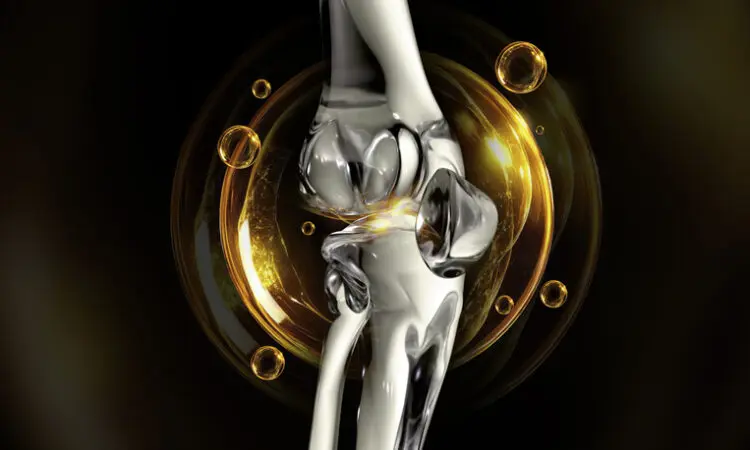
Medically speaking, the "water in the knee" is not water that has entered from the outside. It is synovial fluid (or joint effusion) that is produced within the joint itself. When arthritis causes cartilage to wear down and inflammation occurs in the joint membrane, the body excessively secretes synovial fluid to defend itself. As a result, the pressure inside the joint increases, causing the knee to swell, feel stiff, and become uncomfortable to move.
Kim Do-hoon, the director of Busan Deutantan Hospital (Orthopedics), explains, "The expression 'there's water in my knee' from patients is, medically speaking, a result of the inflammatory response caused by arthritis," adding, "Many patients often feel swelling and a sense of expansion before they feel the pain itself."
When does the water start to accumulate?
Degenerative knee arthritis generally progresses through early, mid, and late stages. In the early stage, the main symptoms are a dull pain when going down stairs or stiffness after walking for a long time. During this period, it is relatively rare for fluid to accumulate in the joint.
However, as arthritis enters the mid-stage, cumulative cartilage damage and repeated inflammatory responses begin to increase the amount of synovial fluid. In other words, the symptom of "water in the knee" is likely a signal that one has mostly just passed the early stage and entered the mid-stage.
On the other hand, in the late stage, joint deformity and persistent pain are the main symptoms. This suggests that the stage of frequently accumulating fluid may have already passed.
Why do some people keep accumulating fluid while others do not?
However, even with the same knee arthritis, some people frequently accumulate fluid while others hardly do. This difference cannot be simply explained by the severity of the disease.
Factors such as body weight, walking habits, thigh muscle strength, and joint usage patterns have a significant impact. In particular, if the quadriceps are weak, the burden on the knee joint increases, making it easier for inflammatory responses to recur.
Additionally, the nature of the arthritis itself, whether it is characterized by prominent inflammatory responses or primarily mechanical wear, also affects the degree of synovial fluid production. Director Kim states, "Even with the same cartilage damage, patients with strong inflammatory responses tend to have increased synovial fluid," adding, "Thus, the symptom of 'water accumulation' is also an indicator of individual differences in arthritis."
Is the reason for fluid accumulation after drainage that the disease has worsened?
When fluid in the joint is drained with a syringe, most patients feel immediate relief. This is because the pressure inside the knee decreases, reducing pain and stiffness. Because of this experience, many patients easily think, "If only the fluid is drained, everything will be fine."
However, if the underlying cause of arthritis remains unchanged, the synovial fluid will accumulate again. Especially if the cycle of fluid accumulation is getting shorter, it signals that the previous treatments have only focused on symptom relief. It would be fortunate if the disease has not worsened during this time.
Director Kim Do-hoon emphasizes, "If fluid keeps accumulating repeatedly, it is a sign that the treatment direction needs to be reassessed," stating, "At this point, not only injection therapy but also weight management, strength training, and gait correction should be discussed as part of an overall management strategy."
From 'draining fluid treatment' to 'management to prevent fluid accumulation'
The symptom of water accumulation in the knee is not a diagnosis. It is more like a warning signal from the joint. Whether to simply dismiss this signal as a discomfort or to use it as an opportunity to check the stage and direction of arthritis is up to the patient.
If appropriate management and treatment are carried out in the mid-stage of arthritis, there is ample room to delay or avoid surgery. The important thing is to accurately understand "why the fluid has accumulated" and "what stage my knee is currently in."
Within the common phrase "there's water in my knee," there is more information and crossroads of choices than one might think. The moment this signal is properly interpreted, the direction of treatment also changes.
Help provided by=Director Kim Do-hoon of Busan Deutantan Hospital (Orthopedics) Trained at Seoul Samsung Medical Center and Busan Bummin Hospital. Specializes in knee joint treatments such as artificial joint surgery, bowleg correction surgery, and stem cell cartilage regeneration surgery.