
It is generally believed that being vegetarian leads to a deficiency in certain nutrients such as protein and vitamin D, resulting in a "decrease in athletic performance." However, actual research has shown the opposite results.
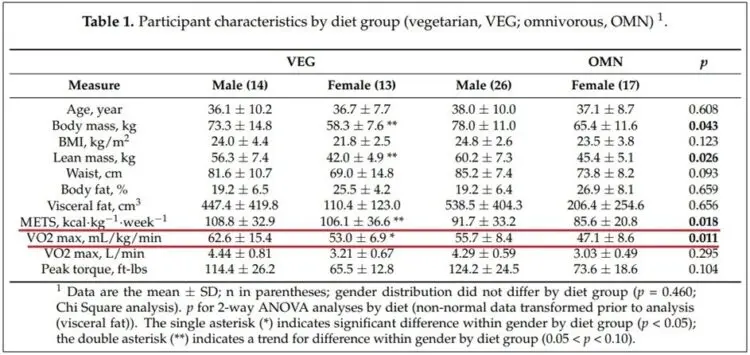
A study comparing 27 athletes who have been vegetarian for over 2 years with 43 omnivorous athletes was conducted at the University of Arizona. METs (*Metabolic Equivalent of Task: a measure of the amount of oxygen required to maintain rest or stable state, used to compare the oxygen consumption of other activities, indicating the intensity of the current exercise. For example: walking 3 METs, aerobics 6 METs, jogging 10 METs) and VO2max (*Maximum Oxygen Consumption: the amount of oxygen that can be used per minute, similar to the concept of engine displacement, indicating cardiopulmonary function) were measured, and lower body strength was evaluated using a machine to measure maximum torque during leg extension.
The results showed no difference in lower body strength between the two groups. However, vegetarian athletes had METs values that were 20% higher than omnivorous athletes, and VO2max values were also found to be 12% higher. In other words, vegetarian athletes demonstrated superior athletic performance (see table below) [1].
A study conducted at the University of Quebec in Canada comparing the athletic performance of 28 young, active women who had been vegan (strict vegetarian) for at least 2 years with 28 omnivorous women found no difference in strength between the two groups, but in the VO2max test, the vegan group scored 44.5 compared to 41.6 ml/kg/min (p=0.03), indicating superiority. In a submaximal endurance test (70% of VO2max), the vegan group was able to pedal on a stationary bike for 12.2 minutes compared to 8.8 minutes (p=0.007), showing a 25% advantage. Consequently, the researchers stated, "The claim that vegetarianism decreases athletic performance is not true, and healthcare professionals should not oppose athletes choosing vegetarianism but rather consider it a good option" [2].
In a recent (2023) study that conducted a meta-analysis of the six most comprehensive papers among 141 studies comparing body fat, muscle mass, aerobic capacity, strength/power, etc., between vegetarian and omnivorous athletes, relative oxygen consumption and maximum power were found to be superior in vegetarian athletes (see graph below) [3].
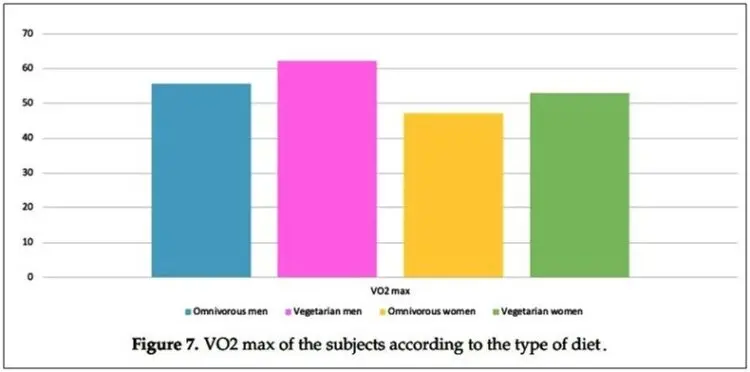
There were no differences between vegetarian and omnivorous athletes in other exercise performance variables. Thus, vegetarianism does not negatively impact an athlete's ability but rather has a positive effect.
While it may be hard for the general public to imagine building muscle on a vegetarian diet, the intake of protein, which is the building block of muscle, can easily be met with plant-based proteins such as legumes, nuts, seeds, and whole grains. Additionally, plant-based foods are rich in antioxidants, vitamins, minerals, and various nutrients, but contain no cholesterol, leading to "cleaner blood vessels," improved cardiopulmonary function, and enhanced delivery of oxygen and nutrients to muscles, thereby improving athletic performance.
While athletes are primarily concerned with athletic performance, vegetarianism also offers a reduction in the risk of chronic diseases, making it beneficial for athletes in the long run [4].
Chronic diseases that are reduced by vegetarianism include hypertension, diabetes, heart disease, obesity, hyperlipidemia, cataracts, breast cancer, prostate cancer, colorectal cancer, and other common ailments that modern people suffer from [5, 6, 7, 8, 9, 10, 11, 12, 13].
Those who are brainwashed by the existing meat-eating culture often refuse to believe the scientific truth that vegetarian athletes perform better. For those individuals, I recommend a movie.
Directed by James Cameron, who is known for famous films like 'Terminator', 'Titanic', and 'Avatar', the documentary film 'The Game Changers' produced in collaboration with Netflix focuses on vegetarian athletes.
I highly recommend watching it. The only way to restore the health of middle-aged individuals, who are increasingly suffering from various ailments, while pursuing health, is through vegetarianism. Seeing is believing!
*New Year 'Vegetarian' Public Lecture Announcement (2026/1/18) https://brunch.co.kr/@mhsong21/121

Song Mu-ho, M.D., Orthopedic Specialist
References
1. HM Lynch, CM Wharton, CS Johnston. Cardiorespiratory Fitness and Peak Torque Differences between Vegetarian and Omnivore Endurance Athletes: A Cross-Sectional Study. Nutrients 2016; 8(11):726.
2. GH Boutros, MA Landry-Duval, M Garzon, AD Karelis. Is a vegan diet detrimental to endurance and muscle strength?. European journal of clinical nutrition 2020;74(11):1550-1555.
3. J Hernández-Lougedo, JL Mate-Munoz, P García-Fernández, et al. The relationship between vegetarian diet and sports performance: a systematic review. Nutrients 2023;15(21):4703.
4. DC Nieman. Physical fitness and vegetarian diets: is there a relation?. The American journal of clinical nutrition 1999;70(3):570S-575S.
5. Y Yokoyama, K Nishimura, ND Barnard, et al. Vegetarian diets and blood pressure: a meta-analysis. JAMA internal medicine 2014;174(4):577-587.
6. H Kahleova, T Pelikanova. Vegetarian diets in the prevention and treatment of type 2 diabetes. Journal of the American College of Nutrition 2015;34(5):448-458.
7. GE Fraser. A comparison of first event coronary heart disease rates in two contrasting California populations. The journal of nutrition, health & aging 2005;9(1):53-58.
8. EA Spencer, PN Appleby, GK Davey, TJ Key. Diet and body mass index in 38,000 EPIC-Oxford meat-eaters, fish-eaters, vegetarians and vegans. International journal of obesity 2013;27(6):728-734.
9. L Quiles, O Portoles, JV Sorlí, D Corella. Short term effects on lipid profile and glycaemia of a low-fat vegetarian diet. Nutricion hospitalaria 2015;32(1):156-164.
10. PN Appleby, NE Allen, TJ Key. Diet, vegetarianism, and cataract risk. The American journal of clinical nutrition 2011;93(5):1128-1135.
11. C Catsburg, RS Kim, VA Kirsh, et al. Dietary patterns and breast cancer risk: a study in 2 cohorts. The American journal of clinical nutrition 2015;101(4):817-823.
12. Y Tantamango-Bartley, SF Knutsen, R Knutsen, et al. Are strict vegetarians protected against prostate cancer?. The American journal of clinical nutrition 2016;103(1):153-160.
13. MJ Orlich, PN Singh, J Sabaté, et al. Vegetarian dietary patterns and the risk of colorectal cancers. JAMA internal medicine 2015;175(5):767-776.