A Russian physician who learned thyroid treatment techniques at Asan Medical Center returned home and personally performed the procedure on five patients.
While South Korean medical professionals demonstrated the procedure in Russia in 2025, a local physician trained in South Korea performed the treatment himself in 2026.
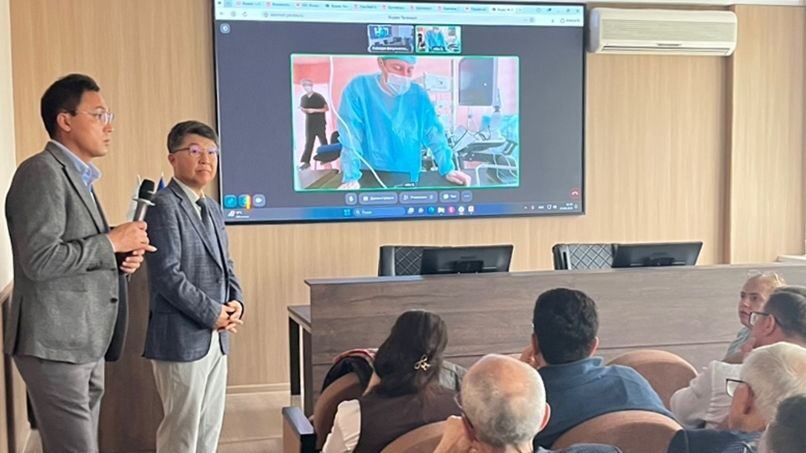
Asan Medical Center said on the 18th that Professor Jung Hwan Baek of its Department of Radiology visited Sechenov First Moscow State Medical University in Russia in September to supervise Professor Maxim Saliba's thyroid radiofrequency ablation procedures.
Baek explained key techniques at each stage of the procedure and answered questions from local medical professionals. Other Russian medical professionals watched the procedures via a live broadcast. Three Russian broadcasters covered the event, featuring the procedures and interviews with Baek.
A month of training in South Korea, followed by hands-on treatment back in Russia
The exchange of medical techniques between the two institutions began in July 2025. At the time, Baek visited Russia at the invitation of Sechenov University and personally performed thyroid radiofrequency ablation.
In November of the same year, Saliba visited Asan Medical Center for a month of training. He learned everything from selecting patients with thyroid nodules to performing the procedure under ultrasound guidance and managing patients afterward.
This time, Saliba personally performed the procedure on five patients. The development is significant because he applied the techniques he learned in South Korea to treating local patients.
Treating thyroid lumps without a neck incision requires precision
Thyroid radiofrequency ablation involves inserting a thin electrode into a nodule, or lump, in the thyroid and treating the nodule tissue with heat generated by a radiofrequency current. Medical professionals use ultrasound to locate the nodule and surrounding tissues during the procedure.
Unlike surgery that requires an incision in the neck, the procedure can preserve as much normal thyroid tissue as possible and leaves no incision scar on the neck. It is primarily used to treat benign nodules that cause pain, pressure symptoms or cosmetic concerns.
However, nerves that control the voice, major blood vessels and the esophagus are closely packed around the thyroid. Heat spreading to surrounding tissues during the procedure can cause nerve damage or voice changes, making precise adjustment of the electrode's position under ultrasound guidance essential.
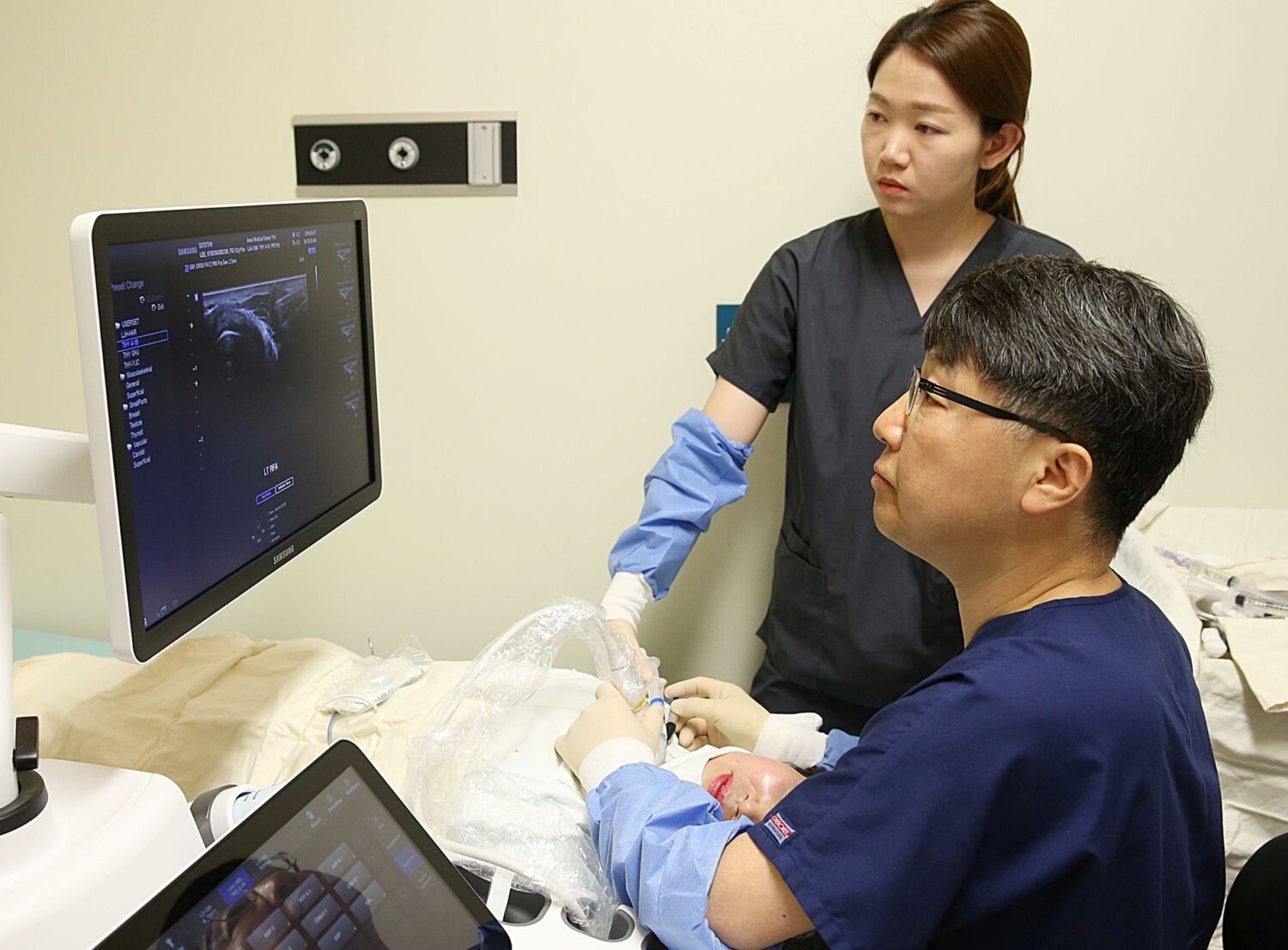
According to Asan Medical Center, Baek has performed approximately 7,000 procedures since becoming the first in the world to perform radiofrequency ablation on a benign thyroid tumor in 2002. He has also taught the techniques to approximately 700 medical professionals from 55 countries.
“This is significant because we have gone beyond simply demonstrating the procedure to medical professionals from abroad: Those who learned the techniques firsthand at Asan Medical Center can now return to their home countries and treat patients,” Baek said. “We will continue to actively share the experience and expertise Asan Medical Center has accumulated in thyroid radiofrequency ablation to help strengthen the treatment capabilities of medical professionals overseas and expand patients' treatment options.”