For elderly patients undergoing spine or joint surgery, a successful operation is not the finish line. Comprehensive treatment must begin with thorough pre-operative evaluations and extend far beyond the operating room—guiding patients back to independent walking and daily life while managing underlying osteoporosis to prevent secondary fractures.
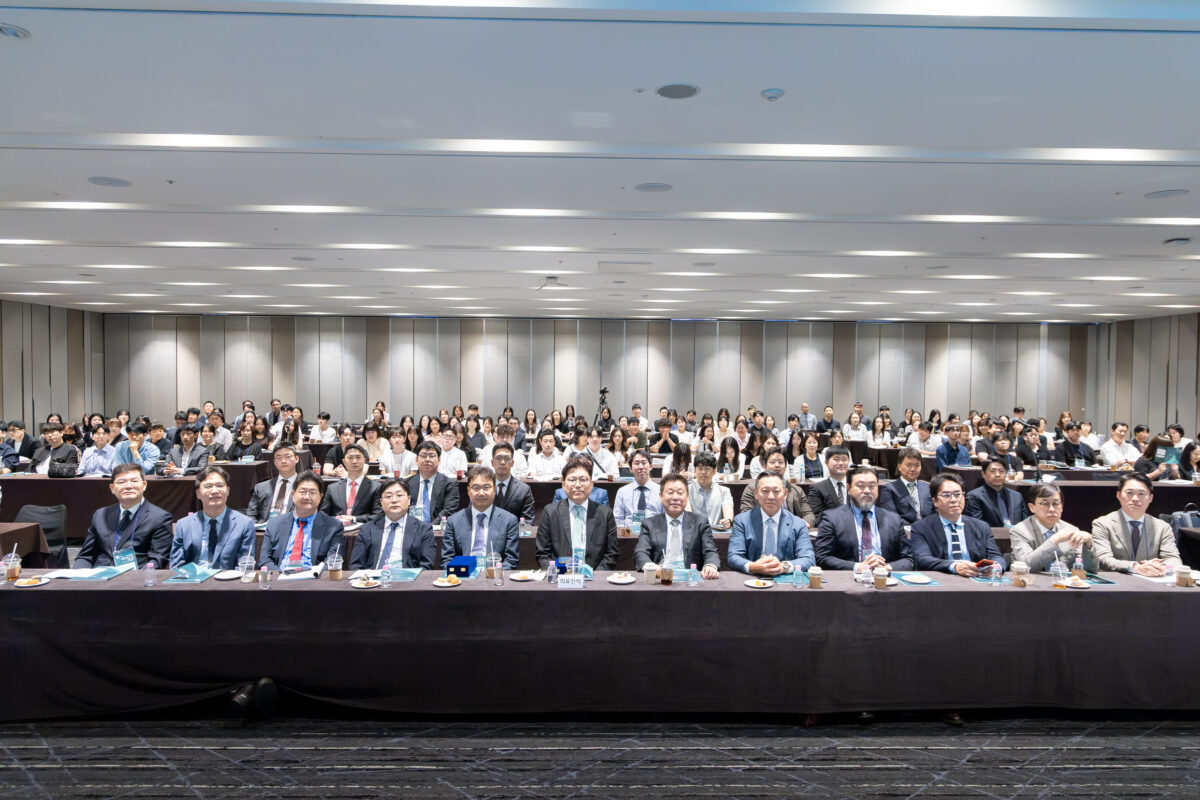
With South Korea's population aged 65 and older now exceeding 20%, integrated management before and after surgery has become a crucial priority in orthopedic care. Addressing these clinical challenges, Nanuri Hospital held an academic conference titled "Innovation and the Future of Spine and Joint Treatment" on Aug. 30 at the Grand Walkerhill Seoul in Gwangjin-gu to celebrate its 23rd anniversary.
The symposium convened medical staff from Nanuri Hospital’s Gangnam, Incheon, Suwon, and Juan branches to share clinical expertise built over 23 years and discuss strategies for safely treating older patients in a super-aged society.
Beyond the Operating Room: Preventing Secondary Fractures
According to the Ministry of the Interior and Safety, South Korea’s senior population reached 10,244,550 by late 2024, accounting for over 20% of the total population. As this demographic expands, clinicians increasingly face the complex task of treating patients who suffer from degenerative spinal diseases or osteoporotic fractures alongside multiple chronic comorbidities.
Conference presenters stressed that surgical care for senior patients requires a continuous spectrum of treatment. Before surgery, clinicians must minimize risk by evaluating overall health, including cardiovascular and pulmonary function, co-occurring conditions, and current medications. After surgery, care must continue through pain control, physical rehabilitation, nutritional support, and osteoporosis treatment. Preventing "secondary fractures"—where a patient who has suffered an initial fracture falls again and breaks another bone—is particularly vital.
Hip fractures illustrate the severity of this risk. A 2023 position statement on the Fracture Liaison Service (FLS) published by the Korean Society for Bone and Mineral Research noted that the one-year mortality rate among hip fracture patients in South Korea reaches 15.6%, demonstrating that geriatric fractures extend far beyond a simple broken bone.
To address this, medical centers are adopting Fracture Liaison Services (FLS)—a systematic care model offering ongoing osteoporosis testing, treatment, rehabilitation, and follow-up monitoring. A recent South Korean study tracking 273 hip fracture patients aged 65 and older found that the one-year secondary fracture rate was 5.7% among patients receiving FLS, compared to 10.7% in the standard care group. One-year mortality rates were 8.6% and 12.5%, respectively. While this non-randomized, single-center study cannot establish direct causality, it highlights the potential benefits of integrated follow-up care. To support wider adoption, the Korean Society for Bone and Mineral Research has published and distributed an FLS guidebook for clinical settings.
Systematic Care for an Aging Patient Base
Nanuri Hospital clinicians emphasized that robust post-operative management has become a key institutional strength as the patient population ages.
Kim Hyung-jin, director of Nanuri Hospital’s Juan branch, outlined the growth of the Joint Center and highlighted the importance of comprehensive care alongside advanced technologies such as robotic surgery. "Since 2021, as the number of patients aged 80 and older undergoing fracture surgery has increased, systematic osteoporosis management and secondary fracture prevention have become essential," Kim said. "Going forward, a hospital's true competitive strength will lie not only in its surgical expertise, but in its capacity to manage a patient’s full recovery and subsequent quality of life."
Lim Jae-hyun, director of Nanuri Hospital’s Gangnam branch, reviewed the Spine Center's achievements over the past two decades, including approximately 1,080 high-difficulty spinal surgeries and 262 published academic papers. "My greatest teacher has always been the patient, and patient satisfaction is the true destination of medical care," Lim said. "The more challenging the case, the more committed we must be to delivering optimal care."
The conference also featured an updated format: senior clinicians presented on clinical milestones and historical advancements, while junior clinicians served as session chairs to guide discussions and explore future treatment directions.
Perioperative Strategies for Octogenarian Surgery
The final session focused on surgical preparation and management protocols tailored for octogenarian patients.
Kim Ju-han, a professor at Korea University Guro Hospital, delivered a lecture on perioperative considerations for spinal surgery in patients aged 80 and older. Jung Hee-chang, a professor at Wonju Severance Christian Hospital, detailed integrated perioperative care for elderly hip fracture patients and strategies to mitigate secondary fracture risks.
"Medicine must never stagnate, and our mission is to continuously innovate to provide patients with a better quality of life," said Jang Il-tae, chairman of Nanuri Hospital. "This conference offers a valuable opportunity to reflect on our 23-year journey and chart our path forward."
Founded in Gangnam in 2003, Nanuri Hospital marks its 23rd anniversary this year. The hospital plans to further strengthen its clinical capabilities in spine and joint surgery, patient safety, post-operative rehabilitation, and osteoporosis management.