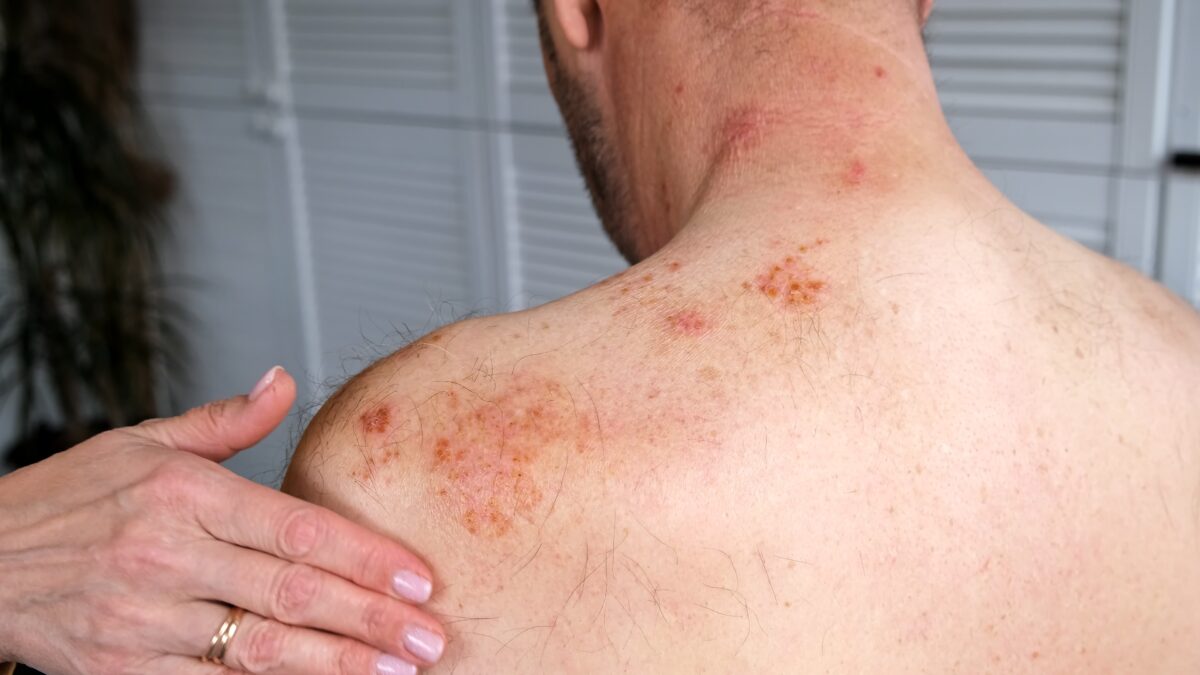
Why does the skin of patients with atopic dermatitis become dry so easily and react with heightened sensitivity to even minor environmental irritants?
South Korean researchers have uncovered a new biological pathway responsible for depleting filaggrin, a crucial structural protein required to maintain a healthy skin barrier.
A research team led by Professor Kim In-sik of the Department of Clinical Laboratory Science at Eulji University announced on the 25th that it had identified how filaggrin levels plummet and the skin barrier breaks down when two specific proteins, SFPQ and S100A8, bind together.
The findings were published online on July 23 in the international journal Cell Communication and Signaling. Researchers Kim Geun-young and Hong Yu-jin served as co-first authors, while Professor Kim In-sik and Professor Lee Ji-sook of Wonkwang University participated as co-corresponding authors. Following publication, Professor Kim’s team was selected for "People Who Shined Korea" (Hanbitsa) by the Biological Research Information Center (BRIC).
How the SFPQ/S100A8 Complex Drives Skin Barrier Breakdown
Filaggrin is a core protein that reinforces the stratum corneum, the outermost layer of the skin. It retains essential skin moisture and prevents external pathogens and irritants from penetrating the dermal layers.
Many patients suffering from atopic dermatitis exhibit deficient filaggrin levels. While some carry genetic variants in the FLG gene responsible for filaggrin production, filaggrin depletion also occurs in patients without such genetic mutations, indicating that inflammatory pathways play a driving role.
The research team focused on the abnormal behavior of SFPQ. In healthy skin cells, SFPQ remains predominantly inside the cell nucleus. In atopic dermatitis, however, SFPQ translocates from the nucleus into the cytoplasm. Once in the cytoplasm, it binds with S100A8, an inflammation-related protein, to form the "SFPQ/S100A8 complex."
Analyzing skin tissue from patients as well as murine models with atopic-like dermatitis, the team confirmed that higher concentrations of the SFPQ/S100A8 complex directly correlated with lower filaggrin levels and increased clinical severity of dermatitis.
A Dual Attack: Accelerating Breakdown and Suppressing Production
The study revealed that the SFPQ/S100A8 complex depletes filaggrin through a two-pronged mechanism:
Accelerated Degradation: The complex binds directly to existing filaggrin proteins and triggers selective autophagy—a cellular degradation process where specific proteins are targeted and dismantled.
Suppressed Synthesis: The complex activates internal JNK signaling within the cell, which directly inhibits the synthesis of new filaggrin.
In short, the complex causes existing filaggrin to break down faster while simultaneously shutting down new production.
The research team also traced the mechanism driving SFPQ out of the nucleus, discovering that two transport proteins, mTOR and CRM1, mediate this nuclear export. When researchers inhibited this transport process using the pharmacological agents leptomycin B and rapamycin, the binding between SFPQ and S100A8 decreased, significantly mitigating filaggrin depletion in both patient-derived skin cells and animal models.

Identifying a New Target for Future Therapies
The authors emphasized that while these findings do not represent an immediate cure, they establish a critical molecular target for future drug development. Because the study focused on patient cell lines, tissue samples, and animal models rather than clinical human trials, further research is required before clinical applications can be realized.
Future studies must verify whether the SFPQ/S100A8 complex can serve as a reliable biomarker for patient diagnosis and whether blocking its activity can safely restore skin barrier function without adverse effects. Atopic dermatitis is driven by a vicious cycle of abnormal immune responses and skin barrier breakdown; identifying this pathway offers a clear target to interrupt that cycle.
Eulji University plans to form a dedicated task force through its Industry-Academic Cooperation Foundation to launch follow-up research in partnership with Uijeongbu Eulji University Hospital, Nowon Eulji University Hospital, and Daejeon Eulji University Hospital. The collaborative initiative will evaluate the diagnostic and therapeutic viability of targeting the SFPQ/S100A8 complex across atopic dermatitis and other allergic conditions.
"This study is significant in that it has uncovered a previously unknown mechanism behind skin barrier breakdown in atopic dermatitis and provided a novel target for diagnosis and therapy," said Professor Kim In-sik. "We will continue our collaborative research with Eulji University hospitals and domestic and international experts to translate these findings into practical clinical applications."