
Inadequate protein intake remains a genuine concern for older adults facing sarcopenia—the age-related loss of muscle mass and physical function. According to a South Korean national survey, total daily protein intake averaged 83.6 grams (1.17 g per kilogram of body weight) for men and 59.9 grams (1.05 g/kg) for women. Among adults aged 65 and older, intake dropped to 64.3 grams (0.9 g/kg) for men and 47.6 grams (0.84 g/kg) for women. Although consumption naturally declines with age, these figures still represent 113 percent and 105 percent of the recommended daily allowance (RDA) of 0.8 g/kg for older men and women, respectively. Nevertheless, given individual variations in digestion and metabolic health, some seniors still fall short of their needs [1].
Animal vs. Plant Protein for Muscle Growth
When addressing potential protein deficits, public health materials often encourage eating a broad variety of foods. An educational campaign by the Gangnam District Office in Seoul, for instance, advised seniors to "eat a balanced mix without distinguishing between animal and plant protein" to maintain muscle mass and prevent falls [2]. While such advice sounds intuitive, recommending protein consumption without distinguishing between animal and plant sources lacks scientific precision.
A 2025 systematic review by researchers at Queen’s University in the U.K. analyzed 30 randomized controlled trials evaluating the impact of animal versus plant protein on muscle health. The researchers found that while animal protein showed a slight advantage over plant protein for building muscle mass, this effect was restricted to adults under age 60. Among adults aged 60 and older, no difference in muscle mass accumulation was observed between animal and plant sources. Furthermore, soy protein performed identically to animal protein across all age groups. Crucially, when evaluating actual muscle strength and physical performance—the primary factors in fall prevention and mobility—the analysis found no difference between animal and plant protein [3].
Muscle Mass vs. Healthy Life Expectancy
While animal protein may offer a marginal edge for muscle hypertrophy in younger demographics, relying heavily on it introduces serious long-term health risks, including increased premature mortality.
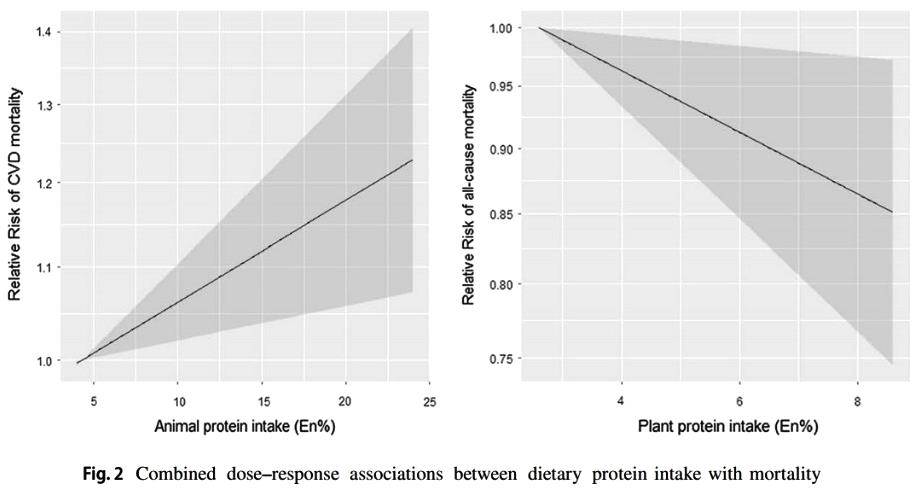
In 2020, the U.S. National Institutes of Health (NIH) conducted the largest diet-and-mortality study to date, tracking nearly 400,000 participants over 16 years. The findings revealed a clear trend: higher animal protein consumption correlated with higher rates of premature death, whereas higher plant protein consumption was associated with lower premature mortality [4]. A concurrent joint study by Harvard University and Erasmus University Rotterdam, following 350,000 participants over 13 years, confirmed these exact results [5].
This disparity stems from the broader nutritional package accompanying each protein source. Meat-based diets heavy in animal protein deliver high levels of saturated fat and cholesterol while containing zero dietary fiber, contributing to chronic conditions such as hypertension, cardiovascular disease, type 2 diabetes, obesity, atherosclerosis, gout, chronic kidney disease, and colorectal cancer. Conversely, plant-based protein sources contain no cholesterol, are lower in saturated fat, and come packed with vitamins, minerals, dietary fiber, and protective antioxidants, which instead help prevent chronic disease [6, 7, 8].
Replacing just 3 percent of daily energy intake from animal protein with plant protein reduces all-cause mortality by 10 percent and cardiovascular disease mortality by 12 percent. Replacing 5 percent yields even greater benefits, reducing all-cause mortality by 24 percent and cardiovascular mortality by 22 percent [9].
If the sole objective is maximizing muscle volume without regard for overall health, focusing on animal protein might seem attractive. However, for those aiming to maintain functional strength while extending their healthy life expectancy, plant protein is the far superior choice. Consuming an uncritical "balanced mix" of proteins risks accumulating a balanced mix of chronic diseases. For preventing sarcopenia safely, plant protein remains the optimal prescription.
Song Moo-ho, MD, PhD, is a specialist in orthopedic surgery and lifestyle medicine.
References
1. KW Kim, HA Park, YG Cho, AR Bong. Protein intake by Korean adults through meals. Korean Journal of Health Promotion 2021;21(2):63-72.
2. Gangnam District Office https://www.gangnam.go.kr/office/wellaging/board/wellaging_cardnews/10/view.do?mid=wellaging_cardnews
3. RJ Reid-McCann, SF Brennan, NA Ward, et al. Effect of plant versus animal protein on muscle mass, strength, physical performance, and sarcopenia: a systematic review and meta-analysis of randomized controlled trials. Nutrition Reviews 2025;83(7):e1581-e1603.
4. J Huang, LM Liao, SJ Weinstein, et al. Association between plant and animal protein intake and overall and cause-specific mortality. JAMA Intern Med 2020;180(9):1173-1184.
5. Z Chen, M Glisic, M Song, et al. Dietary protein intake and all-cause and cause-specific mortality: results from the Rotterdam Study and a meta-analysis of prospective cohort studies. Eur J Epidemiol 2020;35:411-429.
6. M Nestle. Animal v. plant foods in human diets and health: is the historical record unequivocal? Proceedings of the Nutrition Society 1999;58(2):211-218.
7. A Fehér, M Gazdecki, M Véha, et al. A Comprehensive Review of the Benefits of and the Barriers to the Switch to a Plant-Based Diet. Sustainability 2020;12(10):4136.
8. W Khalid, MS Arshad, MM Ranjha, et al. Functional constituents of plant-based foods boost immunity against acute and chronic disorders. Open Life Sciences 2022;17(1):1075-1093.
9. Z Chen, M Glisic, M Song, et al. Dietary protein intake and all-cause and cause-specific mortality: results from the Rotterdam Study and a meta-analysis of prospective cohort studies. European Journal of Epidemiology 2020;35(5):411-429.