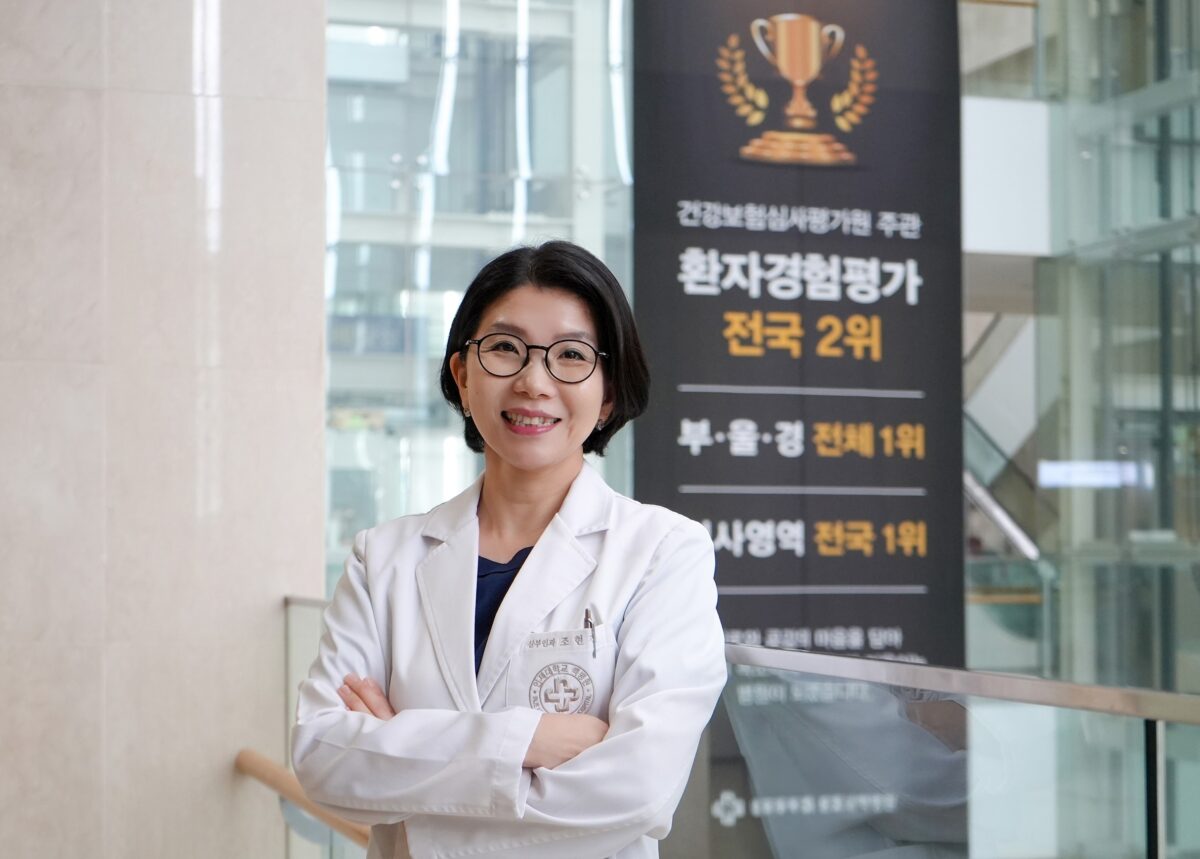
The medical care was excellent, and the nursing was top-notch. But if an argument erupts over parking fees on the day you are discharged, what kind of memory will you carry away from that hospital?
"In that moment, your memory of the hospital can drop to zero," said Cho Hyun-jin, director of the Service Innovation Center at Busan’s Haeundae Paik Hospital and an OB-GYN specialist. "The most fundamental duty of a hospital is good medical care. But good care alone doesn’t make a good hospital."
In marketing, these decisive touchpoints are known as "moments of truth" (MOT)—the concept that a brief interaction can shape a customer’s entire impression of a brand.
Over the past few years, most of Cho’s work has taken place outside the examination room, focusing on subtle touchpoints like a pre-rounding alert or a single surgical progress update sent by text message. In short, he focused on how the hospital manages those moments of truth.
The approach delivered tangible results. In the Health Insurance Review & Assessment Service (HIRA) "2025 Fifth Patient Experience Assessment," Haeundae Paik Hospital earned an overall score of 96.32 points out of 100. The score ranked No. 2 nationwide among 47 tertiary general hospitals—including Seoul’s "Big 5"—and 329 general hospitals, marking an outstanding achievement.
Yet, the assessment has inherent limits. HIRA distributed a mobile web survey to discharged patients, but the response rate hovered just over 20%, leaving the experiences of the remaining 80% unknown. Furthermore, despite popular assumption, the survey does not simply measure superficial kindness. Even so, the significance of the high score is hard to dismiss.
You Don’t Get to 100 Just by Adding Everything Up
To interpret this report card properly, one key concept must be understood. "Patient experience is the memory as perceived by the patient," Cho explained.
Unlike a standard exam where five 20-point sections neatly total 100, a shortfall in even a single area can cause the overall rating to collapse. Factors not explicitly listed on the survey—such as parking, food quality, or security—can still heavily penalize real-world perceptions.
Viewed in this light, Cho's assertion lands with greater weight: no matter how perfect the medical care is, if a touchpoint before or after treatment falls apart, the patient's entire impression can fall apart with it.
Fiercer Competition for Patient Experience Ratings
HIRA’s patient experience assessment began in 2017 and completed its fifth round in 2025, covering 376 hospitals nationwide. As HIRA plans to expand the scope to over 880 institutions—including specialty hospitals and facilities with 100 beds or more—competition will only intensify.
Hospitals are also viewing the metric differently. In the third assessment in 2021, only two hospitals nationwide scored above 90 points overall. By the fifth assessment in 2025, that number rose to 57, reflecting a widespread shift toward prioritizing patient and caregiver experience.
This trend is not unique to South Korea. In Newsweek’s annual "World’s Best Hospitals" rankings, the weight of the patient experience category rose from 14.5% in 2023 to 18.5% in 2026. Across the globe, the era in which clinical skill alone dictates top standing is coming to an end.
"HaeBaek TokTok" and Systemic Emotional Support
HIRA’s assessment spans seven categories: nurses, doctors, medication and treatment process, emotional support, hospital environment, protection of patient rights, and overall rating. Haeundae Paik Hospital ranked No. 1 nationwide in three of them: doctors (96.45 points), emotional support (94.80 points), and protection of patient rights (96.69 points).
The "emotional support" category evaluates comfort and empathy regarding illness—asking whether clinicians actively empathized with patients' distress. Nationally, this category consistently yields the lowest average scores, but Haeundae Paik Hospital scored far above the national average.
Cho tackled this abstract, challenging category through "HaeBaek TokTok," a messenger-based notification service. The system guides patients from admission through SurgeryTok (real-time surgical progress updates), RoundsTok (advance notification of physician rounding schedules), and DischargeTok (step-by-step guidance on billing and discharge).
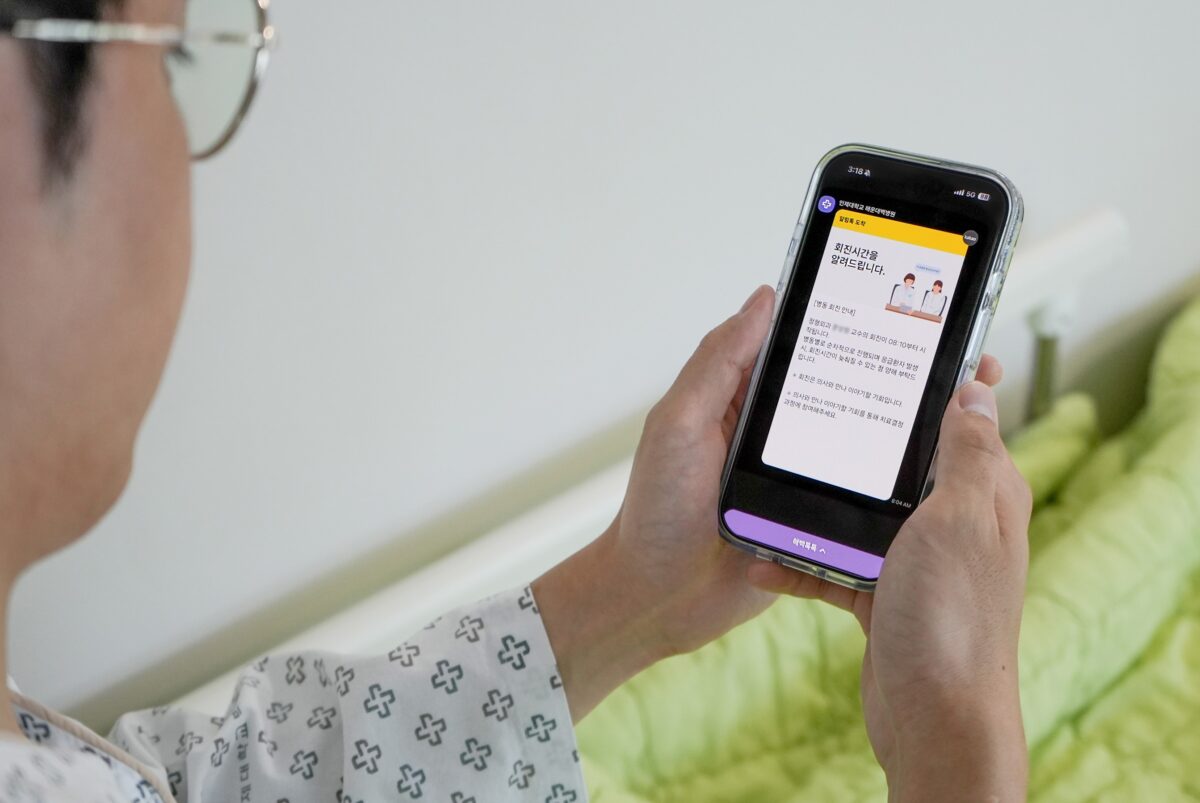
Anxiety among patients and caregivers often stems from information asymmetry. By standardizing communication through structured systems and manuals, the hospital narrowed that gap. Addressing the root cause of anxiety—"not knowing"—proved to be a far more effective form of emotional support than superficial expressions of sympathy.
A top-down cultural commitment further reinforced these efforts through "executive patient-experience rounding." Each month, a 10-person leadership team conducts rounds across inpatient wards. Hospital Director Kim Sung-soo has attended every single session without fail for four years, maintaining close oversight of operations and patient welfare.
"Seeing the hospital director personally make bedside rounds every month inspired our ward nurses to engage patients with genuine care," Cho said. As leadership set the tone, physicians and administrative staff followed.
This cultivated culture yielded unexpected moments of connection. "We received numerous messages from bereaved family members expressing deep gratitude," Cho shared. Even in moments of profound grief after losing a relative, caregivers took time to send thank-you notes, having witnessed the staff's dedication firsthand. While "emotional support" appears as a dry line item on an evaluation form, the high score was built from the steady accumulation of these meaningful moments.
No. 1 in the Doctors Category Without "Kindness Training"
The doctors category evaluates four specific items: respect and listening, opportunities for dialogue, and providing information about rounding times.
"I have never trained our professors to be kind," Cho said, noting that the word "kindness" does not appear anywhere in the assessment's 26 items.
Instead, Cho visited each specialty department office to explain the evaluation's purpose, opening with the principle that "the most important thing in a hospital is good medical care" before addressing why the assessment matters.
"RoundsTok notifies patients in advance, keeping them at their bedsides and streamlining the care team's route," Cho explained. "For patients who think of questions only after the doctor leaves, we introduced rounding cards. If a professor can answer those questions on the spot the next day, it actually shortens rounding time." By designing a structure that benefits both doctors and patients, Cho secured strong buy-in from medical staff.
Protecting Patient Rights by Reviewing Every Submission
The protection of patient rights category asks whether it was easy to raise complaints and whether patients were treated fairly. Every Monday morning, the Service Innovation Center team reads all Voice of Customer (VOC) submissions received over the previous week.
"We focus on the content of the complaint, not the complainant," Cho emphasized. Addressing the individual merely calms anger, but addressing the content allows the hospital to fix systemic flaws.
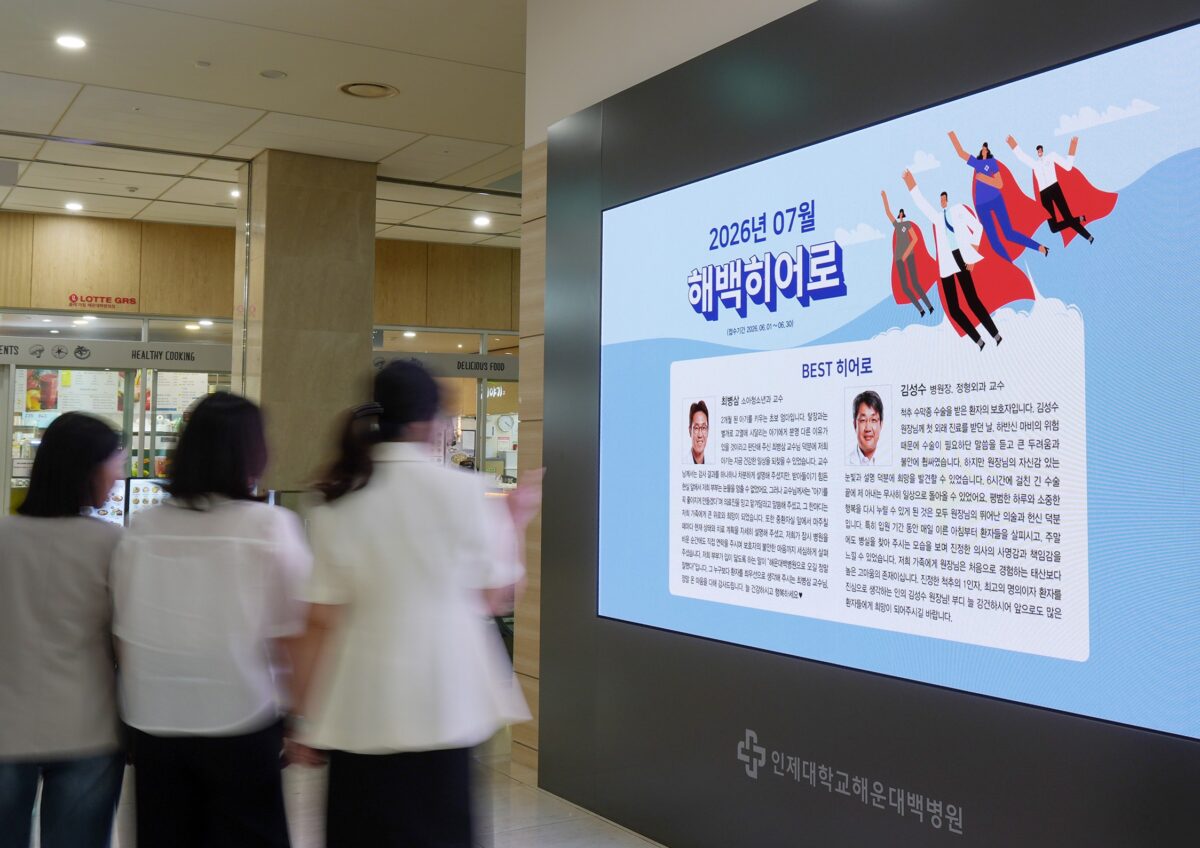
The hospital also uses positive VOC feedback to select a monthly "HaeBaek Hero." Honorees span all patient-facing roles, including medical technologists, radiographers, security guards, and cleaning personnel. Recently, an employee earned the recognition after performing CPR on a bystander who collapsed in cardiac arrest at an off-site funeral home, remaining by the person's side until paramedics arrived—an act later shared online by a witness.
A Lingering Sore Spot for the Nation's No. 2
Despite ranking No. 1 nationwide in three categories and No. 2 in three others, Haeundae Paik Hospital placed 10th nationwide in the "overall rating" category, which asks patients to evaluate their complete stay and state whether they would recommend the hospital.
"Tenth nationwide is a solid result, but from our perspective, it remains a lingering sore spot," Cho admitted.
Asked what drove that specific score, Cho paused before offering an answer: "I think it reflects a score of patient affection. Our hospital's history is relatively short, so we have not yet built that deep, long-standing emotional attachment that develops over decades."
His proposed solution is a return to fundamentals: fostering deep trust and genuine affinity. Stacking top scores in subcategories does not automatically make an institution beloved. Yet this challenge extends beyond Haeundae Paik Hospital. As clinical skill gaps narrow across the healthcare sector, a hospital’s true competitive edge will increasingly depend on how effectively it handles every moment of truth.