"You need to eat well and build up your strength."
Cancer patients and their families frequently hear this advice ahead of surgery, assuming that simply gaining muscle mass will ensure a smoother procedure and recovery. However, new research suggests that focusing solely on muscle quantity misses a critical determinant of long-term survival.
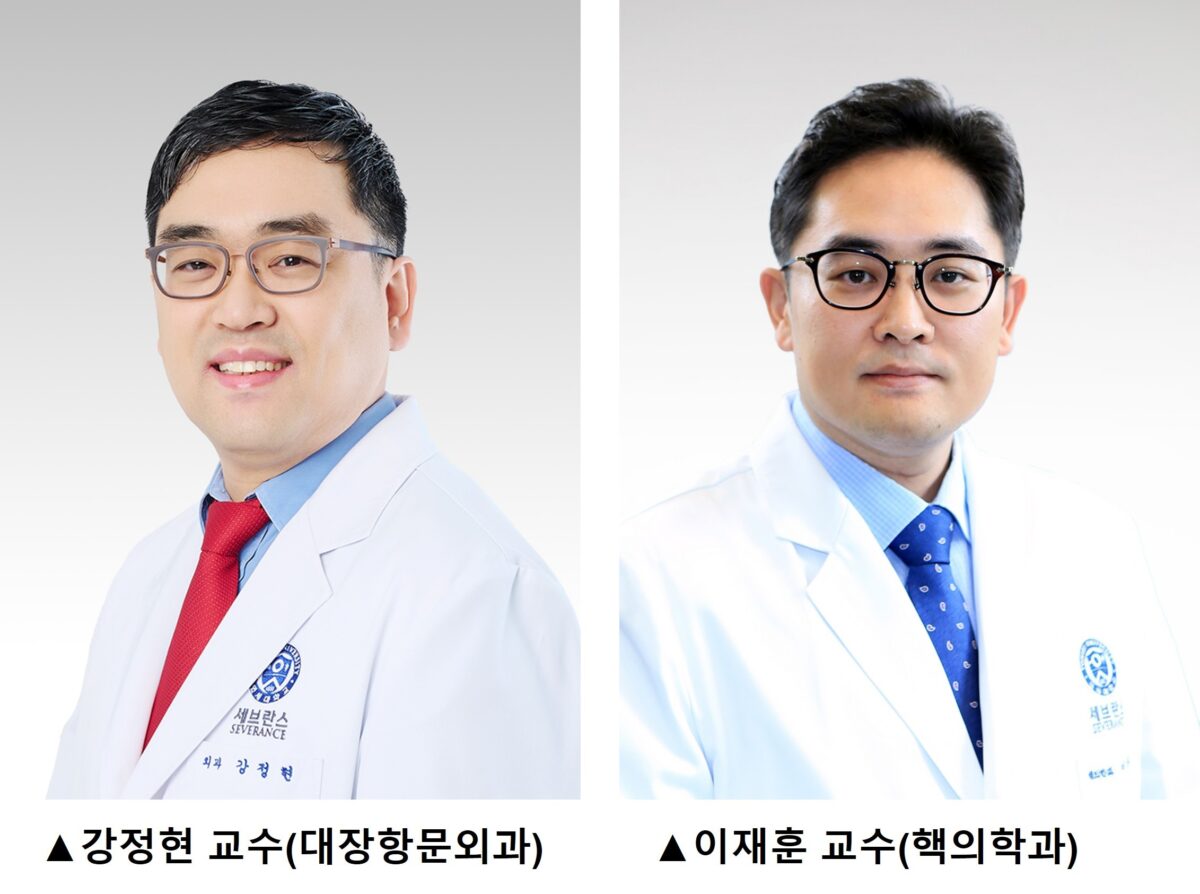
A research team co-led by Professor Kang Jung-hyun of the Department of Colorectal Surgery and Professor Lee Jae-hoon of the Department of Nuclear Medicine at Yonsei University's Gangnam Severance Hospital announced on August 5 that muscle quality—specifically the amount and density of fat deposited between muscles—plays a pivotal role in colon cancer outcomes.
Analyzing abdominal CT scans of colon cancer patients, the researchers found that survival rates declined significantly as intermuscular adipose tissue (IMAT), or fat lodged between skeletal muscle groups, increased. The study was published in the international journal European Journal of Radiology.
Beyond Muscle Mass: The Role of Muscle Quality
If muscle mass represents "quantity," the extent of fat wedged between those muscles represents "quality." Two individuals may possess identical muscle volume, yet their underlying muscle quality can differ drastically.
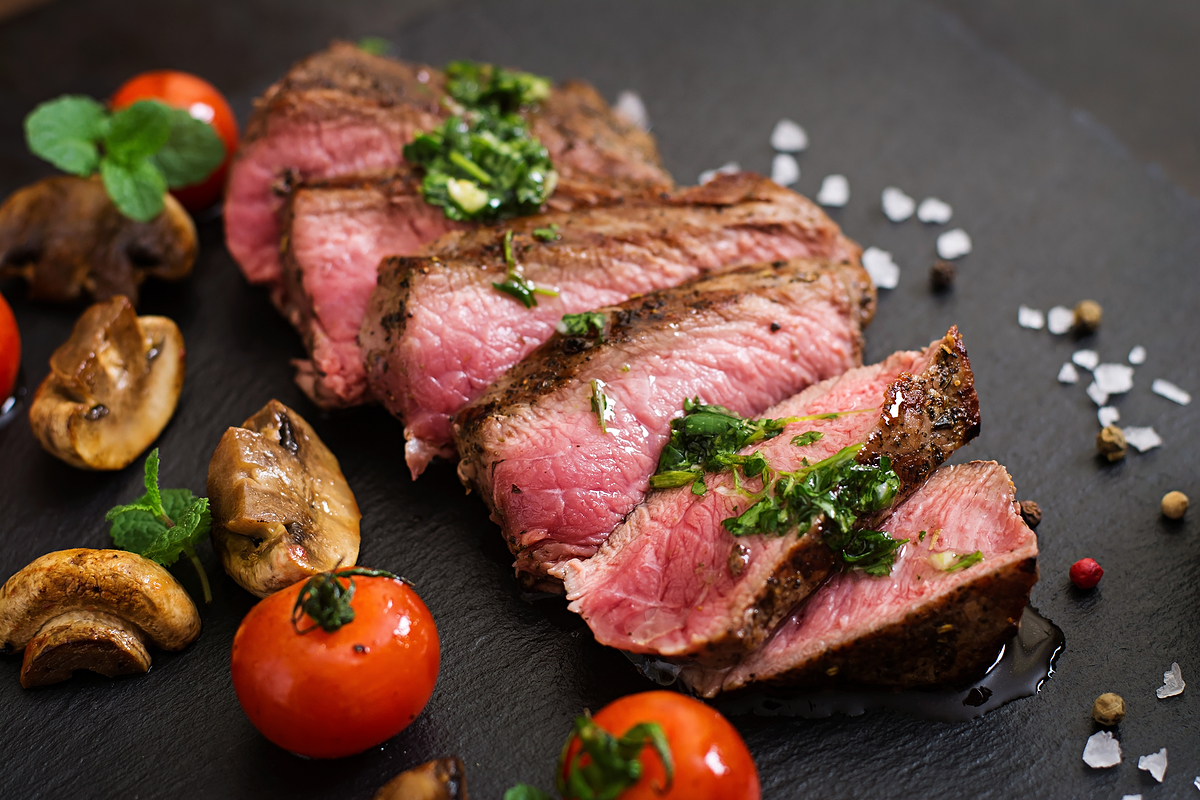
An analogy with meat illustrates the concept: even with an equal volume of lean meat, highly marbled beef differs fundamentally from dense, lean tissue. Skeletal muscle functions similarly—as fat infiltrates muscle tissue and the surrounding fascia, muscle function deteriorates even if overall volume appears normal.
While clinical assessments have traditionally focused on overall muscle mass, IMAT—fat deposited within the fascial sheath surrounding muscle bundles—has received less recognition. Professor Kang’s team has systematically published indicators related to sarcopenia, previously developing a prognostic index combining blood albumin levels with muscle fat, as well as a machine-learning model to estimate muscle loss without CT imaging.
International research reflects similar trends. A multicenter study analyzing over 1,400 patients globally also linked higher intermuscular fat to increased mortality and recurrence risks, though it evaluated fat volume and density separately rather than as a combined index.
Both Fat Volume and Density Impact Survival
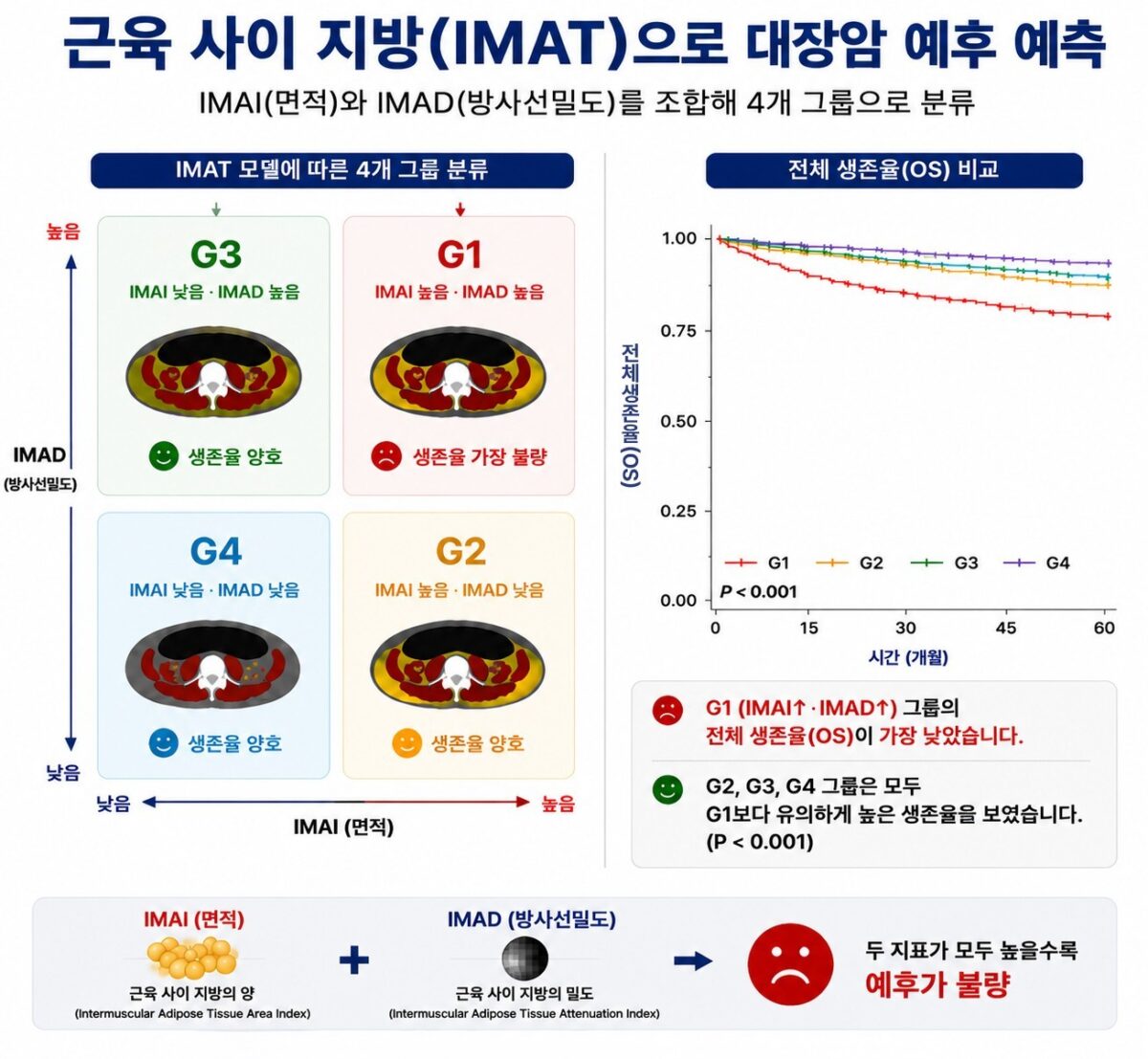
To quantify risk, the research team analyzed CT scans of 1,080 patients with stage 1 to 3 colon cancer who underwent surgery between 2005 and 2014, evaluating both intermuscular fat area and density alongside long-term survival rates.
When patients were categorized into four groups (G1 through G4) based on a combined measure of fat area and density, a distinct pattern emerged. Survival did not follow a simple linear decline; rather, survival rates dropped precipitously only in the group exhibiting both high fat area and high fat density.
Patients with elevated levels in only one parameter—or low levels in both—showed minimal differences in survival. This indicates that survival drops specifically when intermuscular fat is both extensive and dense, regardless of how much total muscle mass a patient appears to have.
Personalized Prognosis and Preoperative Planning
"This study highlights the potential of using preoperative CT imaging to evaluate fat deposited between skeletal muscles, allowing clinicians to predict prognosis more precisely and tailor individualized treatment plans for colon cancer patients," said Professor Kang Jung-hyun. "Because our model simultaneously considers both the area and density of intermuscular fat, future multicenter studies across diverse populations could expand its clinical application further."
Because the study relied on single-institution data, further validation across multi-hospital cohorts representing diverse racial backgrounds and body compositions will be required.
For patients preparing for cancer surgery, these findings emphasize that building strength goes beyond merely increasing body weight or muscle volume. Assessing how fat is distributed between muscles provides a far clearer picture of physical resilience—a factor patients can discuss with their surgical care teams ahead of treatment.