When starting a diet, people often look first for alternatives to traditional potato chips and cookies. That search frequently leads to products perceived as healthier, such as veggie chips or puffed rice snacks. While these items may use vegetables or whole grains as base ingredients, their processing methods and portion sizes mean they rarely deliver the intended weight-loss benefits.
Many veggie chips are made by removing moisture and deep-frying, whereas puffed rice snacks rely on high-pressure expansion to increase volume. Although their production methods differ, both yield a crunchy, lightweight texture that makes it easy to misjudge how much has been consumed.
This light texture often leads individuals to continue eating before feeling full, making portion control difficult. The issue is especially critical in middle age, when declining muscle mass reduces the basal metabolic rate, making mindful snack choices increasingly important. Mindlessly consuming handful after handful while watching television can quickly contribute to unexpected middle-age weight gain.
The oil trap behind "healthy" veggie chips
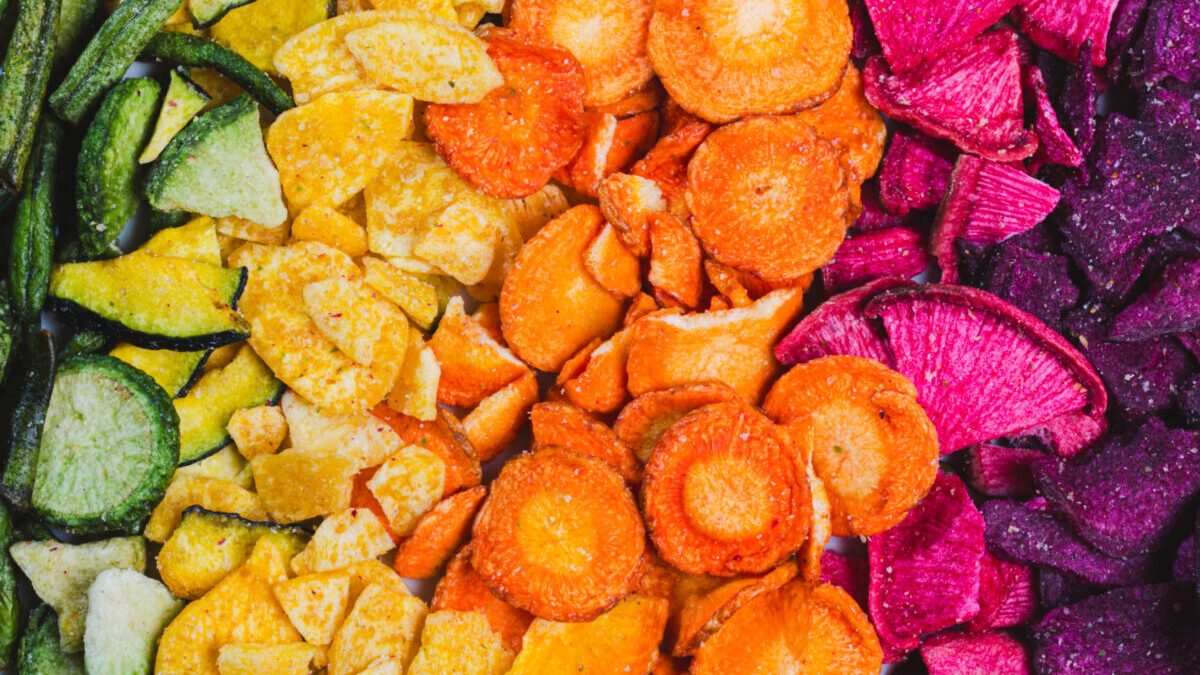
Veggie chips are widely viewed as a nutritious alternative to conventional snacks. The category spans products made from vegetable powders to mixed vegetable chips that retain the visible shape of sweet potatoes, beets, and carrots.
Many whole-vegetable chips are produced by thinly slicing vegetables and applying a "vacuum low-temperature frying" process. Although conducted at lower temperatures and pressures, the process still relies on frying in oil. As moisture evaporates from the vegetables during cooking, oil fills the remaining micro-cavities, driving the fat and calorie content far above that of the raw ingredients.
For example, a typical whole-vegetable chip (Product A) contains 532 kcal and 32.1 g of fat per 100 g. Consuming a modest 30 g serving delivers 160 kcal and 9.6 g of fat. Despite its natural appearance, the nutritional profile closely mirrors that of standard potato chips.
Snacks made with vegetable powders present similar concerns. Commercial veggie chips made from powder (Product B) carry a total package weight of 291 g, with a single 30 g serving delivering 156 kcal and 8 g of fat. Eating just a palm-sized 30 g portion supplies roughly the calories of half a bowl of rice and approximately 15% of the daily recommended fat intake (54 g).
Dehydrated or freeze-dried options are not automatically low-calorie either. While they may use less oil than fried varieties, the removal of water concentrates the raw ingredients, resulting in higher caloric density by weight. Additionally, many manufacturers add sugar, syrup, salt, or seasonings to enhance flavor.
When possible, water-rich vegetables such as carrots, bell peppers, and cucumbers provide greater satiety when consumed fresh and whole. When purchasing veggie chips, consumers should check whether the nutrition label reflects the entire package or merely a single serving, paying close attention to total calories, fat content, and added sugars or oils..
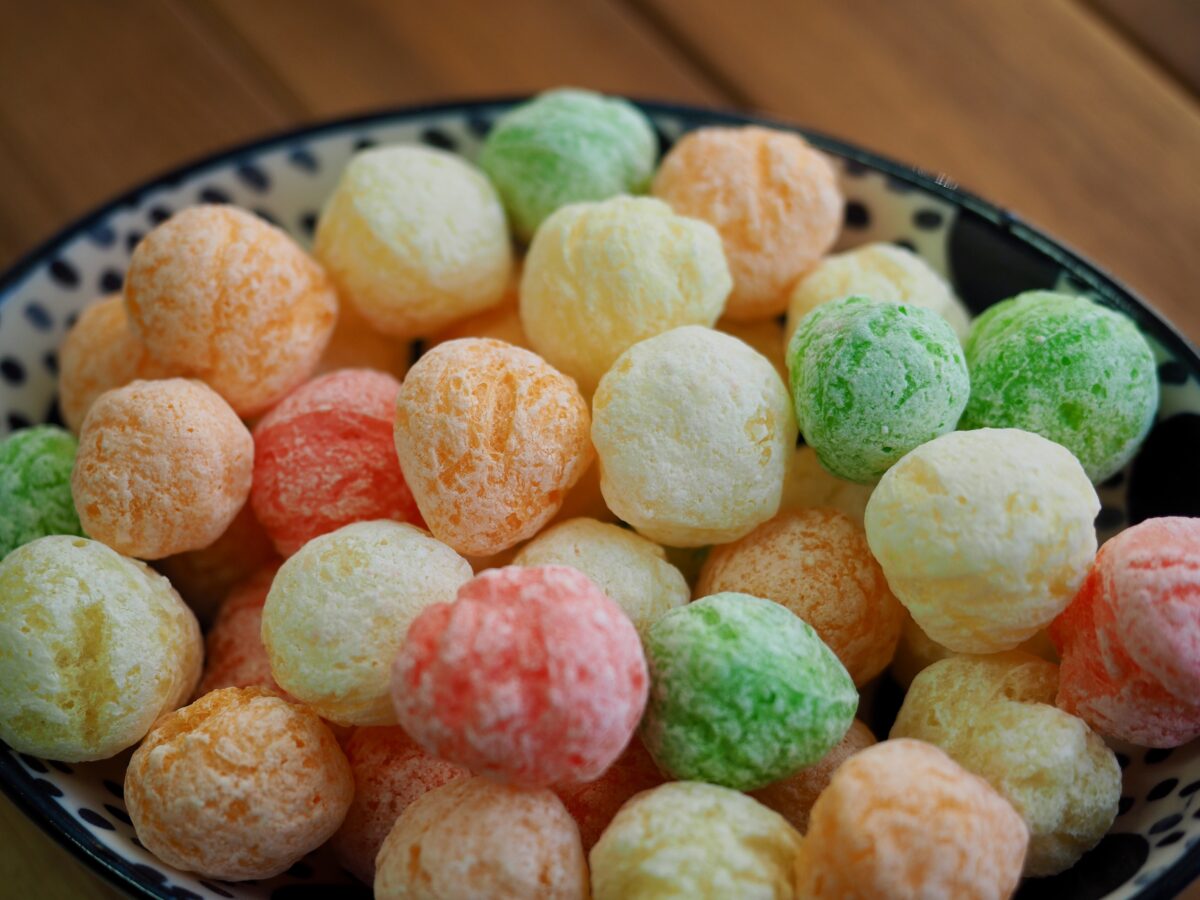
Puffed rice and crackers: High carbs and low satiety
Puffed rice snacks are often favored because they are low in fat and feature a mild flavor, yet they remain composed primarily of refined rice or brown rice carbohydrates. Consuming them by the handful can rapidly elevate carbohydrate and calorie intake. Even when fat content is low, the majority of total calories derive from carbohydrates.
Furthermore, because puffed rice products are bulky but lightweight, estimating actual consumption proves difficult. Eating directly from the bag while working or watching television often leads to overconsumption. A standard puffed rice snack (Product C) contains 399 kcal and 89.8 g of carbohydrates per 100 g. Consuming a 30 g portion supplies 120 kcal and 26.9 g of carbohydrates, while a 50 g portion yields roughly 200 kcal and 44.9 g of carbohydrates.
Round brown-rice crackers present a similar dynamic. A single 9 g brown-rice cracker (Product D) contains 35 kcal and 7.2 g of carbohydrates. Consuming five crackers totals 175 kcal and 36 g of carbohydrates. Eating 10 pieces amounts to 350 kcal and 72 g of carbohydrates—exceeding the caloric content of a standard 210 g bowl of cooked white rice (300 kcal).
Traditional puffed-rice confections (gangjeong) are frequently coated with rice syrup or sugar. A 120 g bag of barley puffed-rice gangjeong (Product E) contains 385 kcal and 44 g of sugar—supplying more calories than a bowl of rice alongside sugar levels comparable to several sugar cubes. Consumers should look beyond marketing terms like "barley" or "brown rice" and carefully inspect ingredient lists for added corn syrup, rice syrup, or refined sugar.
Because puffed rice snacks contain minimal protein and fat, they offer low satiety, causing hunger to return shortly after eating and leading to additional snacking. For effective weight management, it is advisable to pre-portion snacks onto a plate rather than eating from the package, and pair them with protein-rich foods such as a hard-boiled egg, unsweetened Greek yogurt, or low-sodium cheese.