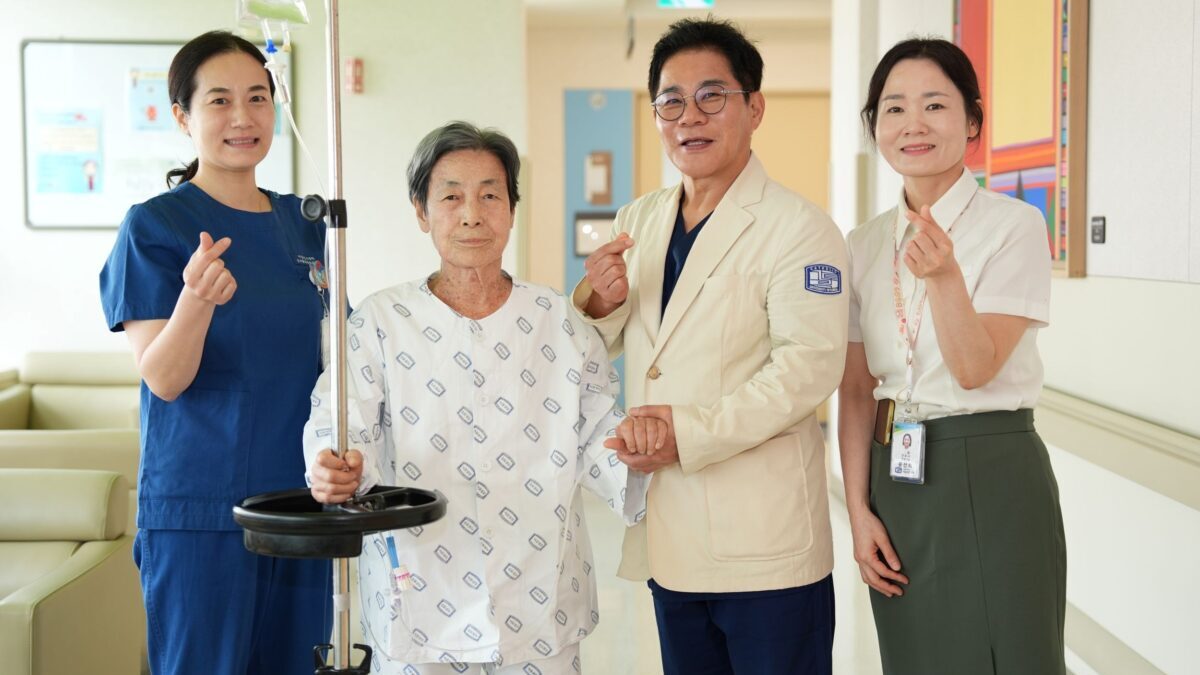
A medical team at Seoul St. Mary’s Hospital has successfully performed South Korea’s first "LLAMACORN" procedure, a novel catheter-based cardiac technique that allowed an 89-year-old patient with a failing artificial heart valve to receive a replacement without undergoing open-chest surgery.
The Catholic University of Korea’s Seoul St. Mary’s Hospital announced on July 29 that a team led by Professor Jang Ki-yuk of the Department of Cardiology at its Cardiovascular and Cerebrovascular Hospital performed the repeat transcatheter aortic valve implantation (TAVI) using the LLAMACORN method on July 22.
Overcoming Coronary Obstruction Risks in Repeat TAVI
TAVI is a minimally invasive procedure that inserts a replacement valve through a blood vessel in the groin, avoiding the severe surgical stress of opening the chest or stopping the heart. However, implanted artificial valves gradually degenerate over time. When a secondary "valve-in-valve" TAVI is performed inside a failing artificial valve, expanding the new device can push the old valve’s thin membranes, known as leaflets, outward.
Because the openings to the coronary arteries lie directly above the aortic valve, displaced leaflets risk blocking primary blood supply to the heart muscle, potentially causing myocardial infarction or cardiac arrest. In the 89-year-old patient, who had received her initial TAVI six years ago, the opening of the left coronary artery sat unusually low, presenting a severe risk of vessel obstruction if a new valve were deployed directly.
How LLAMACORN Outperforms Existing Techniques
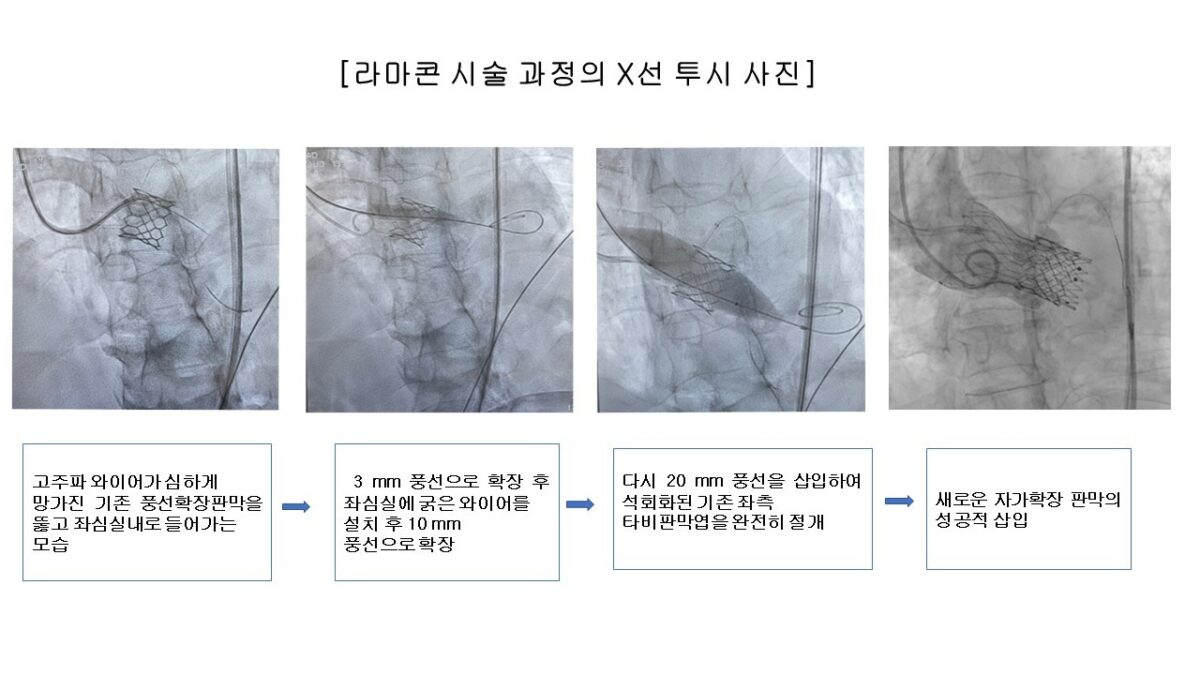
To prevent occlusion, Professor Jang’s team utilized LLAMACORN, a technique designed to pre-split the old valve leaflets before placing the new implant.
During the procedure, clinicians use a catheter equipped with a radiofrequency energy needle to puncture the old leaflet. A balloon is then inserted into the micro-opening and inflated under pressure to split the leaflet widely to both sides. Once a new self-expanding artificial valve is deployed, the gap created between the split leaflets preserves a clear channel for uninterrupted coronary blood flow.
Unlike earlier techniques such as BASILICA—which splits leaflets using an electrified wire through a technically demanding path—or UNICORN—which leaves only a small puncture and restricts replacement valve selection—LLAMACORN achieves a wider tear. This allows cardiologists to select from a broader array of replacement valve models customized to the patient's heart structure.
First reported in human clinical applications by Australian researchers in 2024, LLAMACORN remains an advanced, early-stage intervention requiring broader data collection to evaluate long-term outcomes.
Clinical Recovery and Policy Challenges
Following the procedure, echocardiogram results showed that the peak velocity of blood flow across the patient’s aortic valve dropped from 4.6 meters per second to 2.1 meters per second, signaling a dramatic reduction in valve resistance and restored cardiovascular flow.
"LLAMACORN fundamentally mitigates the critical risk of coronary artery obstruction by artificially splitting old leaflets, offering a vital therapeutic alternative for high-risk patients," said Professor Jang Ki-yuk.
While South Korea's National Health Insurance expanded coverage for initial TAVI procedures in 2022, secondary repeat TAVIs remain largely uncovered, leaving patients with substantial out-of-pocket expenses. Health policy experts note that updating reimbursement rules for repeat procedures will be necessary as TAVI adoption expands among aging populations.
With this procedure, Professor Jang’s clinical team has recorded five domestic medical firsts over the past five years, including transcatheter inferior vena cava valve replacement, axillary-artery access TAVI, BASILICA, transcaval aortic valve replacement, and LLAMACORN.