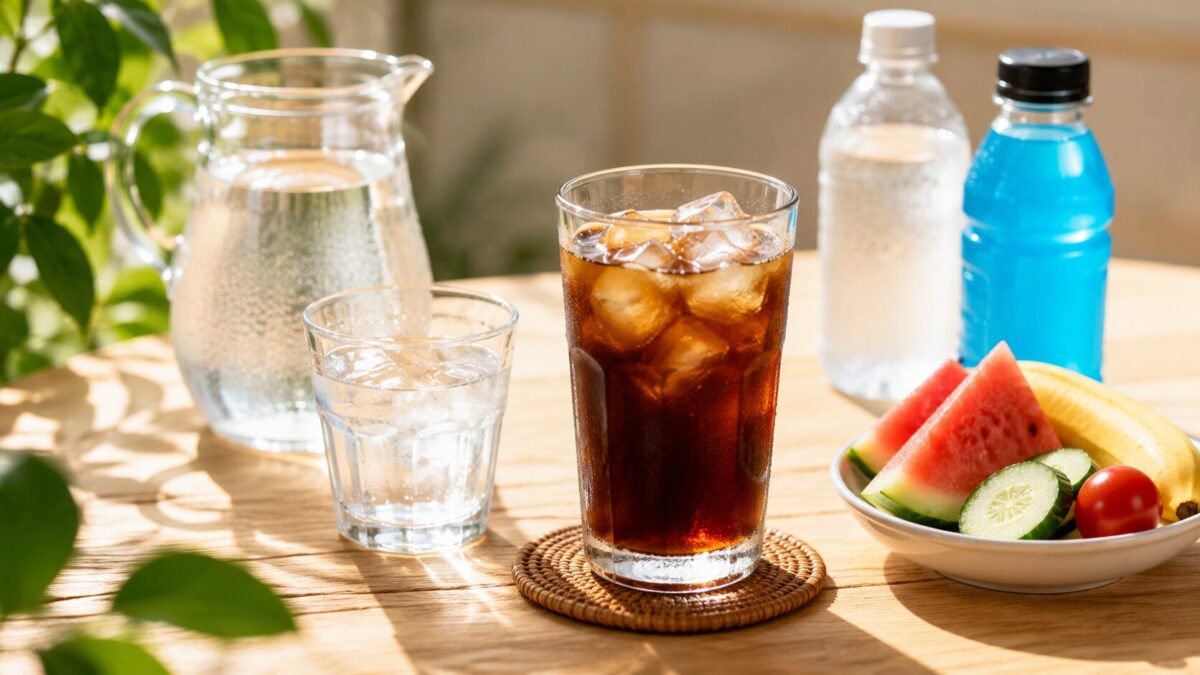
In sweltering heat, many people reach for iced coffee throughout the day. While it feels refreshing and seems to quench thirst, relying on coffee instead of water can leave your body short on essential fluids. During the summer, what you drink—and the habits you build around your beverages—makes a critical difference in preventing dehydration.
Replacing Water Entirely with Iced Coffee
Coffee provides fluids, but large amounts of caffeine act as a mild diuretic and can increase urine output. If you spend the entire day repeatedly drinking coffee instead of water, you may fail to adequately replace lost fluids, raising your risk of dehydration. During extreme heat, when sweating is elevated, this fluid deficit becomes even more pronounced.
If you have a cup of coffee, make it a habit to drink a cup of water alongside it. Meeting total daily fluid intake requirements and sipping water consistently before feeling thirsty are key steps toward staying hydrated.
Waiting Until You Feel Thirsty to Drink Water
Thirst is a delayed signal, indicating that your body's fluid levels have already dropped. In older adults, the sensation of thirst becomes less sensitive, allowing dehydration to progress unnoticed.
When spending time outdoors or in hot environments, drink small amounts of water every one to two hours, even if you do not feel thirsty. Dark yellow urine or a noticeable decrease in urination frequency are clear indicators that your body needs more fluids.
Drinking Only Water After Sweating Heavily
Exercising for extended periods in peak summer heat or engaging in heavy outdoor labor drains essential electrolytes like sodium and potassium alongside sweat. Ingesting large volumes of plain water all at once can dilute electrolyte levels, leading to fatigue and muscle cramps.
Following high-intensity exercise lasting over an hour or heavy sweating, replenish electrolytes alongside water. Drinking a moderate amount of a low-sugar sports drink or eating fluid- and potassium-rich foods—such as tomatoes, bananas, cucumbers, and watermelon—can effectively restore balance.
Quenching Thirst with Alcohol or Sugary Drinks
Beer, cocktails, soda, and sweetened coffee drinks may temporarily mask thirst, but they are ill-suited for proper hydration. Alcohol accelerates fluid loss by increasing urine output, while sugary beverages are easy to overconsume, placing an extra burden on blood sugar levels.
To effectively satisfy thirst, rely on water, unsweetened barley tea, or unsweetened non-carbonated tea as your primary choices. Limit iced coffee intake to two or three cups a day, and pair each cup with water to maintain optimal fluid balance all summer long.