If you experience sudden weakness in an arm or leg, facial drooping, or slurred speech shortly after a breast cancer diagnosis, do not dismiss it as a routine treatment side effect. A major study reveals that during the first few months following a breast cancer diagnosis and the start of treatment, the risk of an ischemic stroke—caused by a blocked blood vessel in the brain—rises sharply.
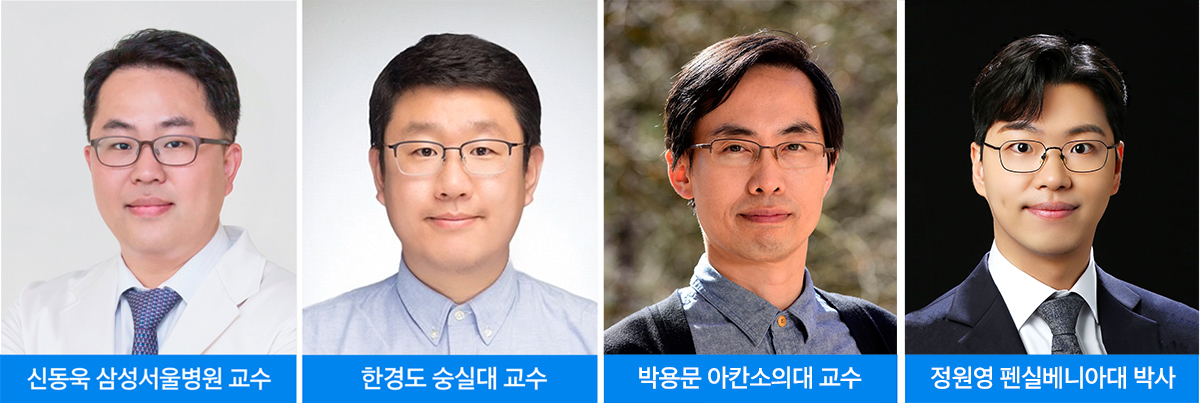
Samsung Medical Center announced on the 21st that a joint research team led by Professors Shin Dong-wook of its Department of Family Medicine and Han Kyung-do of Soongsil University's Department of Information Statistics, Insurance and Actuarial Science confirmed these findings through an analysis of National Health Insurance Service data.
The study also included Professor Park Yong-moon of the Fay W. Boozman College of Public Health at the University of Arkansas for Medical Sciences and Dr. Jung Won-young of the University of Pennsylvania. Their findings were published in the journal Neurology, the official publication of the American Academy of Neurology.
Ischemic Stroke Risk Peaking Immediately After Diagnosis
The researchers analyzed data from 107,606 women aged 18 and older who were newly diagnosed with breast cancer and underwent surgery between 2010 and 2016, excluding those with a prior history of stroke. The comparison group consisted of 322,818 women without a history of cancer, matched 3:1 by birth year and followed for an average of 7.2 years.
The risk of ischemic stroke peaked immediately after diagnosis. Within the first three months, the stroke risk for breast cancer patients was 2.90 times higher than that of women without cancer. It remained 2.27 times higher within six months and 59% higher within the first year. Over time, the gap narrowed; by three years post-diagnosis, the risk was 17% higher than the control group.
The data indicates that stroke risk does not remain elevated indefinitely. Instead, it surges during the initial period when diagnosis, surgery, and chemotherapy are concentrated, then gradually subsides.
Long-Term Averages Mask Early Spikes
Across the entire seven-year follow-up period, the overall incidence of ischemic stroke was similar between the two groups. Ischemic stroke occurred in 1,155 breast cancer patients (1.07%) compared to 3,698 women in the non-cancer group (1.15%), showing no statistically significant difference over the long term.
The researchers explained that the sharp spike in risk during the first few months was offset by a subsequent decline, smoothing out the overall long-term average. Consequently, patients and clinicians should not rely solely on seven-year incidence rates to dismiss early stroke risks following a breast cancer diagnosis.
The researchers also clarified that a "2.9-fold increase" does not mean nearly 30% of breast cancer patients will suffer a stroke, but rather that their relative risk is nearly triple compared to peers without cancer. Individual risk varies based on factors like age, blood pressure, diabetes, and smoking status. Furthermore, as an observational retrospective study, the findings demonstrate correlation rather than direct causation, and apply specifically to patients who underwent surgery.
Overlapping Factors Drive Hypercoagulable State
The elevated risk immediately following diagnosis stems from several overlapping factors. Cancer itself can induce a "hypercoagulable state," making the blood more prone to clotting. When surgical inflammation and the cardiovascular strain of chemotherapy are introduced, the risk of a cerebral vessel blockage increases significantly.
This risk surge was particularly pronounced in patients with pre-existing cardiovascular risk factors such as hypertension, type 2 diabetes, or a history of smoking. Among breast cancer patients who currently smoked, the risk of ischemic stroke was 2.26 times higher than in cancer-free women.
"This large-scale study confirms a distinct time-dependent pattern where ischemic stroke risk temporarily surges immediately following breast cancer diagnosis and treatment, then steadily declines," said Professor Park Yong-moon, the study's first author. "It is essential to consider not only the magnitude of the risk, but also when it occurs."
Professor Shin Dong-wook emphasized, "Patients with cardiovascular risk factors such as high blood pressure or diabetes, as well as smokers, require particularly meticulous management during the early phase of cancer treatment."
Recognizing Warning Signs and Seeking Immediate Care
An ischemic stroke occurs when a blood vessel delivering blood to the brain becomes obstructed, depriving brain tissue of oxygen and nutrients. Delaying treatment expands the area of brain damage, increasing the likelihood of permanent paralysis or speech impairment.
Warning signs include sudden weakness in an arm or leg, facial drooping on one side, slurred or abnormal speech, and sudden vision impairment in one eye.
"If any of these symptoms appear, patients should immediately suspect an ischemic stroke and seek emergency medical care without delay," Shin advised.