For patients awaiting kidney transplantation, elevated levels of antibodies against donor tissues pose a formidable barrier to finding compatible organs while drastically increasing the risk of post-transplant rejection. A research team at Seoul St. Mary’s Hospital has been honored with a national science award for discovering a key inflammatory pathway that drives the formation of these challenging antibodies.
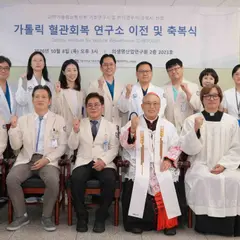
Seoul St. Mary’s Hospital announced on the 13th that a research team featuring Prof. Lee Han-bi of the Division of Nephrology and Dr. Shin Yoo-jin of the Organ Transplantation Research Institute at The Catholic University of Korea College of Medicine (co-first authors), alongside Prof. Jung Byung-ha of the Division of Nephrology (corresponding author), received the 36th Science and Technology Outstanding Paper Award. Hosted by the Korean Federation of Science and Technology Societies (KOFST), the awards ceremony took place on Sept. 30 at the Korea Science and Technology Center in Seoul.
Uncovering the Mechanics of High Sensitization
The study investigated antibodies targeting human leukocyte antigens (HLA)—proteins vital for enabling the immune system to distinguish self-cells from foreign tissues. Exposure to foreign HLA through prior blood transfusions, pregnancy, or previous organ transplants can lead to a "highly sensitized" state marked by abundant HLA antibodies. Finding a compatible donor for highly sensitized candidates is exceptionally difficult, and the risk of graft rejection following surgery remains high.
To decode the underlying cellular mechanisms, the researchers utilized single-cell transcriptome analysis—a technique that measures gene expression at the individual cell level—to analyze approximately 18,000 immune cells from a highly sensitized mouse model.
The analysis revealed that HLA antibody formation is driven not only by antibody-producing B cells, but also by T helper 17 (Th17) cells and the Interleukin-17 (IL-17) signaling pathway. The findings demonstrate that inflammatory crosstalk among immune cells plays a pivotal role in stimulating HLA antibody production.
New Horizons for Desensitization Therapy
The study was published online in June 2024 and formally featured in the November 2025 issue of Kidney Research and Clinical Practice.
The team's insights point toward novel strategies for "desensitization therapy"—medical interventions aimed at reducing pre-existing HLA antibodies before transplantation—and for preventing acute and chronic rejection post-surgery. Although the findings were derived from animal models and require further clinical confirmation to establish whether inhibiting the Th17/IL-17 pathway effectively reduces antibody titers in human patients, the work establishes a key theoretical foundation.
"This study provides a fresh perspective on understanding the immune responses of highly sensitized transplant candidates," said Prof. Lee Han-bi. "We will continue our research to translate these insights into practical clinical protocols that directly benefit patients waiting for kidney transplants."