During sleep, the brain organizes information learned while awake and stores it as long-term memory. To do that, it is important to spend enough time in deep sleep during the night.
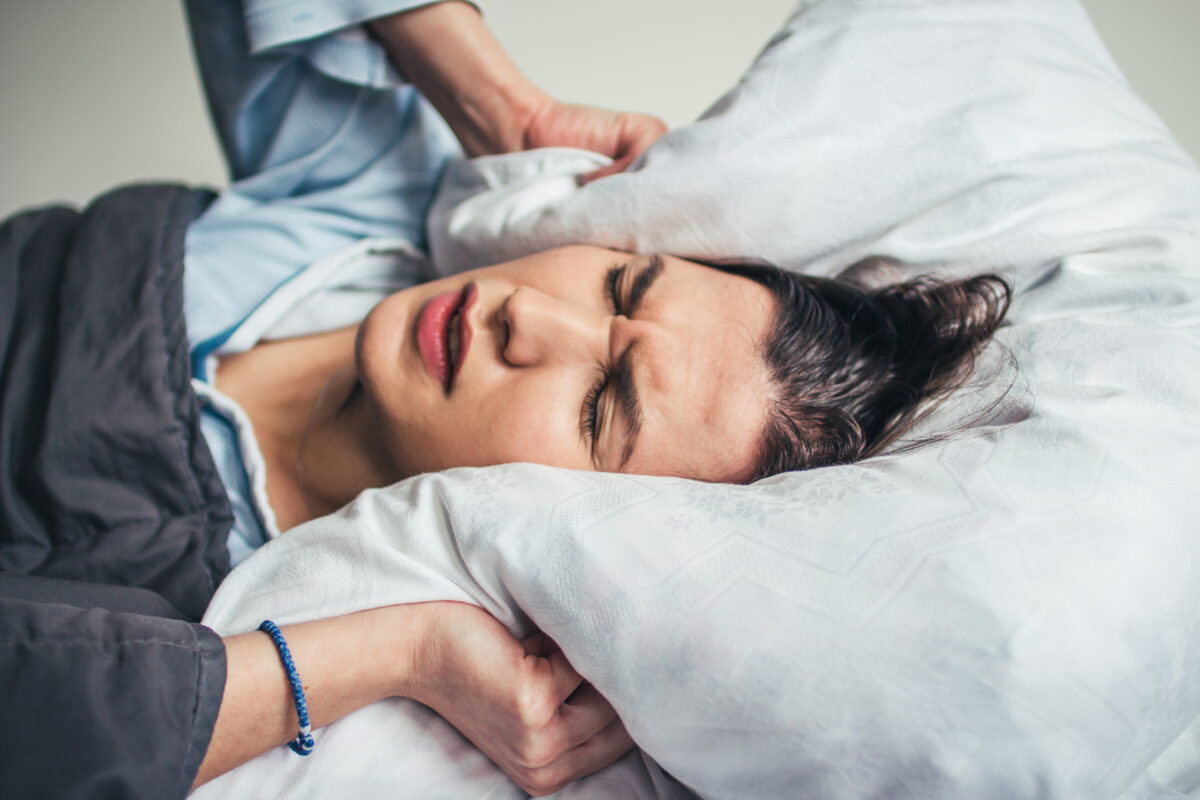
A study found that irregular sounds — such as TV audio, music or conversation — may not significantly change total sleep time but can disrupt deep sleep and weaken memory.
A neuropsychology research team at the University of Freiburg in Germany published findings in the international journal 《iScience》 showing that randomly occurring sounds during sleep interfere with the transmission of slow waves, which are important for forming long-term memories.
The team ran an experiment involving 20 healthy adults. After completing various memory tasks — including memorizing words and learning finger sequences — participants took a three-hour nap. Over the two-day experiment, on one day they were exposed during sleep to brief clicking sounds played at random intervals; on the other day, they heard no sounds at all.
While participants napped, the researchers analyzed their sleep using electroencephalography (EEG) and then reassessed how much of what they had learned they remembered after waking.
The results showed that on the day participants were exposed to random sounds, total sleep time did not differ much from when they slept in a quiet environment, but time spent in deep sleep decreased. In particular, the process by which slow waves — which play an important role in storing learned material as long-term memory — propagate across the brain did not proceed smoothly. Participants were also less able to recall what they had learned before falling asleep.
During deep sleep, slow waves spread throughout the cerebral cortex, helping organize information learned during the day and store it as long-term memory. The researchers concluded that random sounds disrupted the propagation of these brain waves, reducing the efficiency of memory formation as well.
“Research is also underway to boost memory by using sound during sleep, but inappropriate auditory stimulation can instead have negative effects on sleep and memory formation,” the team said. “However, additional studies are needed to confirm whether the same results appear across different age groups and in real-life environments.”