In late June, a man in his late 70s suddenly collapsed while checking his rice paddies after finishing spring planting and routine fieldwork. Believing he had no serious health problems, he had continuously pushed through his demanding routine on the farm. On the morning of the incident, he had been working as usual while driving a heavy cultivator.
Fortunately, the collapse did not lead to a major physical accident. However, diagnostic tests at the hospital confirmed an unexpected and perilous diagnosis: advanced, severe aortic valve stenosis. The valve that guards the outlet of the aorta—the main artery carrying oxygenated blood from the heart to the rest of the body—had narrowed significantly, preventing enough blood from flowing out to sustain his system.
Aortic valve stenosis is not a common disease. Its pathology is also distinctly different from ischemic heart diseases such as angina or myocardial infarction, as well as from arrhythmias—heart conditions that affect hundreds of thousands of individuals each year.
However, data from South Korea's Health Insurance Review and Assessment Service (HIRA) show that the number of patients who visited hospitals for aortic valve stenosis skyrocketed from 13,787 in 2018 to 47,676 in 2024. With population aging accelerating rapidly, this upward trajectory is becoming increasingly pronounced.
In particular, an overwhelming share of these patients are concentrated among individuals in their 70s and older. While it may not be a household name, once you reach your 70s, it becomes a condition that is hard to dismiss as a disease that has nothing to do with you.
As you age, valves age, too — why?
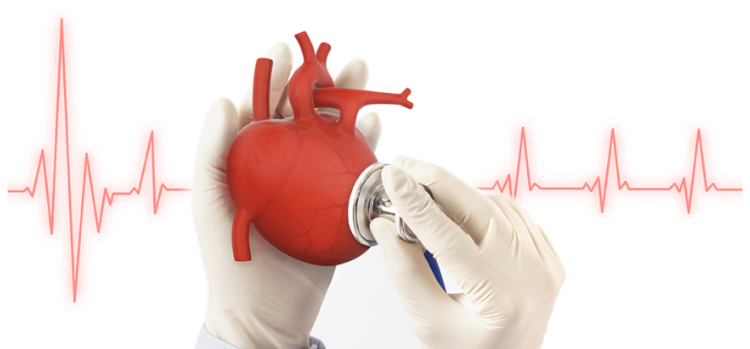
The human heart relies on four primary valves: the mitral, tricuspid, aortic, and pulmonary valves. Among them, the aortic valve serves as the critical door that opens when blood leaves the left ventricle in the lower left section of the heart and enters the aorta. This gateway must open fully and fluidly for blood to circulate properly throughout the entire body.
However, as people age, the valve tissue can become progressively thicker and stiffer, preventing it from opening well and narrowing the pathway for blood to exit. Valve calcification is frequently the primary cause behind these structural shifts. Over time, these age-related changes can gradually culminate in severe valve stenosis.
Lee Mi-rae, a professor at the Cardiovascular Center at Samsung Changwon Hospital and a cardiologist in the Division of Cardiology, compares this phenomenon to a household faucet. If you partially block a faucet opening with your finger, the outlet narrows and the escaping stream becomes significantly stronger. The same mechanism applies to a diseased heart valve; when the opening constricts, blood is forced to flow through at a much faster velocity. Echocardiography, an ultrasound technique that visualizes the heart and its surrounding structures, assesses the severity of stenosis as mild, moderate, or severe by calculating a combination of blood-flow velocity, pressure gradients, and the physical valve area.
"Aortic valve stenosis, much like high blood pressure or high cholesterol, frequently sits in a gray zone between normal physiological aging and clinical disease, so it is not something you can diagnose cleanly like slicing tofu with a knife," Professor Lee Mi-rae explains. Clinicians must carefully evaluate multiple diagnostic tests to determine whether a patient's current stage reflects normal aging or a condition that requires active medical intervention.
The key factor is always how narrowed the valve has become. If the stenosis is mild, doctors do not immediately perform an invasive procedure or open surgery. Instead, they first focus on strictly managing major systemic risk factors—such as high blood pressure, diabetes, high cholesterol, kidney function, and smoking—while closely monitoring the patient’s clinical course.
However, the situation changes completely if the condition progresses to severe disease and serious symptoms appear. This is because it is structurally impossible to restore a severely narrowed, rigid valve back to normal through medication alone.
What warning signs should families watch for?
Aortic valve stenosis progresses at a slow, insidious pace. As a result, patients themselves often fail to notice the gradual physical changes. They might start driving instead of walking distances they used to manage with ease, opt for elevators over stairs, and take frequent, prolonged breaks in the middle of farm work or standard household chores. It is incredibly easy for both the patient and their family to brush these subtle shifts off, assuming it is just old age.
Professor Lee Mi-rae notes that one tricky characteristic of valve disease is that structural severity and clinical symptoms do not necessarily move in lockstep, adding that many older patients also actively hide their symptoms because they do not want to worry their families. In other words, you cannot assume the disease is mild simply because the day-to-day symptoms do not seem severe.
Families should also be highly cautious if an elderly relative with a history of long-standing high blood pressure suddenly experiences a spontaneous drop in blood pressure and feels relieved. Hidden valve disease or other serious declines in overall heart function could be the actual reason behind the sudden drop.
Shortness of breath follows a similar pattern. Anyone can feel winded as they age. However, progressive shortness of breath may be the only warning sign of underlying heart disease. You cannot assume everything is perfectly fine just because you feel breathless without experiencing classic chest pain.
Why get an echocardiogram if a heart murmur is heard?
Aortic valve stenosis is sometimes discovered entirely by chance before noticeable symptoms manifest—such as when a local clinic detects an abnormal heart murmur during routine auscultation, or when an ultrasound screening during a routine health checkup picks it up.
A heart murmur is a sound that should not normally resonate from the heart. That said, not all murmurs signify danger; some are entirely benign.

However, if an older patient presents with a heart murmur along with shortness of breath, chest pain, dizziness, or fainting, it is best to confirm the underlying cause immediately with an echocardiogram. Echocardiography precisely evaluates how narrowed the valve is, how fast blood is passing through it, and how much physiological strain is being placed on the heart muscle.
Of course, ultrasound imaging alone can be inconclusive in certain complex scenarios. Even if the blood-flow velocity does not appear exceptionally high, the underlying stenosis can still be structurally severe. That is why doctors frequently review other advanced imaging tests, such as a cardiac CT scan, before making a final clinical judgment.
What if someone insists “I’m fine” despite severe disease?
Sometimes diagnostic tests confirm severe, high-risk disease, yet the patient insists they feel perfectly fine. This is why doctors do not simply ask, “Are you short of breath?” They also look closely at objective lifestyle changes, evaluating whether the patient walks notably less than before, actively avoids stairs, has reduced their overall activity levels, or has experienced sudden bouts of dizziness or physical collapse.
If the necessary tests suggest that symptoms are mild or the risk is not yet high, doctors will choose to follow the patient regularly. They perform echocardiography every six months or one year to monitor whether the valve is narrowing further over time.
But if progressive shortness of breath, chest pain, fainting, or repeated dizziness that feels like an impending loss of consciousness occurs, it is time to begin full-scale therapeutic intervention. In cases of severe aortic valve stenosis, leaving symptoms untreated can suddenly and drastically raise the risk of heart failure or sudden death.
What happens after aortic valve stenosis is confirmed?
The definitive direction of treatment is to replace the damaged valve. The primary options largely include traditional aortic valve replacement surgery, which involves opening the chest to manually replace the valve, or Transcatheter Aortic Valve Implantation (TAVI), a minimally invasive procedure in which an artificial valve is guided into place through the femoral artery in the thigh.
The ideal clinical approach is never determined by chronological age alone. Instead, doctors thoroughly consider individual surgical risk, vascular condition, valve anatomy, coexisting medical diseases, and the patient’s personal life goals. The ultimate aim is to find the option that is safer and provides longer-lasting benefits.
Recently, the National Health Insurance criteria for the TAVI procedure in South Korea underwent a significant expansion. Until recently, patients had to meet strict requirements—such as being age 80 or older and falling into a high surgical-risk group (an STS score of 8% or higher)—to qualify for a highly subsidized 5% out-of-pocket share for the procedure.
Now, cases in which a multidisciplinary hospital heart team recognizes the clear clinical need for TAVI can also be included as covered benefits. In other words, opportunities have expanded for patients in their 70s—or even their 60s—to undergo TAVI with the same 5% out-of-pocket financial share.
Samsung Changwon Hospital officially began performing TAVI in 2023. However, behind that modern capability is 40 years of foundational experience in cardiac care: in 1986, the institution opened the very first specialized heart center in South Gyeongsang Province and successfully executed its historic first open-heart surgery that same year.
[FAQ] Questions patients ask most often
If I’m short of breath, does that mean I should immediately suspect aortic valve stenosis? No. Shortness of breath in older adults can result from a wide array of causes, including lung disease, anemia, heart failure, arrhythmia, and a general lack of exercise. Still, if you find yourself becoming short of breath with lighter physical activity than before, it is a good idea to identify the root cause. If chest pain, dizziness, or signs of fainting are also present, the likelihood of valvular heart disease increases significantly.
If a heart murmur is heard, do I need to go to a large hospital? Not all heart murmurs are dangerous. However, if an older patient has a relatively loud murmur, if a completely new murmur is heard that was not present in prior exams, or if shortness of breath, chest pain, or signs of fainting occur together, a more detailed evaluation at a specialized center is needed.
Can aortic valve stenosis be treated with medication? Managing systemic risk factors such as high blood pressure, diabetes, and high cholesterol may help slow the overall progression of the disease. However, it is structurally impossible to return a severely narrowed, calcified valve to normal with medication alone. If severe disease is accompanied by clinical symptoms, medical teams will actively consider mechanical intervention via TAVI or open-chest surgery.
Expert profile: Lee Mi-rae, professor at the Cardiovascular Center at Samsung Changwon Hospital (Division of Cardiology). She graduated from Korea University College of Medicine and completed training at Samsung Medical Center in Seoul through a fellowship. She holds a doctorate in medicine and specializes in echocardiography for diagnosing heart disease. She currently serves as head of the cardiology subdivision at Samsung Changwon Hospital.