Researchers have unveiled findings that raise hopes for a future where a single pill could safely and effectively treat metabolic steatohepatitis and cirrhosis.
While many people traditionally associate "fatty liver" with heavy alcohol consumption, recent years have seen a global surge in patients suffering from metabolic dysfunction-associated steatohepatitis (MASH). In MASH, fat accumulates in the liver and triggers inflammation due to underlying metabolic conditions like obesity and diabetes, completely independent of alcohol intake. What makes this disease particularly dangerous is its ability to progress to liver fibrosis (cirrhosis)—where the liver becomes stiff and scarred—or even develop into liver cancer. Until now, scientists have lacked a definitive answer as to why this progression occurs or how to stop it.
Now, a research team at Kyungpook National University Hospital—led by Professors Park Keun-gyu and Choi Yeon-kyung alongside Dr. Kim Ye-jin—has identified the driving mechanism behind this hepatic malfunction and proposed a promising new therapeutic approach.
Cholesterol and "Rusted Iron" Trigger Liver Cell Destruction
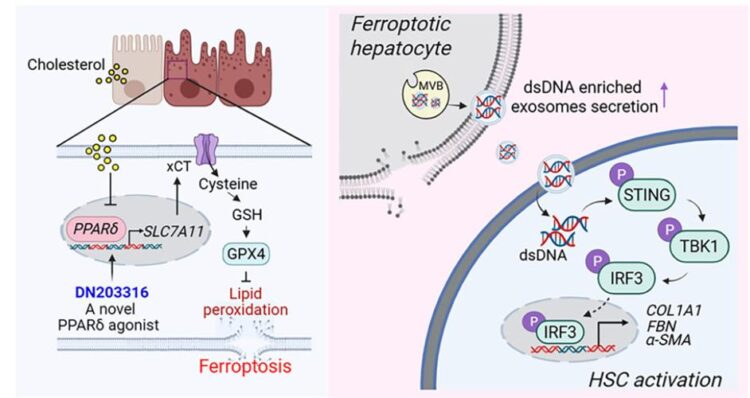
When excessive cholesterol accumulates in the body, it sparks a dangerous chemical reaction inside liver cells. Driven by intracellular iron, the cell membrane oxidizes as if it were rusting, forcing the cell to self-destruct. In medical terms, this type of iron-dependent cell death is known as ferroptosis.
By studying mice fed a high-cholesterol diet, the research team discovered that a critical gene called PPARδ, which acts as a protective shield for liver cells, dropped sharply. Deprived of this shield, the liver cells were left entirely defenseless, breaking down like rusted iron.
How Malfunctioning Cells Spread a "Zombie Virus" via Exosomes
The damage, however, does not stop with the dying cells. Just before they perish, the cholesterol-damaged liver cells dispatch urgent danger signals. They tightly pack intracellular DNA debris into microscopic sacs called exosomes and expel them outward.
When neighboring hepatic stellate cells absorb these sacs, they are stimulated in a manner akin to a spreading zombie virus. Once activated, these surrounding cells begin secreting the rigid, fibrous substances that stiffen the liver. The researchers identified this chain reaction as the true catalyst behind liver fibrosis.



Restoring the Shield: The Development of Drug Candidate DN203316
To break this destructive cycle, the Kyungpook National University Hospital team partnered with the Daegu-Gyeongbuk Medical Innovation Foundation and the biotech firm Cureverse to develop a targeted therapeutic compound named DN203316.
When administered, the drug successfully reactivates and strengthens the missing PPARδ shield. With the shield restored, the rust-like ferroptosis of liver cells is halted, preventing the cells from releasing the zombie-virus-like exosome debris into surrounding tissue. Consequently, the researchers confirmed a striking therapeutic effect: the previously hardening liver tissue recovered, becoming soft and healthy again.
For years, the medical community has lacked a precise link explaining why steatohepatitis leads to cirrhosis. This study is highly significant not only because it is the first to map out this exact causal pathway, but also because it opens the door to a viable, direct drug treatment.
Supported by the Ministry of Science and ICT and the Ministry of Education, this study was published in the June 5 issue of Experimental & Molecular Medicine, a leading international journal.