This week, I want to share a story that strikes a deeply moving narrative chord. Next week marks the 15th anniversary of the passing of Dr. Ralph Millard, a visionary surgeon who left an indelible mark on the history of medicine. Today’s column looks back at a landmark surgical breakthrough that took shape on the harsh, war-ravaged soil of Korea in 1954.
The setting was a grand conference hall in Stockholm, Sweden, hosting the inaugural general meeting of the International Society of Plastic Surgery in 1955. Speakers from around the world were strictly allotted five minutes each. The moment time expired, a red light signaled the end of the presentation, and no one dared to break the rule.
In the back of the hall sat a young American surgeon in his 30s. Flipping through his slides, he grew anxious, drifting into thought: There is no way I can condense this into five minutes.
When his turn finally came, he stood up. Walking slowly toward the podium, he began to speak before he even reached the microphone, instantly turning heads across the room.
“Ladies and gentlemen, my mentor and the honorary chair of this society, Sir Harold Gillies, taught an important principle of plastic surgery for handling tissue during an operation: 'Never throw anything away until you are sure you do not need it.' If you will allow it, I will use even this moment—walking to the podium—as part of my presentation time.”
He continued as he walked: “Many surgical techniques have been tried to correct what was formerly called a 'harelip'—a cleft lip. But there is still no single best operation that satisfies everyone.”
(Omitted)
“What I will present today is a new surgical technique performed on cleft lip in Korean patients.”
(Omitted)
By the time the young doctor reached the podium and began projecting his prepared slides, the room was already stirring.

The images displayed surgical outcomes in Korean children that were far superior to anything previously reported in medical literature. The approach elegantly addressed a range of difficult anatomical challenges that existing techniques had routinely failed to improve. Throughout his presentation, the red light signaling overtime never flashed; the organizers were too spellbound to turn it off.
This was the exact moment the "Millard technique" (rotation-advancement)—which remains the global gold standard for cleft lip repair today—was introduced to the world. The young physician was Dr. D. Ralph Millard, Jr. (1919–2011). In that moment, Korea carved its name onto a foundational page in the history of modern surgery, and these operations on Korean children remain a staple in plastic surgery textbooks to this day.
Shifting the Paradigm on Korean Soil
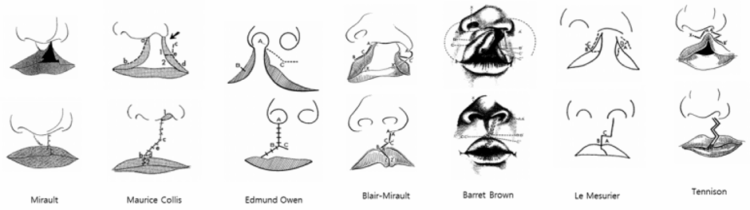
At the time, numerous surgical methods existed, but none could successfully recreate a natural philtral column or a proper vermilion border. The sheer variety of techniques was proof that a truly effective solution had not yet been found. How, then, did this world-changing medical breakthrough take shape amidst the ruins of post-war Korea?
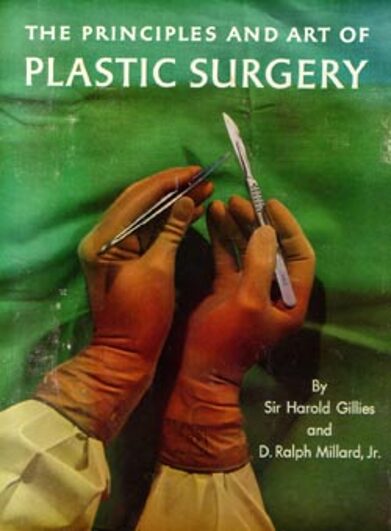
Reconstructive plastic surgery had advanced dramatically through the tragedies of the two World Wars. One physician devoted his life to restoring faces to soldiers who had lost them in battle, laying the foundation for modern plastic surgery: Sir Harold Gillies (1882–1960), widely revered as the “father of modern plastic surgery.”
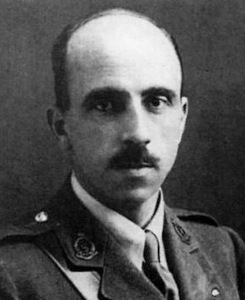
Ralph Millard was his star pupil—a rising talent accomplished enough to co-author a seminal textbook alongside the master himself.
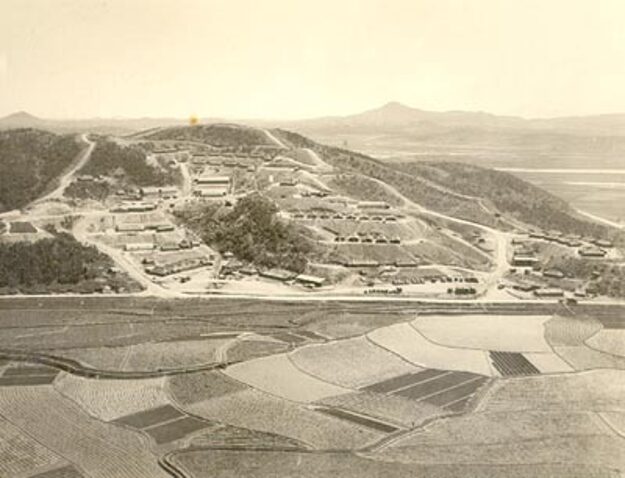
In 1954, the U.S. Marine Corps deployed Millard as a medical officer to a Marine Mobile Army Surgical Hospital (MASH) near Seoul.
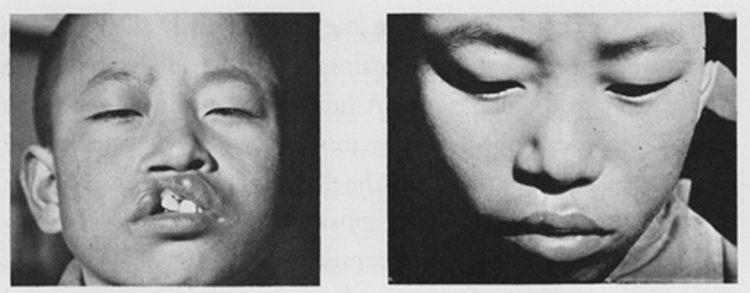
The first cleft lip patient he operated on in Korea was the 7-year-old son of a local civilian military employee. The child and his parents were overjoyed; in post-war Korea, simply being able to receive surgery was a matter of extraordinary luck. But Millard was deeply unsatisfied with the outcome. An unnatural, rigid scar left in the middle of the lip bothered him.
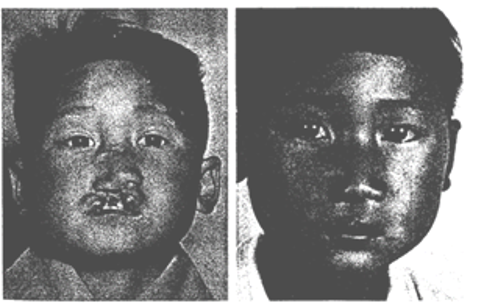
He set the patient’s photograph on an easel, studying it day and night until a revolutionary idea struck him. Conventional surgery treated the cleft area as "abnormal tissue," cutting it away and stitching together what remained. Millard reframed the entire problem: “All the normal lip tissue is already there; it’s just displaced.” Instead of discarding tissue, he rotated and advanced it, guiding it back to its rightful anatomical position. It was not just a technical adjustment, but a profound conceptual shift in how surgeons understood cleft repair.
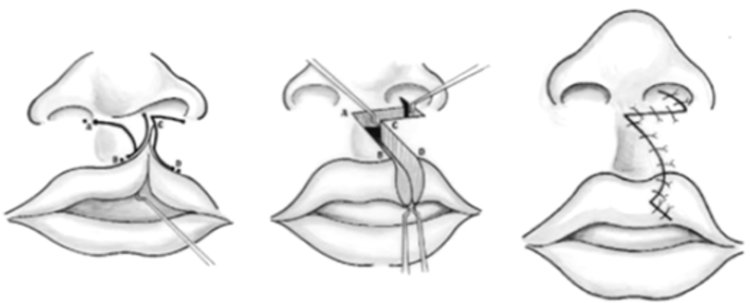
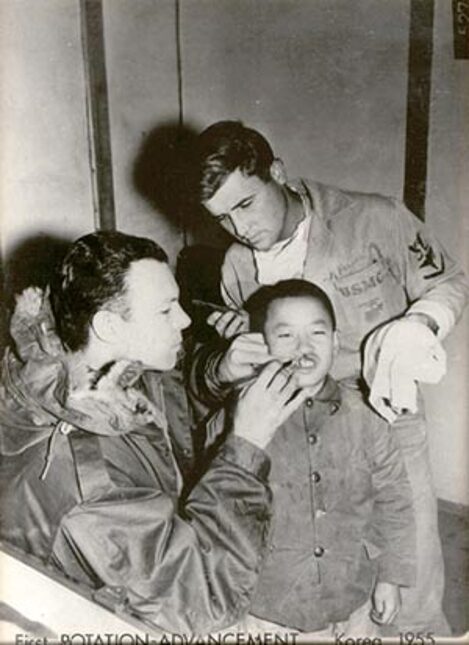
This marked the historic birth of the world’s first rotation-advancement procedure, performed right there on a Korean child. The result was remarkable. After surgery, the scar was naturally concealed along the philtral column, and the lip regained a beautiful, balanced “Cupid’s bow” shape.
Word spread like wildfire across the country that an American military doctor could fix cleft lips. Children arrived at the hospital on ox carts or carried on their fathers’ heavy A-frame packboards (jige).



As the volume of patients grew beyond what the MASH unit could handle, operations were moved to the Geumchon Civil Affairs Office Hospital (now the Gyeonggi Provincial Medical Center Paju Hospital). Yet, in the harsh post-war environment, the facility lacked even reliable electricity.
The two doctors’ dedication never wavered. On clear days, they pushed the operating table to wherever the natural sunlight fell. After sunset, they relied entirely on the steady beam of a flashlight held by Kim Ju-il, the hospital director, as Millard took the scalpel in hand. In the dead of winter, turning on the stove filled the unventilated room with smoke and blinded their vision, making it impossible to heat the space properly. Undeterred, they kept operating in fur hats, heavy parkas, and winter boots.
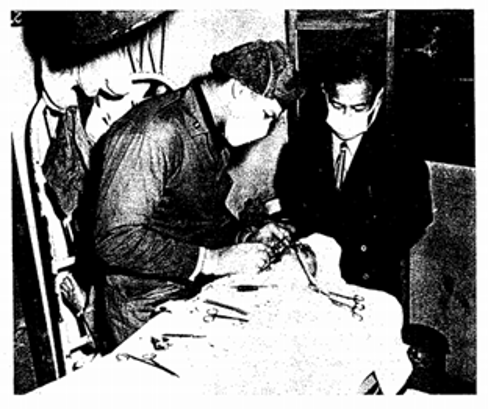
The technique that transformed plastic surgery worldwide did not emerge from a state-of-the-art medical center or a pristine laboratory. It was forged in a dark, post-war Korean hospital, driven by families who walked vast distances for care, and sustained alongside a local doctor who guarded the operating room with a single flashlight. That is where it all began, establishing an extraordinary bond that remains one of the defining chapters in medical history.

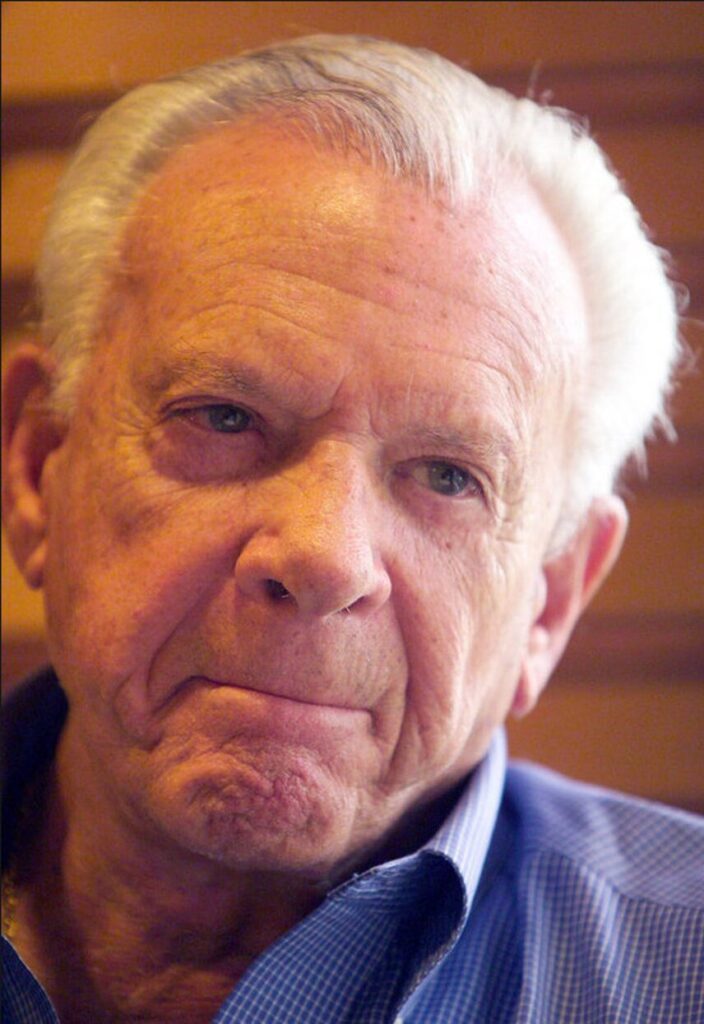
After returning to the United States in 1955, Dr. Ralph Millard went on to lead a distinguished academic career, publishing extensively and serving as president of the American Society of Plastic Surgeons. Recognized in 2000 as one of the "10 greatest plastic surgeons of the millennium," he passed away on June 19, 2011, at age 92.

Meanwhile, Dr. Kim Ju-il, who served as the inaugural director of both the National Geumchon Relief Hospital and the Gyeonggi Provincial Geumchon Hospital, chose a quieter path of service. He remained faithfully in Paju, dedicated to caring for his community. He continued seeing patients in person until the age of 95 and passed away on August 16, 2023, at age 98.
As we approach the 15th anniversary of Dr. Millard’s passing and the 3rd anniversary of Dr. Kim Ju-il's death, we remember their remarkable partnership. On the war-scarred battlegrounds of 1954, the cross-border devotion of these two doctors restored smiles and futures to countless children. Their shared legacy will forever be remembered as one of the warmest and brightest chapters in the history of plastic surgery.