Air fryers have quickly become an indispensable staple in modern kitchens, celebrated for their ability to turn out perfectly crispy meals with minimal time and effort. However, food safety experts warn that not every ingredient is suited for this rapid, high-heat cooking method. Certain foods can generate harmful chemical compounds when subjected to intense air circulation, while other common household ingredients can physically damage the appliance or even spark a kitchen fire.
The Chemical Risk of High-Carbohydrate Foods
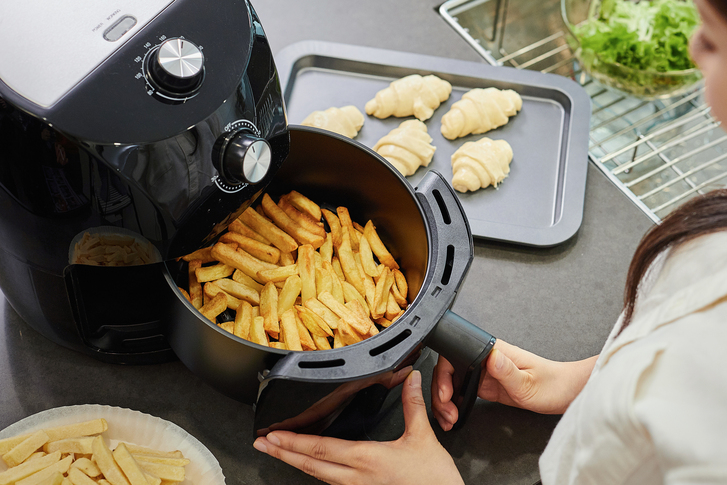
Culinary and safety experts recommend exercising caution when cooking carbohydrate-heavy ingredients, such as bread or frozen French fries, in an air fryer. When starches are exposed to elevated temperatures, a chemical reaction can trigger the formation of acrylamide, a potential human carcinogen.
Acrylamide acts as a neurotoxin that can damage nerve cells and induce chronic inflammation. Because the compound does not easily break down within the human body, it can gradually accumulate in the bloodstream and tissues over time. Long-term dietary exposure to accumulated acrylamide has been increasingly linked by researchers to an elevated risk of developing neurodegenerative conditions, including Alzheimer’s disease.
To establish clear consumer safety boundaries, South Korea’s Ministry of Food and Drug Safety conducted a comprehensive analysis evaluating the volume of acrylamide produced across various popular air-fried foods, including white bread, frozen potatoes, pork belly, and salmon. The regulatory study revealed that protein-rich foods like pork belly and salmon generated negligible, safe levels of acrylamide regardless of the cooking temperature or duration.
In stark contrast, starchy options quickly crossed safety thresholds. Acrylamide concentrations exceeded the European Union’s recommended benchmark limits when white bread was air-fried at 180°C for 24 minutes or longer, and when frozen potatoes were cooked at 190°C for 40 minutes or more.
To mitigate these risks, the ministry released explicit preparation guidelines. Consumers are advised to limit cooking times for bread to 20 minutes or less at 180°C, or 15 minutes or less if the temperature is set to 190°C. For frozen French fries, the safety agency recommends cooking a standard 500g batch at a maximum temperature of 190°C for no longer than 30 minutes.
Why Popcorn Poses a Severe Fire Hazard
While the intense convection heat of an air fryer is technically powerful enough to pop corn kernels, attempting to make homemade popcorn in the appliance introduces severe safety risks. Popcorn kernels naturally vary in size and moisture content, preventing the air fryer's internal mechanism from distributing heat uniformly across the basket.
As the powerful fan circulates air at high speeds, lightweight unpopped or partially popped kernels can easily become airborne. If these loose kernels get lodged in or stick directly to the exposed internal heating element, they can instantly ignite, creating an immediate fire hazard. For a safer snack alternative, experts note that a traditional microwave, a covered stovetop pot, or a frying pan with a small amount of oil remain far safer options for making popcorn at home.
The Structural Threat of Melting Cheese
Home cooks should also exercise strict caution when introducing cheese into an air fryer. Prepared foods that firmly hold their structural shape, such as breaded cheese sticks, or a controlled layer of grated cheese melted directly on top of a piece of toast, generally pose no operational issue.
However, baking loose shredded cheese or individual slices completely on their own should be entirely avoided. Because cheese liquefies rapidly under direct, high-velocity heat, loose pieces can easily blow around the chamber, sticking to the bottom basket or binding directly to the fan and heating element. Once baked onto these sensitive internal components, the melted residue can cause the electrical unit to malfunction or permanently damage the appliance.