When a liver cancer diagnosis is delivered, the immediate instinct for many patients and their families is to look toward Seoul. They grapple with heavy questions: Is surgery necessary? Should chemotherapy begin immediately? Or is there a way to treat the tumor with a needle-based procedure?
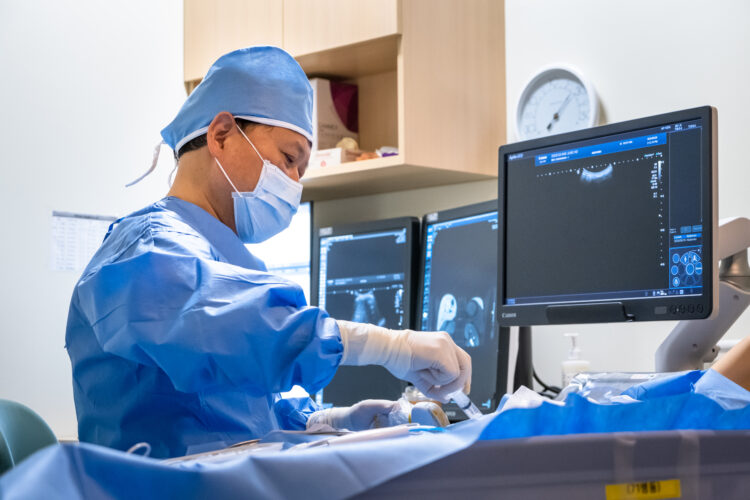
At this critical crossroads, Radiofrequency Ablation (RFA) plays a vital role. The procedure involves inserting an electrode needle into the tumor and applying heat to induce necrosis, effectively destroying the cancerous tissue. Because it requires no incision, recovery is relatively swift.
For patients with early-stage hepatocellular carcinoma, the elderly, or those with impaired liver function for whom major surgery poses a significant risk, RFA is more than just an alternative—it is a lifeline. Both the Korean Liver Cancer Association and the Korean Association for the Study of the Liver recognize RFA as a primary local treatment for early-stage liver cancer.
Professor Lim Hyun-cheol of the Department of Radiology at Samsung Changwon Hospital recently reached a milestone of 100 RFA procedures for liver cancer. This achievement comes just one year after he moved to Changwon from Samsung Medical Center in Seoul in March of last year.
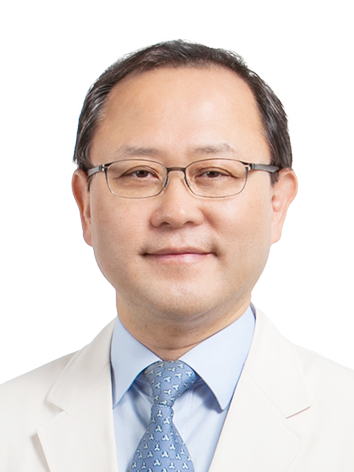
While 100 cases might appear to be a simple numerical performance metric, its clinical significance is far deeper. It signals that liver cancer care in the regions has moved beyond being merely "available" and has entered a stage of robust, accumulated clinical experience. Since joining Samsung Changwon Hospital, Professor Lim has been successfully establishing the groundwork for advanced oncological treatment outside the capital.
RFA is a pillar of modern liver cancer management. According to the 2023 Liver Cancer Adequacy Assessment Report from the Health Insurance Review & Assessment Service, among 4,610 procedures evaluated, transarterial chemoembolization (TACE) was the most frequent at 3,332 cases (72.3%), followed by RFA at 683 cases (14.8%). These figures confirm that RFA is a highly practical and essential tool in real-world Korean medicine.
The necessity of RFA stems from the nature of the disease itself. Liver cancer is rarely solved with a single intervention. Many patients suffer from underlying cirrhosis or chronic hepatitis, and the risk of recurrence is high. Consequently, treatment is not just about "cutting out the cancer," but about managing the patient's long-term health. Clinicians must balance the size, number, and location of lesions against the patient's remaining liver function. In this context, RFA is not a "lesser" version of surgery; it is a core strategic tool.
This is where the expertise of Professor Lim Hyun-cheol becomes indispensable. A true pioneer, Lim was part of the original group that introduced RFA for liver cancer to Korea. During his tenure at Samsung Medical Center, he led a team that performed over 15,000 procedures, personally executing approximately 5,000 of them. Having served as the president of both the Korean Society of Ultrasound in Medicine and the Korean Liver Cancer Association, he is a figure who helped build the very standards of treatment used nationwide.
The true weight of this 100-case milestone lies in how it answers the most pressing question for local patients: "Do we ultimately have to go to Seoul?"
RFA is not a procedure that can be mastered simply by purchasing expensive equipment. It requires precise imaging interpretation to locate lesions, the technical dexterity to place needles safely, the experience to protect surrounding organs, and a rigorous follow-up system to ensure complete necrosis. Reaching 100 cases proves that this steep learning curve has been successfully established within a regional hospital.
Of course, RFA is not a universal solution. If lesions are too large, too numerous, or if metastasis has occurred outside the liver, other treatments must take priority. However, for patients with early-stage disease where the advantages of a minimally invasive procedure outweigh the risks of surgery, the message is now clear: high-quality, reliable treatment is available right here in Changwon.