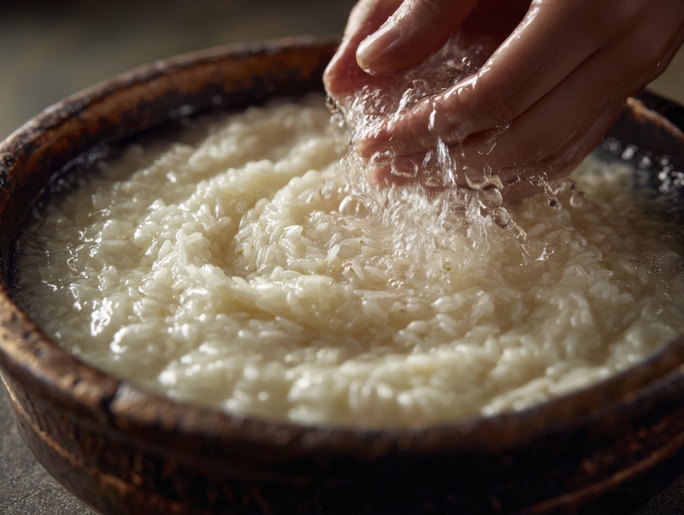
Rice rinse water—the water left after washing rice—contains many beneficial components. It is rich in water-soluble vitamins and minerals, so it can be used for skin care and cooking. And that’s not all. Rice rinse water is especially helpful when doing the dishes, and it can also serve as fertilizer for potted plants. Let’s take a look at ways to use rice rinse water that are too good to simply pour down the drain.
Rice rinse water is useful for removing grease·and odors
Rice rinse water is useful when washing dishes. If you rinse greasy dishes with only water and detergent, a slippery residue can easily remain. Another downside is that you may need to use more detergent and water to remove the grease completely. If you rinse dishes with rice rinse water before washing, the starch binds to the grease, making it easier to clean.
Rice rinse water is also helpful when using an old frying pan that has become rough from long use. Pour rice rinse water into the pan, then simmer gently over low heat for about 3–5 minutes. The warmed starch seeps into tiny gaps in the pan and helps lift long-standing grime. After the pan cools, wipe it with a soft sponge; stuck-on residue comes off more easily, and the surface becomes noticeably smoother.
Rice rinse water is also useful for removing odors from cutting boards used for kimchi or fish, or from containers that held strongly scented foods. Soak the smelly cookware in rice rinse water and the odor will dissipate easily. In the same way, it can help eliminate lingering refrigerator smells. Pour rice rinse water into a bowl, cover it with a cotton cloth, and place it in a corner of the refrigerator. It doesn’t keep for long, but it works well as a single-use deodorizer you replace once a day.
Rice rinse water, also effective for window cleaning·and washing white clothes
The components in rice rinse water help break down built-up grime such as grease. Put rice rinse water into a spray bottle and wipe windows with a dry cloth to make them clearer. Spraying it when wiping wooden floors can also help bring out a shine.
White clothes that easily turn yellow from sweat and stains can look whiter if you rinse them several times in rice rinse water. Boiling clothes in water with rice rinse water can also provide a mild whitening effect.
Fermented rice rinse water, ideal for replenishing nutrients in potted plants
Rice rinse water also contains small amounts of nitrogen, phosphorus, and potassium. These nutrients are beneficial for plants as well, so pouring it into a pot can act as fertilizer. However, pouring unfermented rice rinse water directly into a pot can stress the plant. That’s because the starch can stick to the soil surface and form a thin film that blocks oxygen. The starch can also become food for mold and pests, which may negatively affect the pot’s growing environment.
For this reason, a widely used method is to add EM concentrate to rice rinse water to make a fermented solution. EM is a blend of beneficial microorganisms—such as yeast and lactic acid bacteria—used in food fermentation. For 1.8 L of rice rinse water, add 20 mL of EM concentrate, 20 g of sugar, and 2 teaspoons of salt to a PET bottle. Mix well, close the cap, and let it ferment for about a week. Dilute this fermented solution with water at a 1:500 ratio and spray it on potted plants. If you use the fermented solution undiluted, osmosis can draw moisture out of the plant’s roots.
Because rice rinse water is so versatile, you can store it in a PET bottle in the refrigerator and use it multiple times. However, rice rinse water from the first wash may contain potentially harmful substances such as pesticide residue or dust. It’s better to use the water from the second rinse onward.