A woman in her late 60s who experienced persistent chest pain while walking uphill recently discovered a hidden heart condition through a wearable electrocardiogram (ECG) test. During a health screening, she underwent a "MobiCare" test and a coronary CT scan in addition to her scheduled exams. The wearable device confirmed a diagnosis of atrial tachycardia that had gone undetected by traditional testing methods.
On the 12th, Daewoong Pharmaceutical announced that this case highlights the clinical utility of MobiCare in the early detection of arrhythmias through its specialized screening process.
A standard 12-lead ECG, typically used when chest pain is present, involves attaching 10 electrodes to the chest and limbs to measure electrical signals from 12 directions. However, because this test only assesses the heart’s condition for approximately 10 seconds, it often misses intermittent arrhythmias that do not occur during that brief window.
Overcoming the Limitations of Traditional Holter Monitoring
For longer-term observation, medical professionals have traditionally used a 24-hour Holter ECG. While effective, the Holter requires expensive equipment and a cardiology specialist for interpretation, making it difficult to implement in general health screening centers or local clinics.
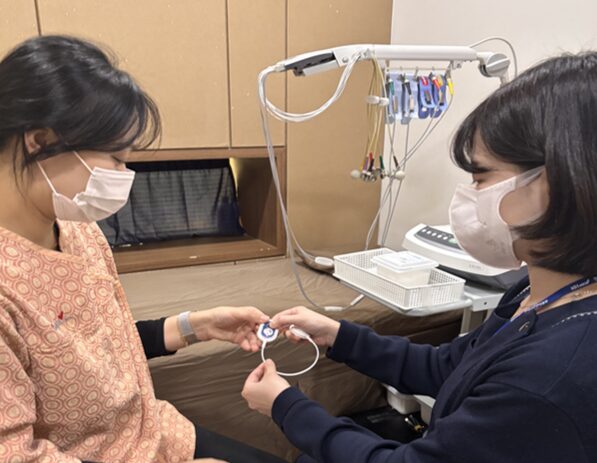
In contrast, MobiCare is a wearable device consisting of just two electrodes. Weighing only 19g, the ultra-lightweight device is easily worn during daily activities and can continuously record ECG data for up to nine days. This extended duration significantly improves the identification of intermittent heart rhythm issues. For added convenience, the device can be returned via a courier pickup service once the testing period is complete.
AI-Based Analysis Enables Wider Access at the Clinic Level
MobiCare utilizes AI-driven analysis to process collected data, which is then reviewed by arrhythmia specialists to provide a final report. This system allows health screening centers and clinics without on-site cardiologists to offer high-level diagnostic services.
Dr. Park Cheol, Director of Clinical Services at the Gyeongnam Branch of the Korea Association of Health Promotion and a thoracic surgery specialist, noted, “Arrhythmias are often difficult to detect with only a short ECG test. Long-term monitoring solutions like MobiCare provide a critical advantage in clinical settings.”
Jo Byeong-ha, Head of the Digital Healthcare Business Division at Daewoong Pharmaceutical, added, “MobiCare is a long-term solution capable of continuous monitoring during everyday life, enabling more effective arrhythmia screening in routine health checkup environments.”