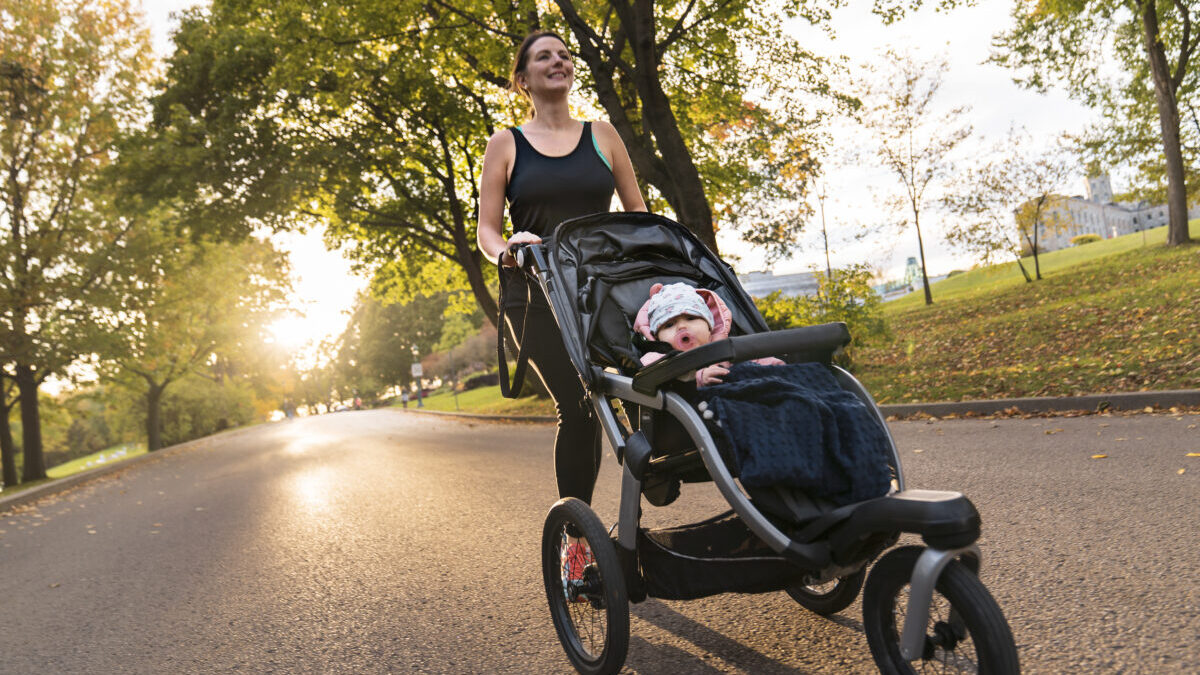
From New York’s Central Park to public spaces across South Korea, parents running while pushing strollers have become a familiar sight. Yet, given a stroller’s added weight and bulk, many assume the habit places extra strain on the runner's body.
While running with a stroller certainly feels more taxing, scientific evidence suggests the risk of injury may actually be lower than running unencumbered. Researchers point to a simple biomechanical mechanism: pushing down on the stroller handle transfers a portion of the runner’s body weight to the wheels, absorbing impact that would otherwise hit the legs and knees.
A research team at Pennsylvania State University recently published a study in the journal PLOS ONE investigating the running habits and injury rates of parents who continued running after having children. The team surveyed 249 parents—196 who ran with strollers and 53 who ran without.
The findings revealed that parents running without strollers reported a higher rate of repetitive running injuries during the first three years post-childbirth. While 30% of non-stroller runners sustained injuries, only 19% of stroller runners reported similar issues.
When adjusting for total distance, the contrast was even starker. Among runners who reported injuries, the incidence rate per 1,000 miles (approximately 1,600 kilometers) was 55% lower for parents running with strollers compared to those running unencumbered.
How Pushing a Stroller Alters Running Mechanics
The researchers attributed these lower injury rates to distinct shifts in posture and gait. Pushing a stroller naturally leads runners to take shorter strides, lean slightly forward, reduce trunk rotation, and maintain a somewhat slower pace.
Crucially, pressing down on the handlebar creates a weight-bearing effect, allowing the stroller to support part of the runner’s mass and reducing the vertical load generated during each foot strike.
"Holding the stroller handle while running may help reduce stress on weight-bearing joints," the researchers noted, adding that this biomechanical offloading likely explains why knee injuries occur less frequently among stroller runners.
A similar load-distribution principle is evident in wheeled walkers used by older adults. Walkers are primarily designed to enhance mobility and prevent falls, but when users lean on the handles or armrests, a portion of the body weight that would normally load the legs is redistributed through the device to the ground.
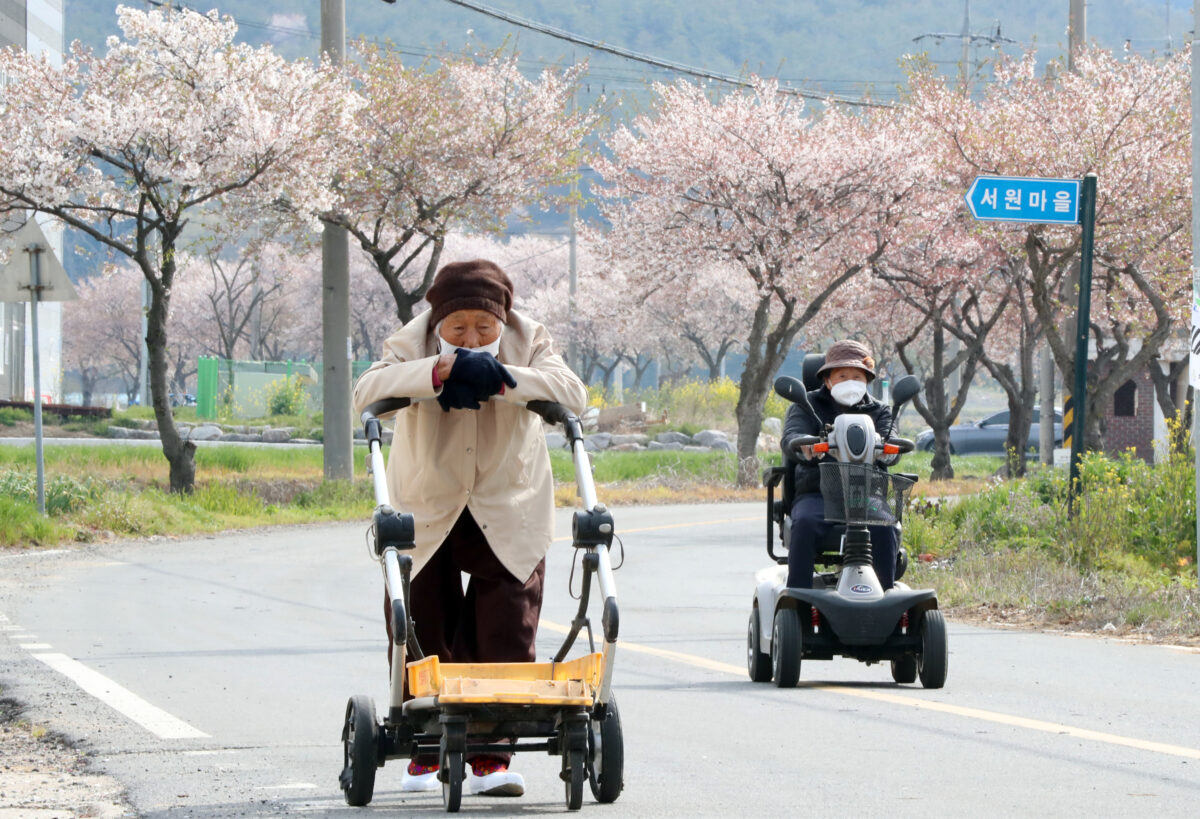
Biomechanical Studies and Ergonomic Considerations
This force-exchange mechanism was detailed in a 2023 study published in Applied Sciences by researchers from Jeonbuk National University’s Department of Biomedical Engineering and the Research Center for Senior-Friendly Welfare Devices. By analyzing muscle activation and plantar pressure in 11 older adults navigating flat surfaces, obstacles, and ramps, the team found that upper-limb muscle activity increased on uneven terrain, confirming that users actively exchange force with the device to stabilize whole-body movement.
Similarly, a 2014 study published in Clinical Interventions in Aging demonstrated that elderly women using walkers with armrests experienced significantly reduced plantar pressure under their feet in direct proportion to the amount of weight supported by their arms—a relationship heavily influenced by armrest height.
However, experts caution against concluding that strollers or walkers automatically prevent joint or back pain. Because the Penn State stroller study was observational, it demonstrates correlation rather than direct causation.
Furthermore, proper ergonomics remain essential. If a stroller or walker is set at an improper height, forcing the user to hunch excessively or place uncoordinated strain on the wrists and back, it can cause secondary strain in other parts of the body.