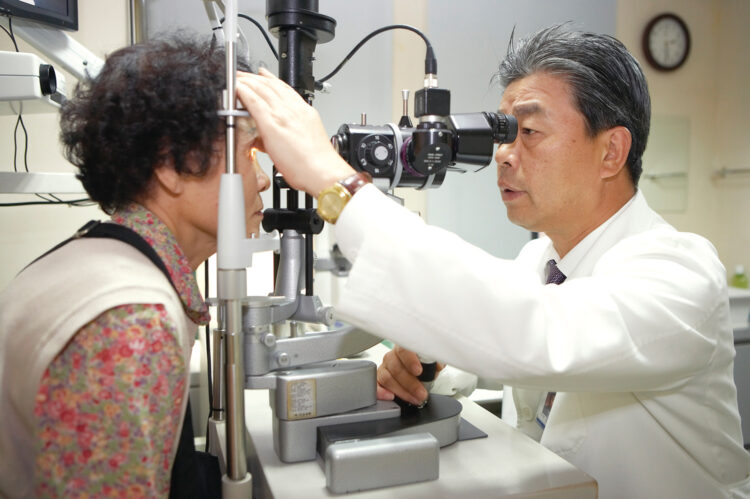
A 102-year-old grandmother, suffering from dementia and severe cataracts, was carried into the exam room on her son’s back. "Please let my mother see the world again in this life," pleaded the 80-year-old nun accompanying her. Because general anesthesia was impossible, four men held her limbs and head steady during the delicate procedure. When she regained consciousness, she cried out in wonder: "I can see! The world is so bright and clear!"
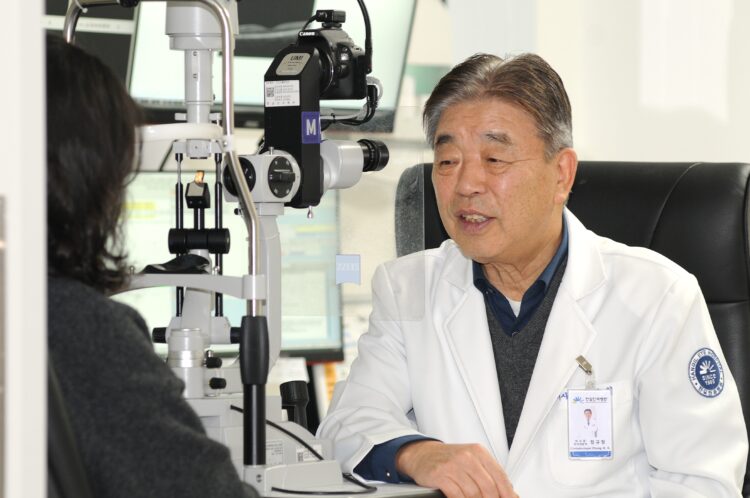
This is just one of the countless stories at Hangil Eye Hospital, an institution that has treated over 5 million eyes—nearly double the population of Incheon—and performed over 150,000 surgeries. Despite these staggering numbers, Director Jeong Gyu-hyung remains modest. "What we did is not special," he insists. "Any ophthalmologist would have done the same."
A Legacy of "Firsts" and World-Class Recognition
While Director Jeong shies away from the "renowned doctor" title, the hospital’s accolades tell a different story. Hangil was the first small-scale hospital to receive excellent medical institution certification from the Ministry of Health and Welfare. It has been designated a "specialty hospital" for four consecutive years and was named one of the "Best Private Hospitals in Asia" by Newsweek and Statista.
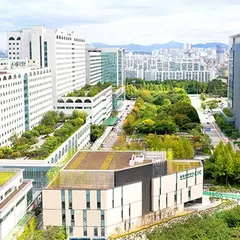
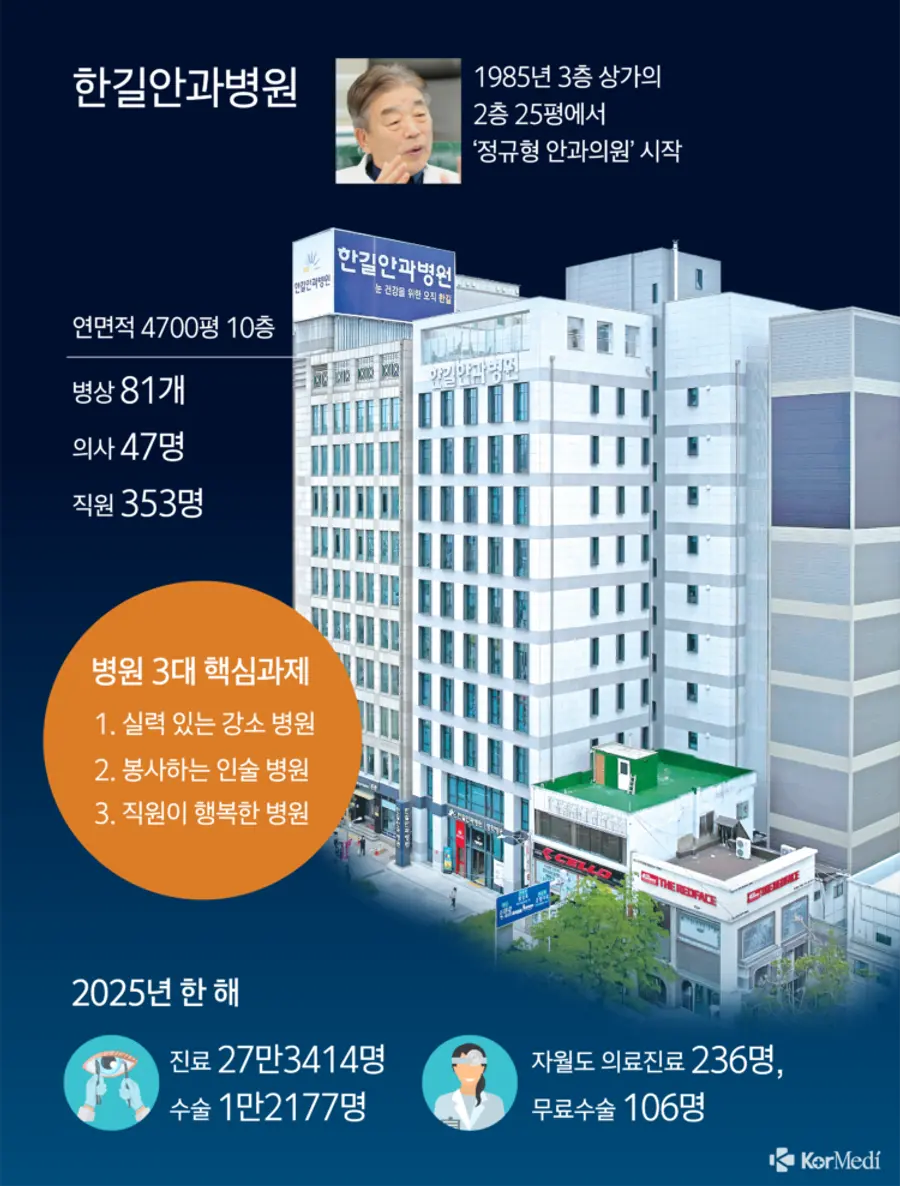
In the Incheon region alone, Hangil is responsible for 20% of all cataract surgeries and 50% of all retinal procedures. This massive scale is managed within a 4,700-pyeong, 10-story state-of-the-art facility. Yet, in a reflection of his patient-first philosophy, Director Jeong’s private office is smaller than an average university professor’s research room.
From Myeongdong to Bupyeong: The Roots of Excellence
Hangil Eye Hospital began in April 1985 as a tiny three-employee clinic near Bupyeong Station. Director Jeong’s journey was fueled by both necessity and a high-caliber education. After his father, also a doctor, passed away suddenly, Jeong felt the weight of supporting his three younger siblings.
He honed his skills at Catholic Hospital (then located at Myeongdong Cathedral), working under legendary pioneers Lee Sang-wook and Kim Jae-ho, who had returned from Johns Hopkins with cutting-edge techniques. They were the first in Korea to use microscopes for eye surgery and introduced ultrasound cataract procedures and artificial cornea transplants. When Jeong opened his own clinic, he brought this elite expertise to Bupyeong, an area that, at the time, lacked a single facility capable of performing cataract surgeries.
A Mission Beyond Profit: 40 Years of Service
The hospital’s commitment to charity was sparked early on when a patient lamented that they could not afford surgery. "As an ophthalmologist, I couldn't just watch people lose their vision due to financial difficulties with my eyes wide open," Jeong recalls.
Since then, the hospital has provided free consultations for over 300 people annually and performed at least 40 free cataract surgeries each year. Their outreach extends to the remote island villages of Ongjin and Ganghwa, and partnerships with organizations like the Korea GM Heart Foundation and SSG Landers have allowed them to restore sight to hundreds of low-income residents.
Global Outreach: From Uzbekistan to the World
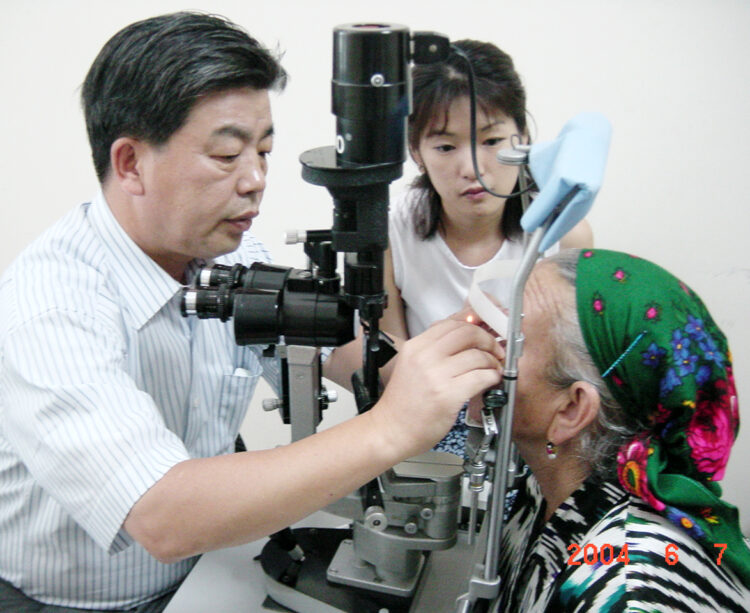
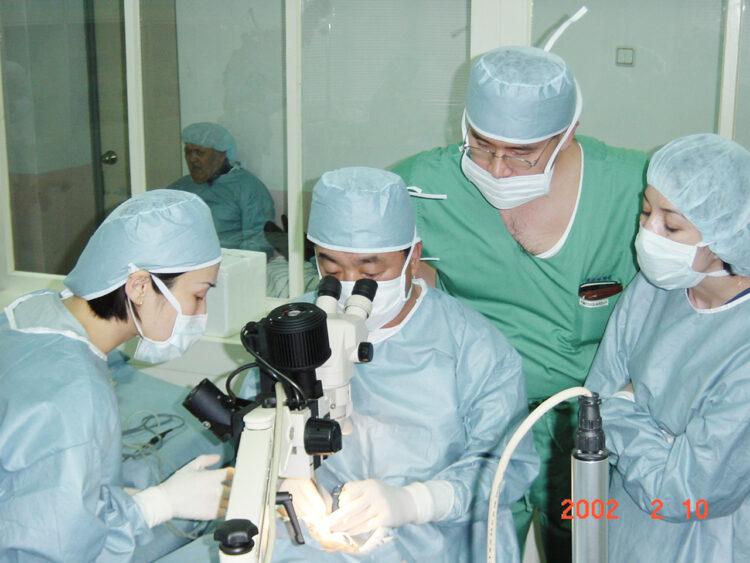
Hangil’s compassion knows no borders. In 2002, hearing that ethnic Koreans in Uzbekistan were living in a "medical blind spot," Jeong and 15 staff members flew to Tashkent. They were met by crowds of patients who had traveled by handcart and on foot.
"The sun was so strong there that many had cataracts as hard as stones," Jeong says. The experience was so moving that he left his equipment behind and eventually established the Hangil Uzbekistan Eye Hospital in 2003. Since its opening, the facility has treated 42,000 patients and performed over 6,000 surgeries. Today, Hangil continues to provide "educational volunteerism," training doctors from Kazakhstan, Madagascar, and Brazil.
Embracing the Future of AI and Personalized Care
Hangil Eye Hospital is not content to rest on its historical laurels. Between 2021 and 2023, it was selected for the Ministry of Health and Welfare’s "Medical Data-Centered Hospital Support Project." It is currently integrating AI-driven "personalized treatments" to ensure that technology serves the patient even more accurately.
"The development of ophthalmology has always relied on equipment and technology," Director Jeong concludes. "We must keep pace with AI to ensure more patients benefit." For the millions who have passed through Hangil’s doors, that vision for the future is as clear as the sight they’ve regained.