Vitamin C strengthens the 'immune function', increasing resistance to respiratory diseases such as colds, flu, and COVID-19. It promotes collagen production, making the skin elastic, inhibits melanin production to alleviate dark spots and freckles, and can slow down skin aging through its antioxidant effects, making it an essential vitamin for women. Additionally, it helps with fatigue recovery, iron absorption, stress relief, and even cancer prevention [1, 2].
However, no matter how beneficial a nutrient is, consuming it in artificially concentrated pill (supplement) form can lead to unexpected side effects, so it is better to obtain vitamins through food rather than pills [3].
Antioxidants taken for health need to work properly
According to data from Harvard T.H. Chan School of Public Health, antioxidants like vitamin C that are naturally present in foods help prevent various chronic diseases, but high-dose pills made by pharmaceutical companies are unlikely to have the same effect as food. This is because antioxidants are most effective when they work in 'complex interactions' with various beneficial components found in foods, so pills made from 'one component' are less effective [4].
The best foods supplying vitamin C are fruits and vegetables. Animal products such as meat, fish, milk, and eggs contain almost no vitamin C. Therefore, those who enjoy eating meat are more likely to experience vitamin C deficiency, while those who enjoy vegetarian diets do not need to worry about a lack of vitamin C.
The recommended daily intake of vitamin C is 100mg, and the vitamin C content in fruits and vegetables is as follows [5].
〈Vitamin C content per 100g of fruit〉 Kiwi 91mg, Jujube 85mg, Strawberry 63mg, Cheonhyehyang 60mg, Orange 56mg, Hallabong 53mg, Lemon 52mg, Pineapple 41mg, Mandarin 31mg, Persimmon 29mg, Mango 22mg….
〈Vitamin C content per 100g of vegetables〉 Kale 76mg, Bell Pepper 60mg, Spinach 51mg, Green Pepper 44mg, Cauliflower 33mg, Broccoli 29mg, Cabbage 29mg, Lotus Root 28mg, Young Radish 27mg, Tomato 14mg, Potato 11mg, Sweet Potato 11mg, Lettuce 11mg….
In other words, consuming just 1-2 pieces of fruit or 100-200g of vegetables a day easily meets the recommended daily intake of vitamin C.
For those who really want a high dose of vitamin C, they can consume 'Acerola', a fruit similar to cherries, or 'Guava', a tropical fruit. Each contains 800mg and 220mg of vitamin C per 100g, respectively (*Acerola is hard to find in Korea, while Guava is produced domestically).
The trap of supplements: Overuse can lead to side effects
Vitamin C is a water-soluble vitamin. Water-soluble means it dissolves well in water, while fat-soluble means it dissolves well in oil. Water-soluble vitamins are easily excreted in urine, while fat-soluble vitamins can accumulate in the body, so caution is needed. (*Note; Vitamin B is water-soluble, while vitamins A, D, E, and K are fat-soluble).
Water-soluble vitamins are sensitive to heat, so it is best to consume them in their natural state, and any excess intake beyond the daily requirement is excreted in urine. This is why it is essential to eat fresh fruits and vegetables daily.
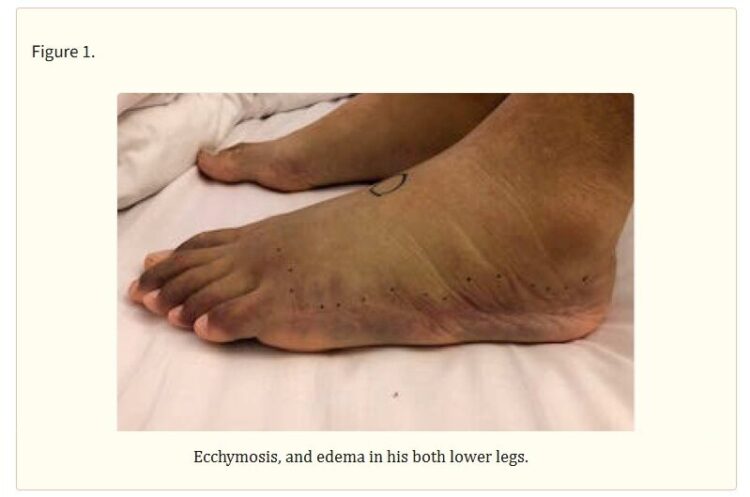
There have been reports of individuals developing scurvy after long-term consumption of only boiled vegetables, excluding raw vegetables (*see photo below - 〈a 59-year-old man who consumed only boiled foods for 5 years due to dental and gum issues, showing swelling and bleeding in both feet〉 [6].
Let’s remember. Fruits and vegetables should be eaten raw whenever possible!
In the United States, cardiovascular diseases and cancer are the two leading causes of death, accounting for about half of all deaths combined. Inflammation and oxidative stress are known to play significant roles in both cardiovascular diseases and cancer, leading many to seek supplements with anti-inflammatory and antioxidant effects. According to a 2023 survey, 58.5% of American adults were taking at least one supplement [7].
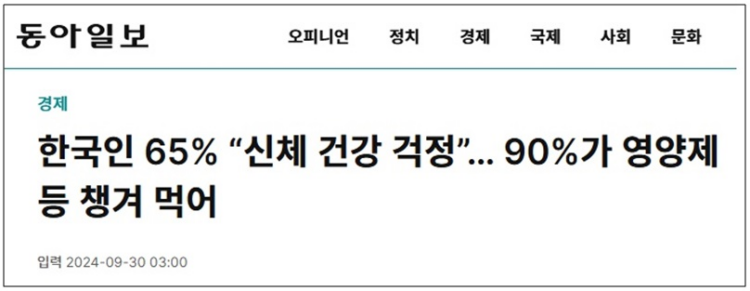
In Korea, the number is even higher. A 2024 survey indicates that 90% of adults take supplements (see article below) [8].
The American expert group 'Task Force on Disease Prevention' offers different advice
The United States Preventive Services Task Force (USPSTF) is an independent organization not influenced by the government, composed of primary care and preventive medicine experts who provide scientific guidelines for disease prevention targeting the asymptomatic general population, i.e., healthy individuals. They systematically review literature and assign grades based on the certainty of preventive effects: A (very certain), B (certain), C (uncertain), D (against use), I (insufficient evidence).
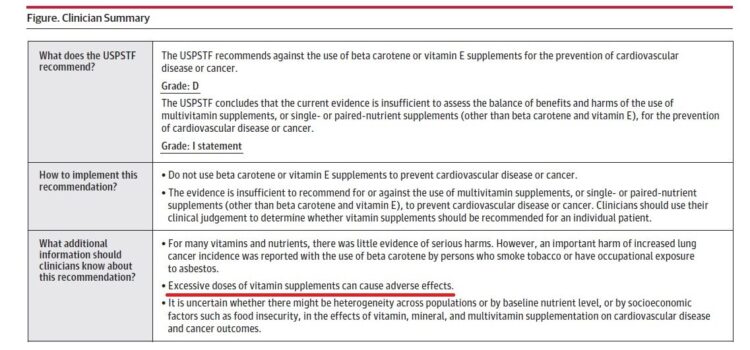
According to the latest 2022 guidelines, vitamin C supplements do not affect mortality from all causes, cardiovascular disease mortality, or cancer incidence, and thus received an “insufficient evidence” grade [9]. (*Please note that the reviewed literature was from before 2010, and the 2023 report indicating a 60% increase in cardiovascular disease mortality with high-dose vitamin C intake was not reflected.)
Vitamin A (beta-carotene) and vitamin E are naturally recommended as “against use,” and other supplements or multivitamins also lack evidence of effectiveness in preventing cardiovascular disease or cancer, thus receiving an “insufficient evidence” grade. Notably, it is specified that high doses of vitamins C and D pose a potential risk of 'kidney stones'. Other supplements can also cause side effects at high doses, so caution is necessary (see table below).
Patients with specific diseases or vitamin C deficiency (such as scurvy) should follow their doctor's instructions. However, healthy individuals should obtain nutrients like vitamin C from fruits and vegetables instead of supplements, as this is the most reliable way to maintain health. 'Food' rather than 'pills' keeps us healthy.
Dr. Song Mu-ho, Medical Doctor, Specialist in Orthopedics and Lifestyle Medicine
References
1. AC Carr, S Maggini. Vitamin C and Immune Function. Nutrients 2017;9(11):1211.
2. JM Pullar, AC Carr, MCM Vissers. The Roles of Vitamin C in Skin Health. Nutrients 2017;9(8):866.
3. D Aune, N Keum, E Giovannucci, et al. Dietary intake and blood concentrations of antioxidants and the risk of cardiovascular disease, total cancer, and all-cause mortality: a systematic review and dose-response meta-analysis of prospective studies. Am J Clin Nutr 2018;108(5):1069-1091.
4. Harvard T.H. Chan https://nutritionsource.hsph.harvard.edu/antioxidants/?utm_source
5. National Standard Food Composition Table https://koreanfood.rda.go.kr/main
6. K Hayashino, Y Meguri, A Komura, et al. An Unbalanced Diet Limited to the Consumption of Boiled Vegetables Led to the Onset of Scurvy. Intern Med 2022;61(11):1795-1798.
7. S Mishra, JJ Gahche, CL Ogden, et al. Dietary supplement use in the United States: national health and nutrition examination survey, 2017–March 2020. NCHS 2023.
8. Dong-A Ilbo https://www.donga.com/news/Economy/article/all/20240929/130125461/2
9. US Preventive Services Task Force. Vitamin, Mineral, and Multivitamin Supplementation to Prevent Cardiovascular Disease and Cancer: US Preventive Services Task Force Recommendation Statement. JAMA 2022;327(23):2326–2333.