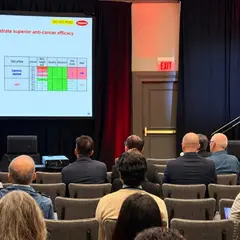
A study has revealed that the therapeutic effects of 'immune checkpoint inhibitors (immunotherapy)', which are gaining attention as the next breakthrough in stomach cancer treatment, show significant differences between men and women. While male patients demonstrated a clear improvement in survival rates, female patients did not show significant therapeutic outcomes.
A research team led by Professor Kim Na-young from Bundang Seoul National University Hospital analyzed 468 stomach cancer patients who underwent PD-L1 (Programmed Death Ligand-1) immunohistochemical testing, a key indicator of immunotherapy, from 2018 to 2024, and found these results.
According to the analysis, the median survival period for male patients who tested positive for PD-L1 and received immunotherapy was 1314 days, extending their survival by about one year (364 days) compared to the non-treated group (950 days). In contrast, there was almost no difference in survival between the treated group (897 days) and the non-treated group (890 days) for female patients. This suggests that existing immunotherapy alone may not provide sufficient therapeutic effects for women.
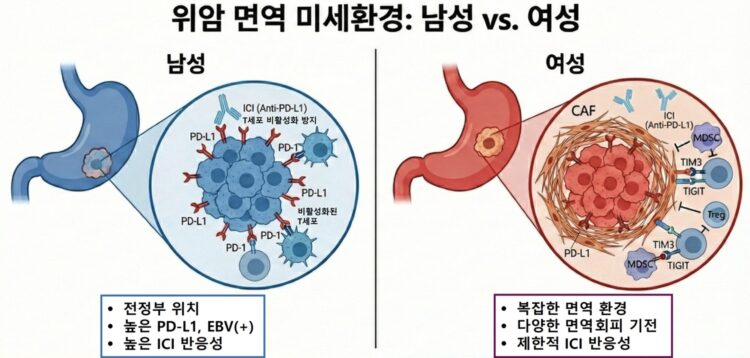
Immune checkpoint inhibitors are treatments that block the deceptive signals sent by cancer cells to evade attacks from immune cells, known as 'immune checkpoints'. T cells, which are immune cells in the body, attack and eliminate tumors, but cancer cells express PD-L1 proteins on their surface to disable the T cells' surveillance. Although immunotherapy is praised as a 'miraculous treatment' due to its low side effects and excellent therapeutic effects, this study revealed that its effectiveness is relatively limited for female stomach cancer patients.

This difference is analyzed to stem from pathological and molecular biological environmental differences between men and women. In men, PD-L1 positive stomach cancer tends to be associated with Epstein-Barr virus (EBV) and occurs more frequently in the 'antrum' of the stomach. Both of these factors contribute to inducing an active immune response, enhancing the efficacy of immunotherapy.
In contrast, female patients, even if PD-L1 positive, showed a low correlation with viruses or the site of occurrence, and various immune suppression mechanisms acted in a complex manner, leading to the assumption that PD-L1/PD-1 inhibitors alone would have limited effectiveness.
Professor Kim Na-young stated, "Given the clear differences in the immune systems of men and women, a more detailed approach considering 'sex-based immunology' is necessary for stomach cancer treatment based on immune checkpoint inhibitors," and emphasized, "It is essential to establish optimized immunotherapy guidelines for both men and women through future large-scale data studies."
This study was conducted with the support of the National Health Research Institute of the Korea Disease Control and Prevention Agency and the National Research Foundation of Korea, and was published in the latest issue of the international journal 《Cancer Research and Treatment》 published by the Korean Cancer Association.