Actress Song Hye-kyo (44) enjoyed seasonal foods that are good for the skin.
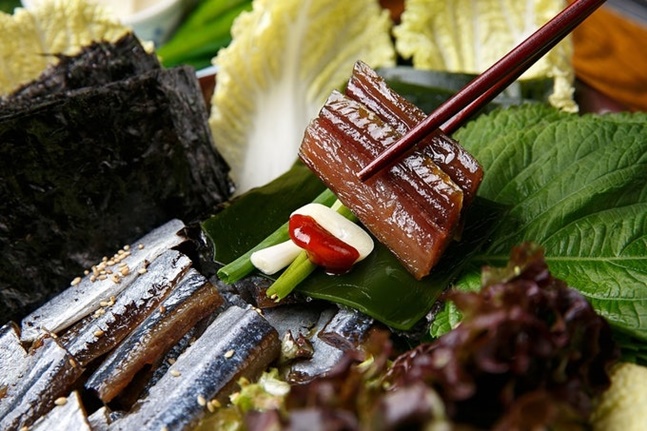
Recently, Song Hye-kyo posted a photo on her social media (SNS) with the caption, "I also had gwamegi now. It was delicious." The photo shows a full spread of gwamegi that Song Hye-kyo ate. She wrapped the seaweed, garlic chives, chili, and garlic evenly in lettuce to make a proper wrap.
Known for her perfect beauty and youthful skin, Song Hye-kyo has a simple palate and enjoys seasonal foods for her health and skin. Recently, she mentioned on a YouTube channel that she likes braised dorumeok, and she seems to have fallen for the charm of gwamegi, a must-have seasonal food in winter.
Let’s learn about the gwamegi that the representative of slow aging, Song Hye-kyo, enjoyed eating.
Winter Delicacy Gwamegi
Gwamegi is a semi-dried fish made by freezing and thawing mackerel (or herring) in the cold sea breeze, making it a winter delicacy. During the drying process, moisture is removed, making the flesh chewy and concentrating the fat flavor, resulting in a rich and savory taste.
Choosing plump and firm gwamegi will ensure deliciousness. Frozen gwamegi should be slightly thawed until the outside is soft. Tear it off in strips, hold the tail, carefully remove the bones, and peel the skin by hand, cutting it into bite-sized pieces. Pressing the outer oil and moisture with a kitchen towel will reduce the fishy smell and make the texture cleaner.
Nowadays, gwamegi is often sold as a set with various seaweeds and wrapping vegetables. Bite-sized pieces of gwamegi are dipped in spicy sauce and wrapped in seaweed, kelp, lettuce, and perilla leaves. Adding garlic, chives, and green chili reduces the fishy taste and enhances the ocean flavor and nuttiness. Adding a bit of vinegar and lemon juice to the spicy sauce makes it tangy and cuts the greasiness. For beginners, grilling or braising is also a good option.
Gwamegi, a Tonic for the Skin
Gwamegi is rich in antioxidant nutrients and omega-3, helping overall skin health and aging prevention. It contains nucleic acids, vitamin E, selenium, etc., which help reduce reactive oxygen species and protect cell membranes, slowing down skin aging. With a high content of unsaturated fats (omega-3 fatty acids), it is beneficial for maintaining the skin lipid barrier, preventing dryness and roughness in winter.
Raw fish like mackerel contains a lot of fish collagen, which is good for maintaining skin elasticity and reducing wrinkles. There is also synergy with the wrapping ingredients. Seaweeds like garlic, kelp, and seaweed that accompany gwamegi have antioxidant and anti-inflammatory effects, which help alleviate skin inflammation and oxidative stress when eaten together.
Points to Note
Gwamegi is a high-protein and high-fat food, which is beneficial for the skin, but if you are on a diet, you should control the amount. 100g of gwamegi is about 180kcal, and it is easy to overeat when wrapping it, so aim for about 80-100g per serving.
Since gwamegi is salted fish, it can be high in sodium, so if you have high blood pressure or kidney disease, you need to control your intake. Choose products with lower salinity, soak them in water for 10-20 minutes to reduce salt, and remove moisture with a kitchen towel to reduce sodium by 20-30%. Eating a lot of seasoned seaweed, dipping sauce, or spicy sauce can increase sodium intake.
Due to its high fat content, overeating can lead to bloating, burping, and diarrhea, and it is high in purines, which can worsen joint pain in gout patients due to increased uric acid. If you have an allergy to blue fish, skin symptoms like hives, itching, and redness may occur. If you have a history of allergies, it is safe to test with a small amount before consuming.