
There is one word that is never absent from the conversations of amateur baseball enthusiasts who visit the baseball field every weekend. That word is 'shoulder.'
"It tingles when I throw," "I feel like my arm is going to dislocate when I catch the ball," "I wake up at night with shoulder pain and can't sleep."
Mr. A (56) was the same. At first, he brushed it off as simple muscle pain, but at some point, he became afraid of the act of throwing the ball itself. At this time, one should suspect whether there is an issue with the 'rotator cuff.' This means that there may be deformation or rupture in the four muscles and tendons that play a role when using the shoulder joint.
"Baseball is not a sport that 'uses' the shoulder"
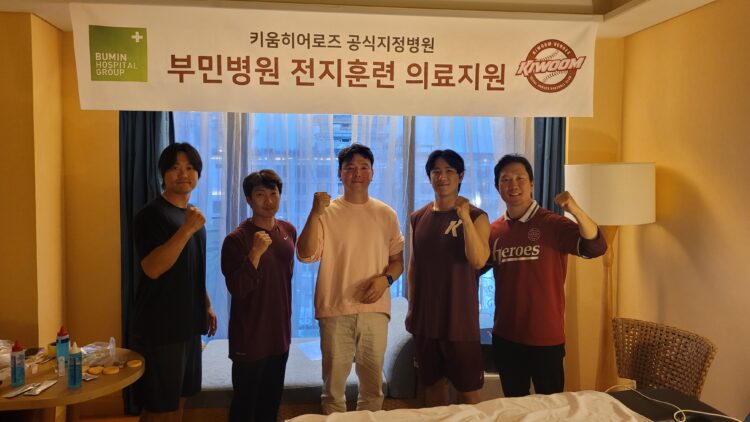
Kim Sung-jun, the deputy director of the Joint Center at Seoul Bumin Hospital (Orthopedics), is the chief team doctor for the professional baseball team 'Kiwoom Heroes.' He is a sports medicine expert who closely observes the shoulders of professional players every season.
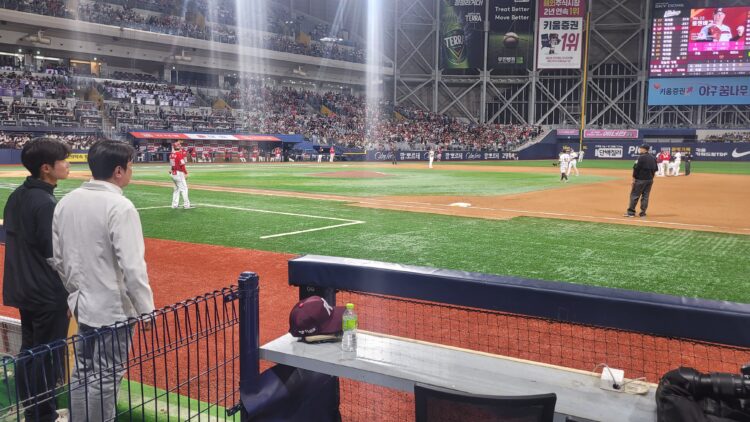
At the same time, he has rich clinical experience treating the shoulders of numerous amateur baseball enthusiasts. He expressed the use of shoulders in baseball like this.
"Baseball is not simply a sport of swinging the arm. In one pitching motion, the rotational energy of the entire body converges on the shoulder joint, rotator cuff, scapula, and elbow. It is closer to a motion of 'grinding' the shoulder. If there is insufficient warm-up and recovery, the shoulder deteriorates faster than expected."
Is it only dangerous for pitchers? Catchers and outfielders can't be at ease either
Rotator cuff tears are commonly known as a professional disease of pitchers. However, the patients encountered in the clinic are somewhat different. Catchers repeatedly accelerate and decelerate their shoulders while making quick throws. Outfielders exert maximum force all at once when throwing home. Additionally, infielders accumulate shoulder muscle damage with short and quick snap motions.
Especially in amateur baseball, it is common to jump straight into games without sufficient stretching. Since they only find time on weekends and holidays, they tend to overexert themselves with excessive pitching when they go to the field all at once. Moreover, after the age of 40 or 50, strength and flexibility decrease, yet they disregard this with youthful vigor.
When these factors overlap, the shoulder suffers. It is not uncommon for partial tears to occur gradually, leading to complete tears. In fact, rotator cuff tears are one of the most common shoulder disorders after the age of 50. Aging, degenerative changes, and excessive repetitive use are the main causes.
Golf and handball are the same
Therefore, rotator cuff tears are not exclusive to baseball. In golf, the sudden rotational force at the moment of the downswing is problematic, while in handball, repetitive overhead throwing puts a burden on the shoulder. Tennis and badminton also accumulate stress on the shoulder with the smashing motion of lifting and striking.
There is one commonality. They all involve repeating strong rotation and speed while raising the arm above the head. Even if the sports are different, the damage mechanisms occurring in the shoulder are almost the same. In sports medicine, they are all managed under the category of 'overhead sports.'
If you have these signals...
Rotator cuff tears are very subtle in the early stages. If you experience any of the following symptoms, it is highly likely that changes have already begun in your shoulder.
First, you feel pain only at a specific angle when raising your arm. You feel a loss of strength when throwing the ball. You wake up at night with shoulder pain when lying on your side. There is a throbbing pain even when you are not using your shoulder.
Deputy Director Kim particularly points out 'night pain' as an important signal. "Shoulder pain at night is likely not just simple muscle pain," he says, "it could be a sign that the rotator cuff is unable to recover on its own."
The standard for diagnosing rotator cuff tears is an MRI. However, it is dangerous to decide on treatment based solely on imaging. He states, "We need to see whether it is a partial tear or a complete tear, whether it is an acute injury or a chronic degenerative tear," and adds, "Then we must check if muscle atrophy and fatty degeneration are present." All these factors must be considered along with the patient's age, activity level, and return-to-sport goals to determine the treatment direction.
Treatment? "There is not just one answer"
This is the question that amateur baseball enthusiasts fear the most. "Do I need surgery?" Deputy Director Kim's answer is as follows. "Not all rotator cuff tears require surgery. However, 'waiting until it leads to a bigger surgery' could be the worst choice."
In other words, if it is a partial tear in the early stage, conservative treatment focusing on injection therapy, physical therapy, and rehabilitation exercises is possible. However, in cases of complete tears or significant functional decline, surgical repair using arthroscopy should be considered. The timing of treatment is also important. The longer a tear is left untreated, the more difficult it becomes to repair, and the lower the chances of returning to sports.
"Will I be able to throw again?"
There is a stage that is as important as surgery. That is rehabilitation. The principles are the same for both professional athletes and amateur enthusiasts. It involves a step-by-step return to exercise, starting from pain management to restoring range of motion, strengthening the rotator cuff, and stabilizing the scapula. Deputy Director Kim states, "Rushing back without rehabilitation is like reserving the same injury again."
Baseball is a sport that can be enjoyed for a lifetime. However, you should not use your shoulder in the same way you did when you were young. Therefore, stretching before the game is not an option but a necessity. Also, if there is pain, the 'courage to rest' is needed. Deputy Director Kim says, "If you want to enjoy baseball for a long time, you must pay attention to the signals from your shoulder before the ball."
Once the shoulder is damaged, it is not easy to return to its previous state. However, with timely diagnosis and proper treatment, you can throw the ball again on that mound or in that outfield.
Assistance: Kim Sung-jun, Deputy Director of Seoul Bumin Hospital (Orthopedics)