
Farting is more than just a social taboo; it is a critical indicator of gastrointestinal health. However, because it is often viewed as an embarrassing or "dirty" physiological phenomenon, it remains one of the least understood aspects of human metabolism.
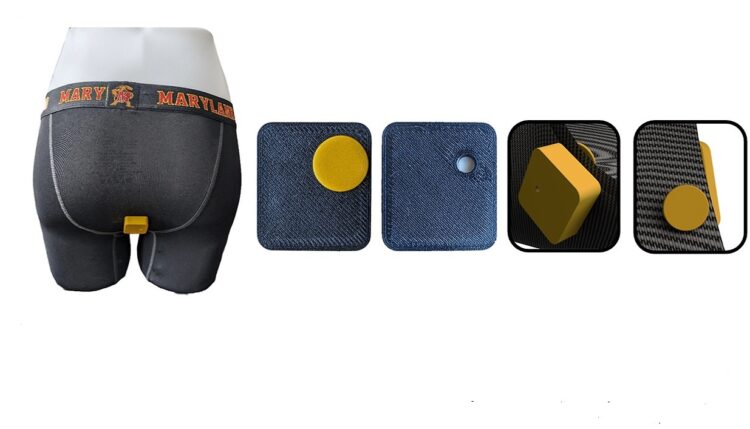
That is about to change. A research team from the University of Maryland has developed a wearable device—informally dubbed "smart underwear"—designed to analyze flatulence 24 hours a day. By monitoring the gases released, the device provides a real-time window into the metabolic activities of the gut microbiome.
Rethinking the "Normal" Frequency: 32 Times a Day?
The research, led by Professor Brantley Hall of the Department of Cell Biology and Molecular Genetics, involved an observational study of 19 healthy adults over one week. The findings have already overturned long-held medical assumptions.
While previous data suggested that the average person farts about 14 times a day (with a range of 8 to 20), this study recorded an average of 32 farts per day. The study also highlighted massive individual variation: some participants farted as few as four times, while others reached 59 times—a nearly 15-fold difference.
How it Works: The Science of "Fart Pants"
The device works by attaching a small electrochemical sensor to the outside of the underwear near the perineum.
Precision Sensing: It measures the frequency, duration, and hydrogen concentration of each flatulence event.
User Comfort: Integrated temperature and acceleration sensors confirmed that participants wore the device for an average of 11.3 hours a day. 95% of users reported no significant discomfort during their daily activities.
High Sensitivity: In a secondary study involving 38 participants (the GUMDROP study), the underwear demonstrated a 94.7% sensitivity rate in detecting microbial metabolic changes following dietary fiber intake.
The research was recently published in the international journal Biosensors and Bioelectronics: X under the title, "Smart underwear: A novel wearable device for long-term monitoring of gut microbial gas production through flatus."
Mapping the "Human Flatus Atlas"
Traditionally, tracking gut microbes required stool or blood samples. This wearable tech offers a non-invasive alternative. Hydrogen gas is a biological marker of fermentation activity; while breath tests only detect 0–500 ppm of hydrogen, farts contain concentrations between 80,000 and 630,000 ppm, making them much easier to measure accurately.
The ultimate goal is to create a "Human Flatus Atlas." This data map would establish objective baselines for gut health, helping scientists understand the physiological differences between high-fiber "producers" and those with different microbial signatures. This could usher in a new era of personalized precision nutrition.
[Frequently Asked Questions]
Q: Is wearing "smart underwear" uncomfortable or dangerous?
A: According to the University of Maryland study, 95% of participants felt no discomfort. For safety, the device uses silver oxide coin cell batteries instead of lithium-ion batteries to eliminate fire risks. It also features a power-saving system. However, it is currently not recommended for use during high-intensity exercise.
Q: What is the "Microbial Activity Index"?
A: Simply counting farts doesn't tell the whole story. The Microbial Activity Index integrates the frequency, duration, and gas concentration into a single scientific figure. This quantifies exactly how actively gut microbes are breaking down specific foods.
Q: How can this improve my gut health?
A: Think of it as a real-time monitor for your internal ecosystem. If your index spikes after eating a specific meal, it suggests that food may be fermenting excessively or is incompatible with your microbiome. This allows you to scientifically tailor your diet to your body's specific needs.