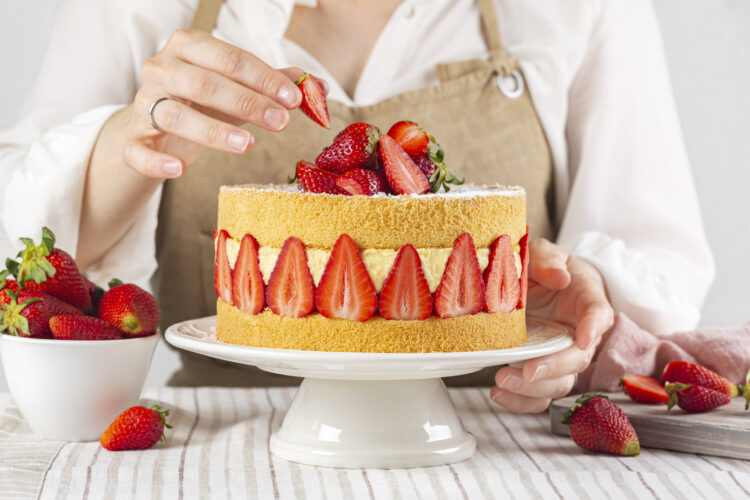
Standing before a decadent display of cakes, many find themselves grappling with a familiar dilemma: to indulge or to abstain? The combination of aerated cream, refined sugar, and butter makes the typical cake a calorie-dense luxury that is difficult to resist.
In reality, the caloric footprint of these desserts is often higher than consumers realize. A standard 100g slice of whipped cream cake contains between 350 and 400 kcal, while chocolate or cheesecake varieties can easily exceed 500 kcal. To put this in perspective, a single slice of cake often carries the caloric weight of two full bowls of white rice. Because these are high-energy-density foods rich in simple sugars and fats, they cause rapid spikes in blood glucose, leading the body to store excess energy as fat more efficiently.
However, total deprivation is rarely a sustainable strategy. Nutrition experts suggest that by refining how and what we eat, it is possible to enjoy a dessert while significantly reducing the metabolic burden.
Selecting the Right Slice
The composition of a cake dictates its caloric density. Varieties heavily layered with buttercream or thick whipped cream are high in saturated fats. Conversely, sponge cakes or fruit-based cakes tend to be lighter. Those topped generously with fresh fruit often have a lower cream-to-bread ratio and higher moisture content, making them relatively lower in calories for the same volume.
On the higher end of the spectrum, cheesecakes and dense chocolate cakes—which rely on cream cheese, butter, and cocoa fats—rank among the most caloric options. For those prioritizing weight management, choosing fruit-centered tarts or cakes with thin glaze layers is a superior tactical choice.
The "Cream Removal" Technique and Pacing
Since a vast majority of a cake’s calories are concentrated in the frosting, simply scraping away a portion of the whipped cream or buttercream can drastically lower the total intake. Focusing on the sponge and the fruit toppings allows for the flavor experience with a fraction of the fat.
Pacing is equally critical. It takes the brain approximately 20 minutes to register satiety signals. By cutting a slice into smaller pieces and eating slowly, the likelihood of overeating diminishes. Furthermore, consuming a small portion of cake immediately following a balanced meal, rather than on an empty stomach, can help moderate the speed at which blood sugar rises.
Utilizing Fiber and Flavor Enhancers
Pairing cake with high-fiber fruits like strawberries or blueberries can increase satiety and slow digestion. Another supplementary method involves a dusting of cinnamon; some research suggests cinnamon may help moderate the body's blood sugar response, though its effects are best viewed as a minor dietary aid rather than a primary solution.
Strategic Beverage Pairings
Accompanying a dessert with unsweetened teas—such as green tea, oolong, or pu-erh—can be beneficial. These teas are rich in polyphenols, which may help mitigate the sharp glucose spike typically seen after consuming sweets. It is important to remember, however, that tea serves only to assist metabolic processing and cannot "cancel out" the calories consumed.
Ultimately, weight management is most successful when it incorporates realistic strategies. By reducing portion sizes, choosing lighter varieties, and enjoying each bite slowly, you can significantly lessen the impact of a celebratory treat on your body.