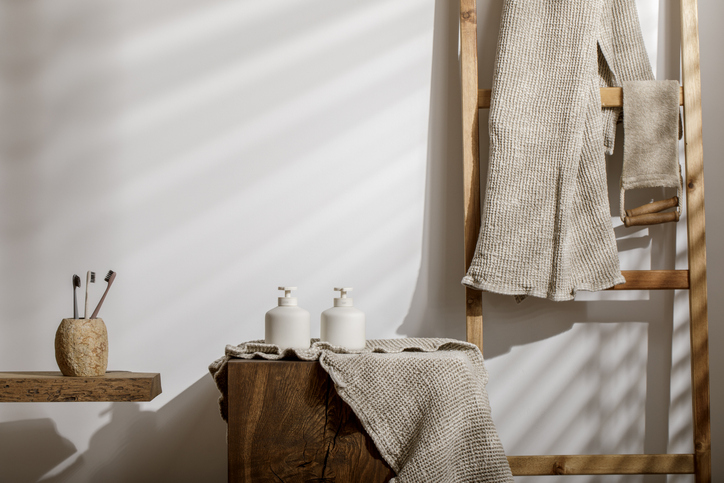
The bathroom is a space where we wash our bodies daily, but its constant high moisture levels create an ideal environment for bacterial growth. If items left in this space are not properly managed, mold can easily develop, leading to respiratory issues and skin infections. Here are four bathroom essentials that require special care and regular maintenance.
1. Toothbrushes: Replace Every Three Months
Toothbrushes naturally harbor food particles and oral bacteria, and high humidity in the bathroom accelerates their growth. According to a study by the Korean Academy of Preventive Dentistry, the average household toothbrush contains about 5 million bacteria per 1mm²—a count significantly higher than that of a typical toilet (50–300 bacteria).
Because they are used daily, disinfection is crucial. Once a week, soak your toothbrush for 10–20 minutes in a solution of water mixed with a spoonful of baking soda or salt; soaking in mouthwash is also effective. While you should replace your toothbrush every three months, swap it out immediately if the bristles become bent or frayed.
2. Shower Towels: Weekly Disinfection Required
Shower towels and loofahs are essential for creating a rich lather, but they easily trap soap residue and dead skin cells. When these items remain damp, they become breeding grounds for bacteria such as E. coli, Staphylococcus aureus, and Pseudomonas aeruginosa.
To maintain cleanliness, soak shower towels in hot water and wash them at least once a week. After use, they should be dried in a well-ventilated area outside the humid bathroom. It is also important to replace them with new ones every 1–2 months.
3. Bathroom Slippers: Deep Clean with Sodium Percarbonate
Black mold stains frequently appear in the tight, slip-resistant patterns of bathroom slippers, making them difficult to clean with simple scrubbing. Regular disinfection is vital since they are worn every time you enter the space.
Sodium percarbonate is an effective solution, offering bleaching, sterilizing, and deodorizing effects. To clean, place the slippers in a plastic bag submerged in warm water, then add half a cup of sodium percarbonate and a dash of dish soap. The resulting chemical reaction creates bubbles that break down contaminants and mold in hard-to-reach crevices.
4. Towels: Replace Every 6 Months to 1 Year
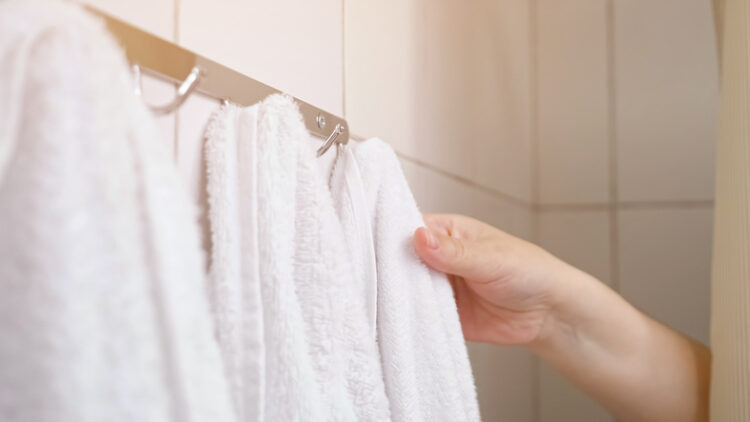
Even after washing your body, towels can harbor skin oils and flakes. When damp, bacteria multiply rapidly, potentially leading to skin conditions or athlete’s foot. Simply drying a towel does not eliminate these microorganisms.
Used towels should be washed on a delicate cycle in water below 40°C. Use a high water level for thorough rinsing and avoid fabric softeners, which can reduce absorbency. Because damaged fibers can eventually irritate the skin, a replacement cycle of every 6 months to 1 year is recommended.