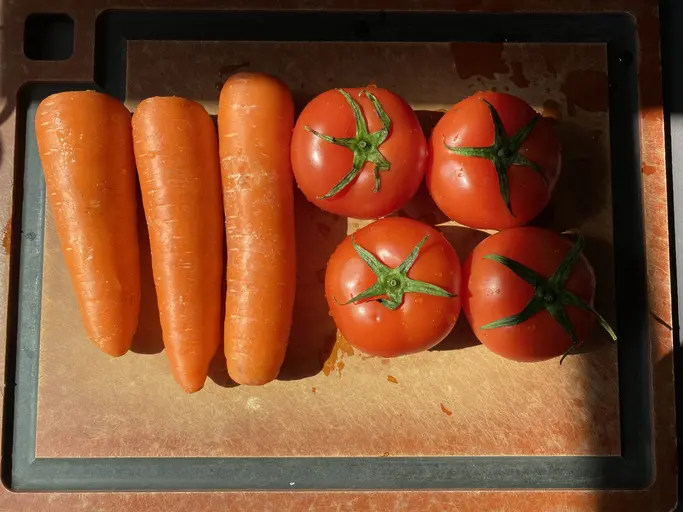
Research results indicate that older adults in their 60s and 70s who consistently consume lycopene-rich foods such as tomatoes and carrots may significantly reduce their risk of gum disease (periodontitis). An international research team, including Connecticut College, analyzed data from 1,227 adults aged 65 to 79 who participated in the National Health and Nutrition Examination Survey (NHANES, 2009-2014) and reported these findings.
According to the study, about 49% of participants were suffering from gum disease, and among them, about 78% were found to have insufficient levels of lycopene. Additionally, it was analyzed that older adults who consumed sufficient lycopene had about one-third the risk of developing gum disease compared to those who did not.
Lycopene is abundantly found in red vegetables and fruits such as watermelon, grapefruit, papaya, and red bell peppers, in addition to tomatoes and carrots. The research team stated that lycopene is an important dietary factor for maintaining gum health in older adults and that further research is needed.
This study involved Tulane University, the University of California, Southern Illinois University, Louisiana State University, and Yunnan University in China. The research results (Lycopene, Race and Periodontitis: Disparities in Older Adults) were recently published in the 《Journal of Nutrition, Health and Aging》.
The benefits of lycopene are not limited to gum health. Comprehensive research and clinical trial results indicate that lycopene helps prevent various diseases through its antioxidant properties. Since lycopene is a fat-soluble component, its absorption rate significantly increases when consumed with healthy fats like olive oil.
Lycopene is good for preventing cell damage and reducing inflammatory responses. It plays an important role not only in chronic inflammatory diseases such as gum disease but also in cardiovascular diseases. Lycopene helps lower blood pressure, inhibit arteriosclerosis, and prevent the oxidation of bad cholesterol (LDL cholesterol), thereby reducing the risk of heart attacks and strokes.
It also shows effects in lowering the risk of prostate cancer, stomach cancer, and lung cancer. Notably, there are research results indicating that the incidence of prostate cancer significantly decreased in groups that consistently consumed processed tomato products.
Lycopene positively impacts brain health and the maintenance of cognitive function. Its antioxidant properties reduce neuronal damage and can slow the progression of degenerative brain diseases such as Alzheimer's disease. Some studies have found that lycopene reduces inflammatory responses in the brain and improves the balance of neurotransmitters, which may alleviate depression.
Lycopene reduces skin damage caused by ultraviolet rays and helps prevent aging, positively affecting skin elasticity and moisture retention. In fact, individuals who consume sufficient lycopene have been reported to experience less skin damage when exposed to sunlight.
Lycopene is a component that can be expected to prevent periodontal disease as well as heart and brain diseases, especially in older adults in their 60s and 70s. Experts say, “If older individuals improve their diets to consume sufficient lycopene, it will help increase their healthy lifespan.”
[Frequently Asked Questions]
Q1. What foods are the richest in lycopene?
A1. Tomatoes are a representative source, especially in processed forms like tomato sauce, paste, and juice, where the absorption rate is high. Additionally, red fruits and vegetables such as watermelon, guava, pink grapefruit, papaya, and red bell peppers are rich in lycopene.
Q2. How should lycopene be consumed for better effectiveness?
A2. Since lycopene is fat-soluble, consuming it with healthy fats like olive oil significantly increases its absorption rate. Cooked tomatoes or processed products have a higher bioavailability than raw tomatoes.
Q3. Do lycopene supplements have the same effect as food?
A3. Supplements can be helpful, but consumption through natural foods is more recommended. Natural foods contain various antioxidant components, vitamins, and minerals along with lycopene, allowing for synergistic effects.