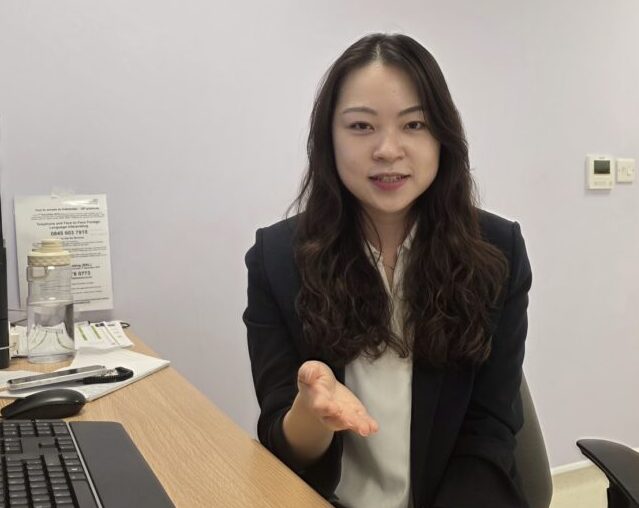
“The most memorable class during medical school was the one on how to shake hands during my first year,” says Kim Min-jin, a family medicine resident at Northgate Health Centre in Oxford. A graduate of Barts and The London School of Medicine and Dentistry, Kim holds both Korean and UK medical licenses—a rare background that offers a unique perspective on British medical education.
In a symbolic scene for UK healthcare, aspiring physicians are gathered to have their handshake strength, vocal tone, eye contact, and posture corrected one by one. The core philosophy is clear: the brief moment a patient opens the door and shakes a doctor's hand is the starting point of the clinical relationship. Professors emphasize that those first few seconds determine whether a patient trusts the doctor as an expert or seeks care elsewhere.
Learning Beyond the Textbook
Unlike the "spoon-fed" approach often found in other systems—where students rely on curated past exam questions—British medical education requires self-direction. "What professors teach in class is rarely enough to cover the exam," Kim explains. Students must identify key material themselves, share findings with peers, and value clinical knowledge gained directly from hospital placements over rote memorization.
"If You Don't Ask the Patient, There Is No Treatment"
The British system is thoroughly patient-centered. When a patient requires a specialist—such as for ADHD—the General Practitioner (GP) provides a list of several clinics. The patient then chooses the facility based on location or operational style.
This philosophy extends to every clinical interaction. Obtaining explicit consent is a strict rule. "Even for a blood test or an X-ray, I always ask, 'This is what I plan to do—how do you feel about that?'" Kim says. If a patient refuses, the procedure does not move forward. The patient's right to self-determination takes precedence over the doctor’s initial judgment.

Building Trust Through Radical Honesty
British medical schools utilize professional actors to train students for the most difficult conversations: delivering a cancer diagnosis or discussing an impending death. A professor observes these interactions, providing instant feedback on tone and word choice.
A key takeaway from this training is avoiding premature reassurance. Even if the probability of a negative outcome is low, doctors are taught not to say, "You'll be fine." Instead, they present the worst-case scenario early, allowing the patient time to prepare mentally. This partnership in navigating uncertainty is viewed as the true beginning of trust.
Charité: The Patient’s Language and Multidisciplinary Care
In Berlin, the prestigious Charité Medical School follows the "Beddinger model": the treatment goal is not set by the doctor, but decided together with the patient.
Because university attendance rates in Germany vary, students are rigorously trained to translate complex medical data into "the patient's language." A core course, Communication, Interaction and Team Competence, uses simulated patients to practice delivering bad news and mediating conflicts.
The classroom environment at Charité is notably diverse, featuring students ranging from teenagers to experienced nurses and physiotherapists in their 40s. Dr. Moon Da-woon, a Charité graduate and neuropsychiatrist, notes that this cultural and professional diversity shifts the focus from simple knowledge transfer to cultivating the "attitude" of a good doctor.
Charité students begin meeting patients within their first month. While daunting, it teaches them early that a doctor is someone who listens to stories, not just someone who treats symptoms. "Changing an entire treatment plan sometimes starts with a single word a patient says," Dr. Moon observes. "Good education cultivates the sensitivity to not miss that word."
Interview interpretation and reporting assistance: Kim Dong-wook, Park Byung-ok
This project was supported by the Press Promotion Fund, funded by government advertising fees.