Older adults diagnosed with multiple myeloma should not automatically be ruled out for autologous hematopoietic stem cell transplantation simply because they are past age 65, according to new research from South Korea.
Multiple myeloma is a blood cancer characterized by the abnormal proliferation of plasma cells in the bone marrow. Because the disease predominantly strikes older populations—with 2,099 newly diagnosed cases reported in South Korea in 2023 alone—clinicians frequently face difficult decisions regarding whether older patients can tolerate intensive transplant procedures.
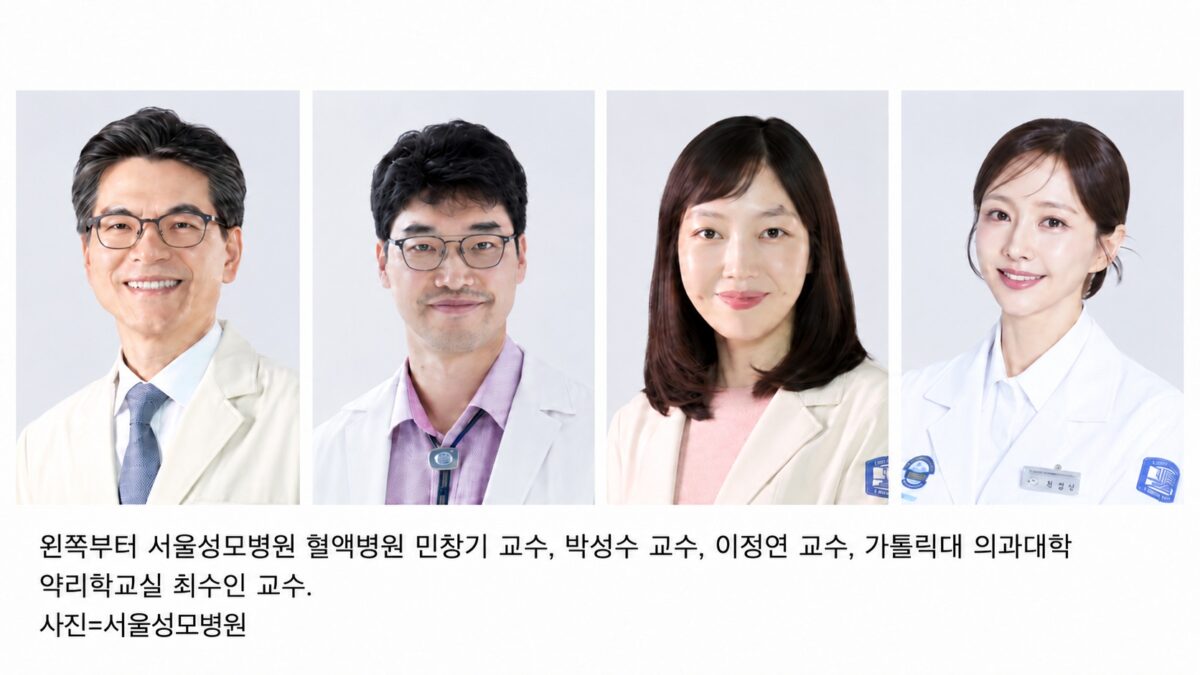
A research team led by Professor Min Chang-gi of the Department of Hematology at Catholic University of Korea Seoul St. Mary’s Hospital conducted a comprehensive clinical and cost-effectiveness analysis using nationwide claims data from the Health Insurance Review and Assessment Service (HIRA). The team included first author Professor Lee Jeong-yeon of Seoul St. Mary’s Hospital and co-corresponding author Professor Choi Su-in of the Department of Pharmacology at the Catholic University of Korea College of Medicine. The findings were published in Value in Health, the official journal of the International Society for Pharmacoeconomics and Outcomes Research (ISPOR).
Survival Rates Jump 12.8 Percentage Points
Autologous hematopoietic stem cell transplantation involves harvesting a patient’s own stem cells, administering high-dose chemotherapy, and reinfusing the stored cells. While it serves as a core treatment for multiple myeloma, physicians often hesitate in older cohorts due to concerns over physical frailty and comorbidities.
Analyzing 735 patients aged 65 to 69 who were diagnosed between 2017 and 2024, the researchers compared 458 patients who underwent transplantation following induction therapy (bortezomib, thalidomide, and dexamethasone) against 277 patients who received non-transplant therapy. To control for underlying health disparities between the two cohorts, the team applied inverse probability of treatment weighting (IPTW) and evaluated long-term outcomes using a semi-Markov statistical model.
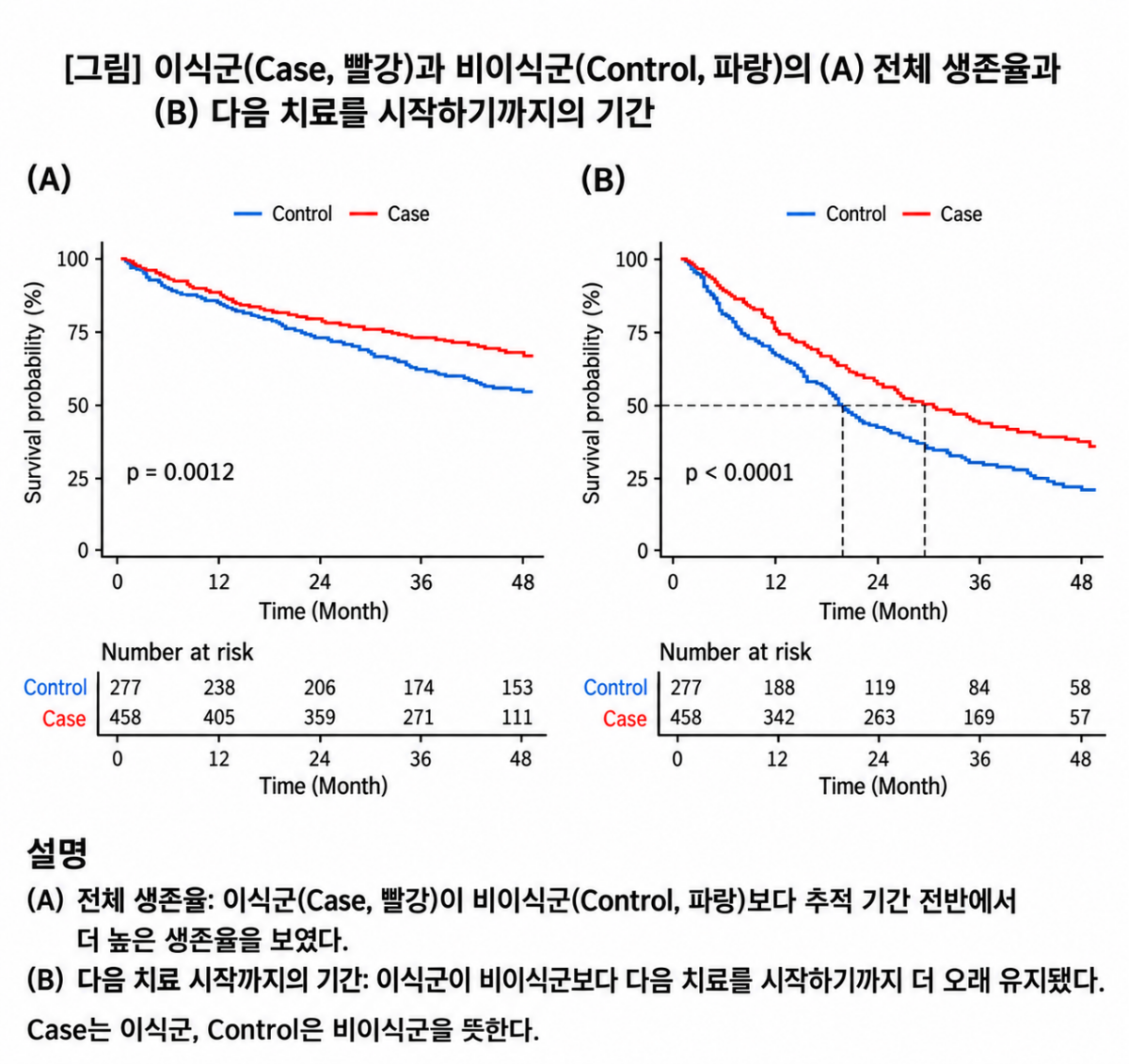
The analysis revealed that the 4-year overall survival rate was 67.8% in the transplant group compared to 55.0% in the non-transplant group—a 12.8 percentage point survival advantage. Patients in the transplant cohort experienced a 38% lower risk of death, while the median time to their next line of treatment was extended by approximately ten months (29.8 months versus 19.7 months).
Higher Upfront Costs Offset by Quality-Adjusted Survival
From an economic perspective, medical costs for the transplant group were approximately 29.90 million won higher than for the non-transplant group. However, transplantation yielded an additional 0.71 quality-adjusted life years (QALYs)—a standard metric measuring both length and quality of life.
The resulting incremental cost-effectiveness ratio (ICER) stood at approximately 42.40 million won per QALY, falling comfortably below the study's willingness-to-pay threshold of 52.40 million won. Across 1,000 simulation models, transplantation demonstrated a 70.3% probability of being cost-effective. The authors noted that South Korea’s structured healthcare cost system makes early transplantation economically viable by delaying costly disease relapses.
Clinical Fitness Over Chronological Age
South Korea expanded National Health Insurance coverage for stem cell transplants in September 2019 to include patients up to 69 years old. However, the researchers emphasized that biological fitness—rather than the age on a patient's identification card—must dictate treatment choices.
This perspective aligns with current clinical guidelines from the American Society of Clinical Oncology (ASCO), which advise that transplant decisions should depend on frailty, functional status, and comorbidities rather than chronological age or renal function alone.
"There are still instances where transplantation is bypassed simply due to advanced age," said Professor Min Chang-gi. "Our analysis demonstrates with domestic real-world data that patients aged 65 to 69 experience significantly longer survival and clear cost-effectiveness. Treatment decisions should be tailored to overall physical condition rather than age."
Professor Choi Su-in added, "Because healthcare pricing structures vary globally, international cost-effectiveness data cannot be directly applied to Korean clinical settings. Establishing localized evidence using nationwide claims data provides an essential foundation for future reimbursement policies."
The researchers noted that as an observational claims-data study rather than a randomized controlled trial, the findings reflect real-world clinical associations, showing that patients who underwent transplantation achieved a 38% lower risk of death. The study was conducted as part of the Catholic Multiple Myeloma Research Network (CAREMM-2110), with contributions from Professor Park Sung-soo and Professor Byun Sung-gyu of Seoul St. Mary’s Hospital.