The mother had lived with diabetes for years before complications set in. Diabetic retinopathy began impairing her vision in both eyes, threatening blindness, while diabetic foot lesions further compromised her health.
By February 2023, her condition had deteriorated to the point where she required regular hemodialysis. Confined to a hospital bed three to four days a week for four hours at a time, a kidney transplant became her only path off life-sustaining dialysis.
“I’ll give you mine.”
Holding his mother’s hand, her son spoke quietly. Having already watched her endure surgeries for appendicitis and stomach cancer alongside her chronic diabetes, he could no longer stand by and watch her suffer.
His mother firmly refused. No matter how severely her own health was declining, she could not bring herself to accept an organ from her child. For the next three years, each time her son raised the topic, she shook her head.
“Mom is sick. I can help. That’s enough,” he insisted.
Her son viewed the decision simply, but for his mother, the choice was agonizing. Diagnosed in the second grade with a Level 2 brain lesion disability—commonly classified as cerebral palsy—her son had faced lifelong challenges. Before gratitude came overwhelming guilt and anxiety. She worried whether the major surgery would prove too taxing for his body, and feared burdening an already difficult life. The thought of her son living the rest of his life with a single kidney left her heartbroken.
Despite his physical limitations, her son had pursued an independent path. He attended mainstream elementary, middle, and high schools, graduated from a four-year university in Busan, worked for a year at McDonald’s, and served for six years as an administrative assistant at a township office. More recently, while assisting with his family’s pension business, he had been preparing for the civil service exam to become a licensed social worker. Now in his late 30s, he was an independent adult making a fully conscious choice.
Even so, the medical team at Bongsaeng Memorial Hospital proceeded with extreme caution, refusing to perform the surgery based solely on goodwill. The hospital requested comprehensive evaluations from psychiatric and neurological specialists.
Through rigorous interviews and clinical testing—including brain MRIs, MRAs, and EEGs—doctors verified that he was free of clinical anxiety or depression, and that his offer was not driven by impulsive emotion. The assessments confirmed that he fully understood the medical implications of organ donation. In many ways, the thorough evaluations highlighted both the depth of the mother's initial reluctance and the son's unwavering resolve.
Two Operating Rooms, Side by Side
In April 2026, the mother’s health took another severe turn, resulting in repeated hospitalizations. The family gathered once more, and this time, she finally agreed to accept her son's gift.
Detailed pre-transplant testing began in May for both mother and son, confirming a compatible A-positive blood type match.
At 8:30 a.m. on Aug. 11, the son was brought into the operating room first. Under general anesthesia, Dr. Kim Dong-woo, head of urology, performed the donor nephrectomy.
In the adjacent operating room, Dr. Baek Seung-eon, honorary director of surgery, prepared the mother. Around 10:30 a.m., the donated kidney was transferred next door. Over the next several hours, surgeons meticulously reconnected the renal blood vessels and ureter.
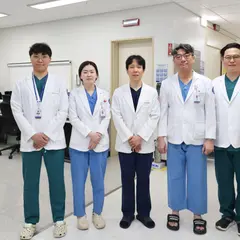
The son returned to his hospital room around 11:30 a.m., while the mother completed surgery around 2:00 p.m. Dr. Kim Jung-kyung, honorary director and attending nephrologist, oversaw the entire procedure, supported by Dr. Oh Jun-seok, head of nephrology, and attending physicians Dr. Lee A-rim and Dr. Kim Yang-hyun.
A Milestone Transplant Built on Decades of Teamwork
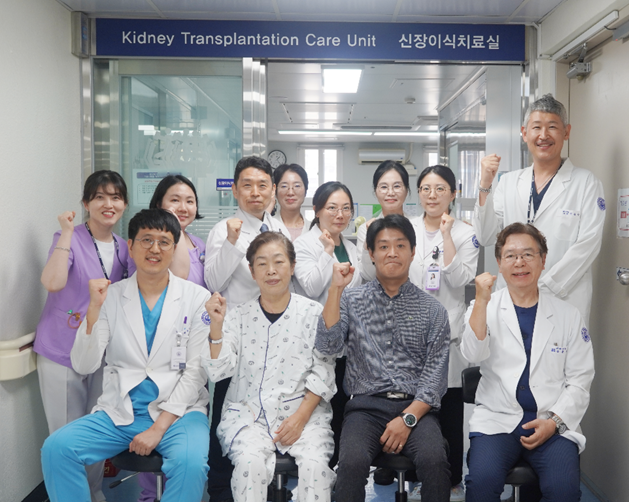
The surgery was a complete success, with both patients recovering without notable complications over the following two weeks. The procedure marked the 1,458th kidney transplant performed at Bongsaeng Memorial Hospital since its transplant program began in 1995, and its 36th this year alone—placing it among the top surgical centers in South Korea outside Seoul’s major medical hubs.
“Kidney transplantation is an arduous field that demands round-the-clock commitment, including weekends,” said Dr. Kim Jung-kyung on the 25th. “The seamless teamwork and clinical know-how built over decades were crucial to this success. A transplant succeeds best when a dedicated multidisciplinary team—spanning nephrology, surgery, urology, dialysis units, laboratories, transplant coordinators, and nursing staff—works in perfect harmony.”
From a purely medical standpoint, the procedure was routine for the experienced transplant team. But returning to that ordinary routine required three years of patient waiting from a son, and three years of tearful hesitation from a mother. Today, she is finally free from the burden of hemodialysis.